4x4 Underbody Rust Protection
4x4s rot from the chassis out. Ladder frames, outriggers and box sections pack with mud and salt and corrode from the inside. We dry ice clean the lot, expose the real condition, treat the corrosion and protect both the surfaces and the cavities – then keep it in check.
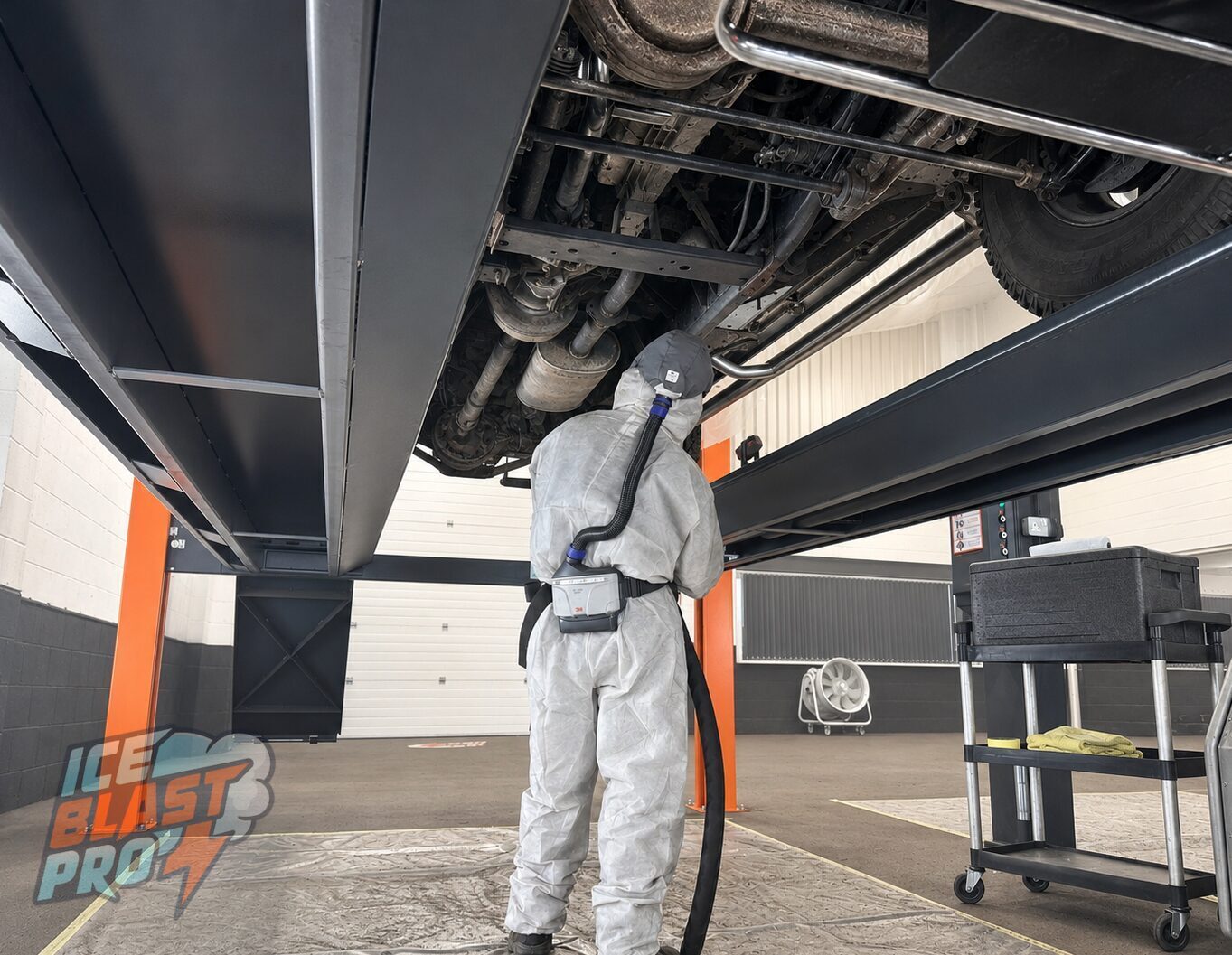
4x4 underbody rust protection is built around the part that matters on these vehicles: the chassis. Ladder frames, outriggers, tow points and box sections trap mud, water and salt and corrode from within. We dry ice clean the underside and chassis, treat the corrosion, protect the surfaces and inject the cavities, then maintain it on a cycle that suits how hard the vehicle works.
4x4s we’ve worked on
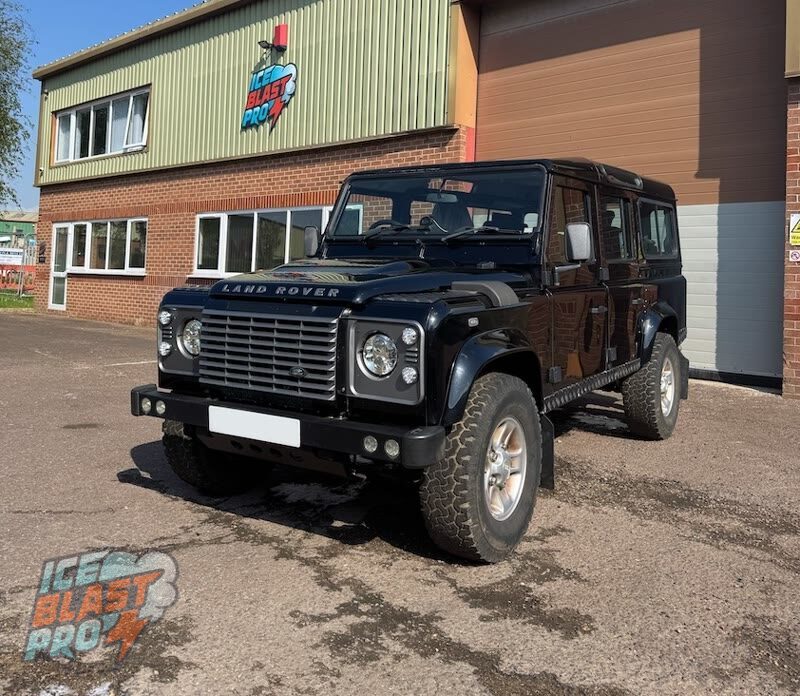
From hard-working Defenders to G-Wagens, Range Rovers and older off-roaders, these are some of the 4x4s that have come through the workshop – every one cleaned back to expose its true condition, then treated and protected to stand up to mud, salt and real use.



The chassis is the vehicle
On a separate-chassis 4x4 – the Defenders, G-Wagons, Range Rovers, pickups and older off-roaders – the ladder frame is the structure everything else bolts to. It is also the first thing to rot. Outriggers, crossmembers and box sections are open invitations for mud and salt to pack in, hold moisture and quietly corrode the metal from the inside until an MOT or a tow point failure makes it obvious.
Protecting a 4x4 properly means treating the chassis as the priority, not an afterthought. That is a different job from preserving a road-car monocoque, and it is what this service is built around.
Where 4x4s corrode
- Ladder chassis & crossmembers – the main structural rails that carry the vehicle, with seams, joins and rear sections that often trap moisture and road salt.
- Outriggers & body mounts – classic Defender and off-roader rot spots where mud, salt and water collect around brackets and mounting points.
- Box sections & sills – enclosed cavities that can stay wet long after a wash, wet drive or winter road use, especially where drainage is poor.
- Side steps, side skirts & lower edges – areas that catch spray, mud and grit, often hiding corrosion behind trims, covers and fixings.
- Tow points, brackets & suspension mounts – exposed hardware that takes constant road spray, impact from grit and repeated wet/dry cycles.
How we protect a 4x4
Clean out. Dry ice clears packed mud, salt and old coatings from the chassis, outriggers and suspension without forcing water into the box sections.
Inspect and treat. The bare chassis is inspected, photographed and any corrosion is stabilised and treated before protection – holes or weak metal are flagged for repair.
Protect inside and out. A durable coating goes on the exposed metal and a creeping wax is injected through the chassis cavities, so the frame is protected from both sides.
Watch a dirty 4x4 underbody being cleaned
This is the first stage on a mud-caked Defender 90: dry ice blasting lifts packed dirt, road salt and grime off the chassis, axles and suspension without forcing water into the box sections – exposing the real condition of the metal before any treatment or protection goes on.
A Defender 110, top to bottom
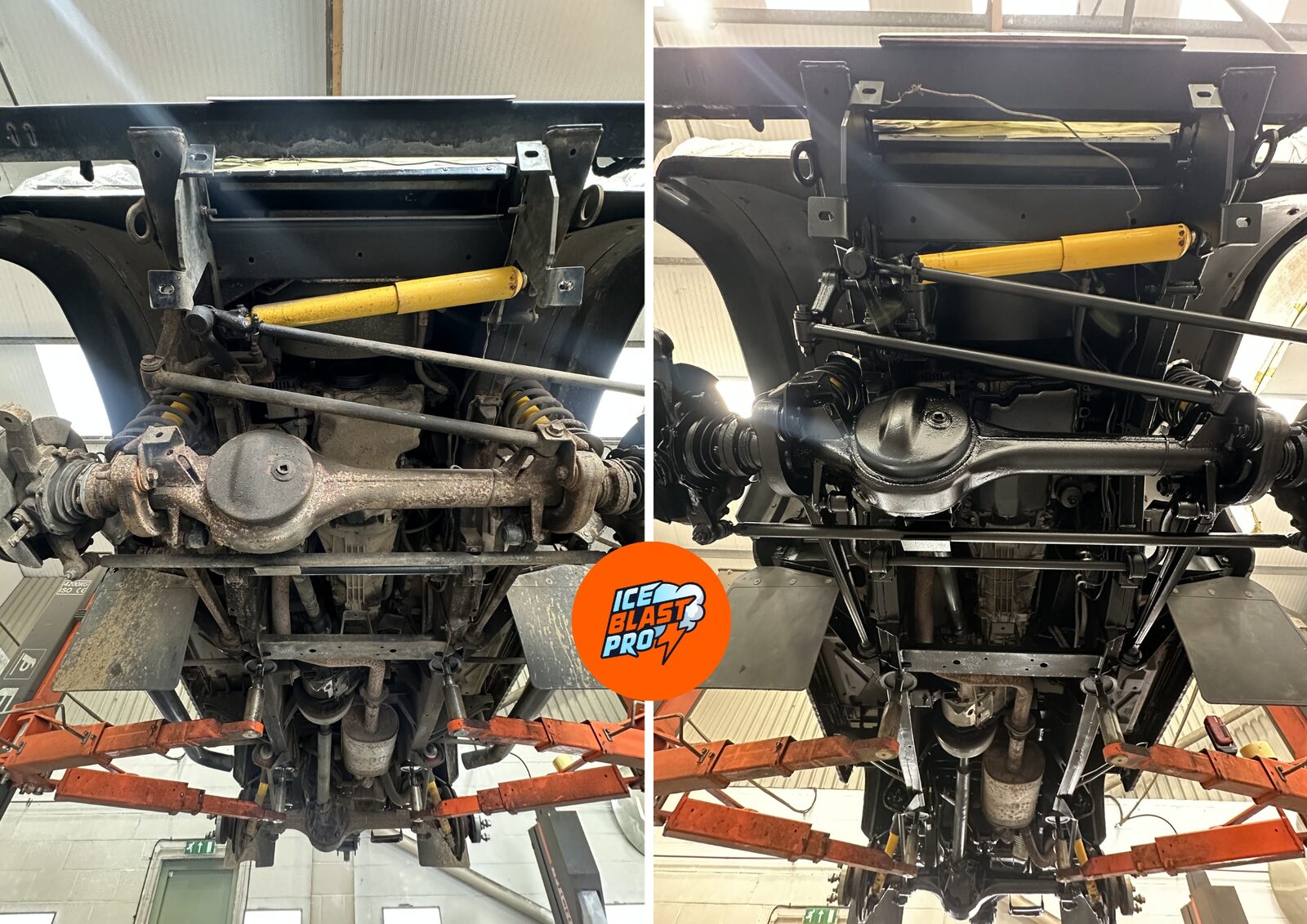
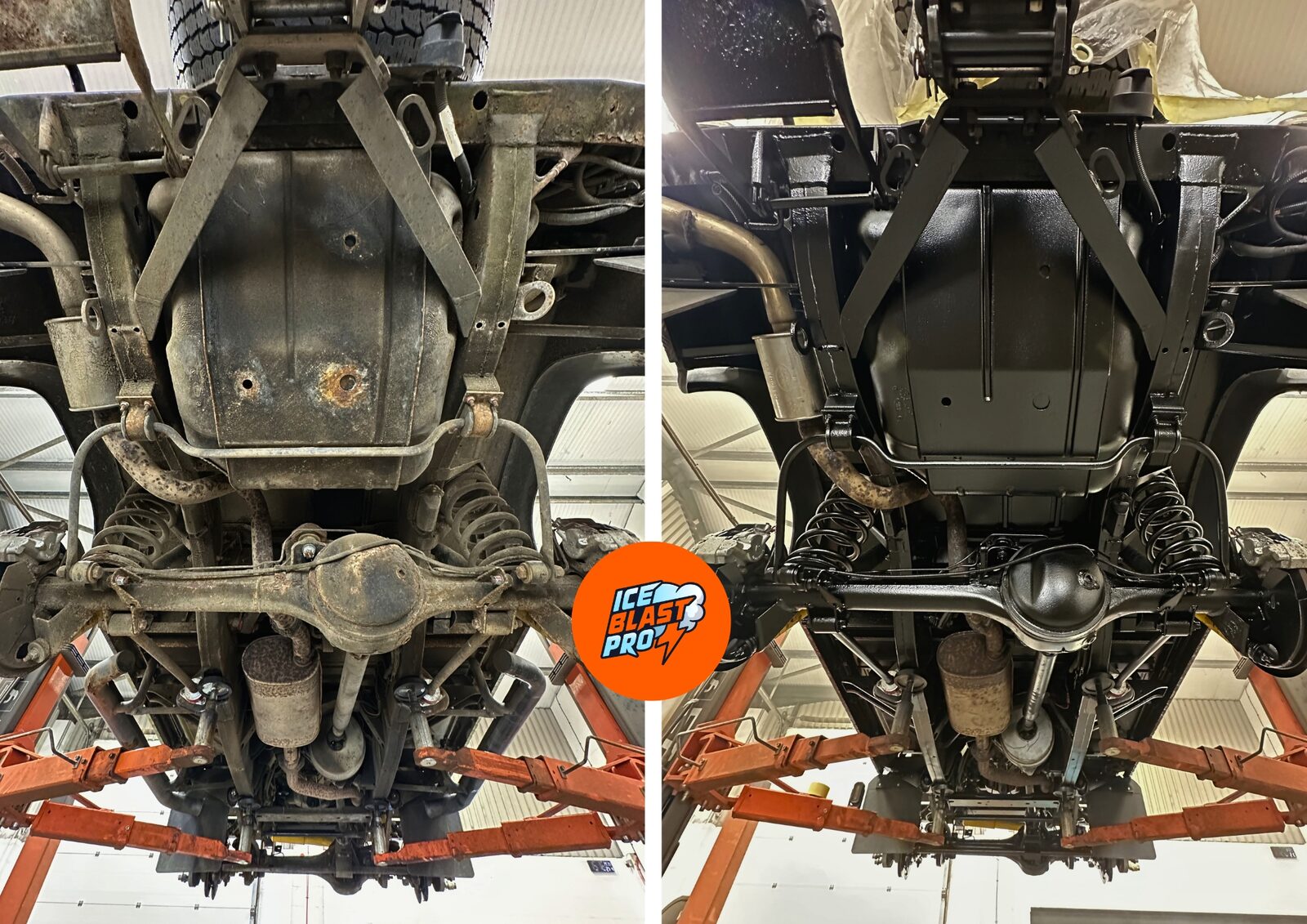
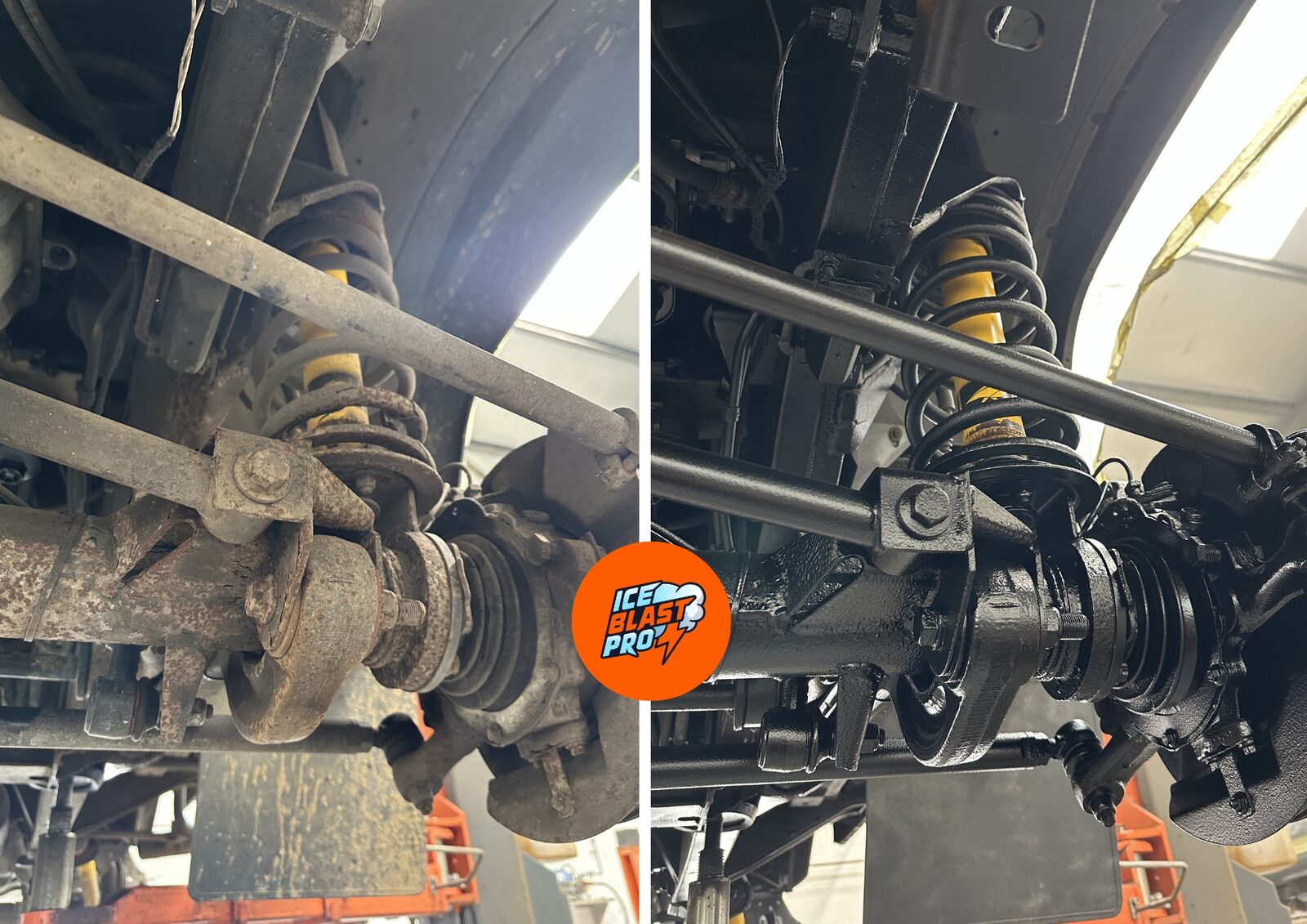
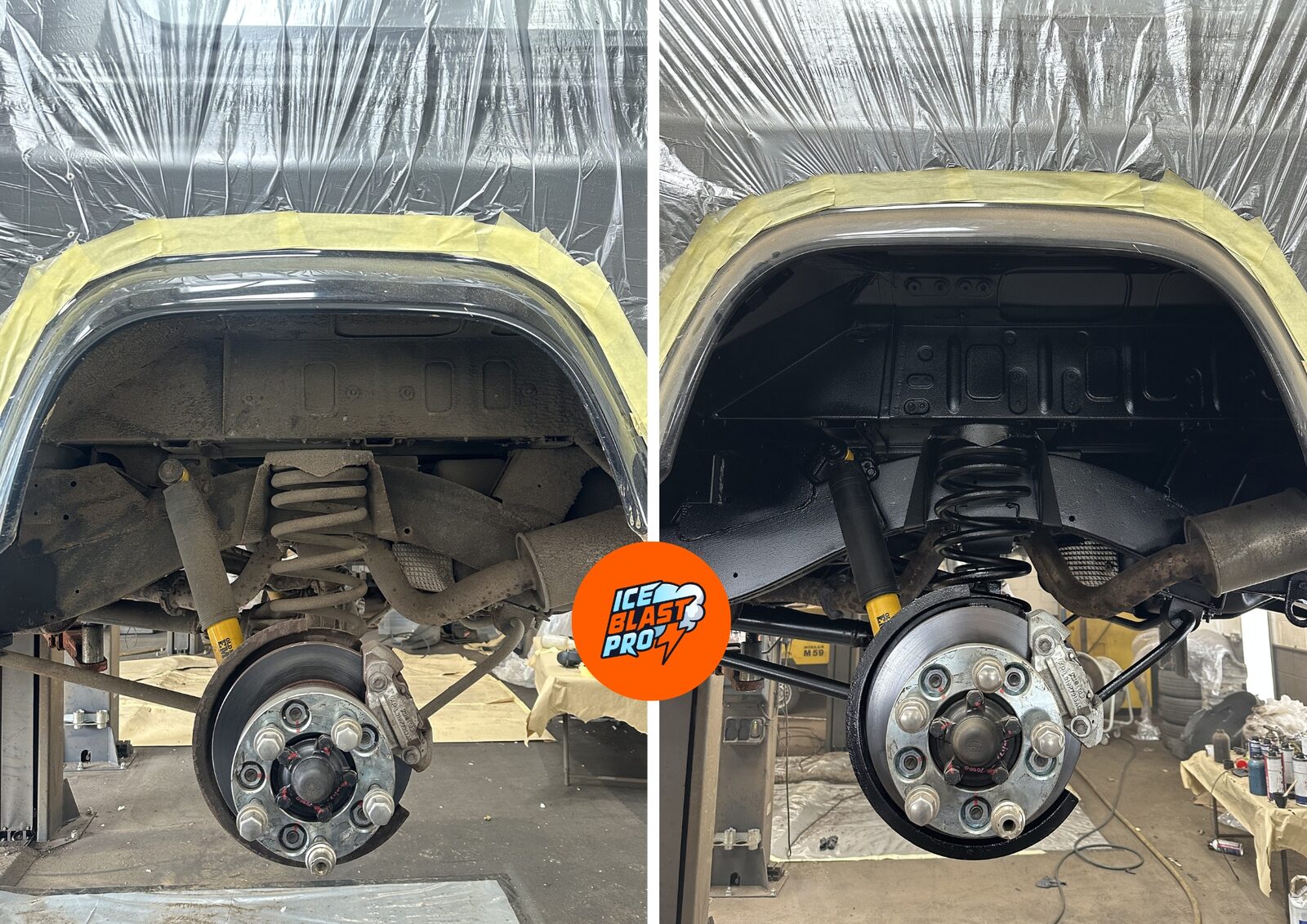
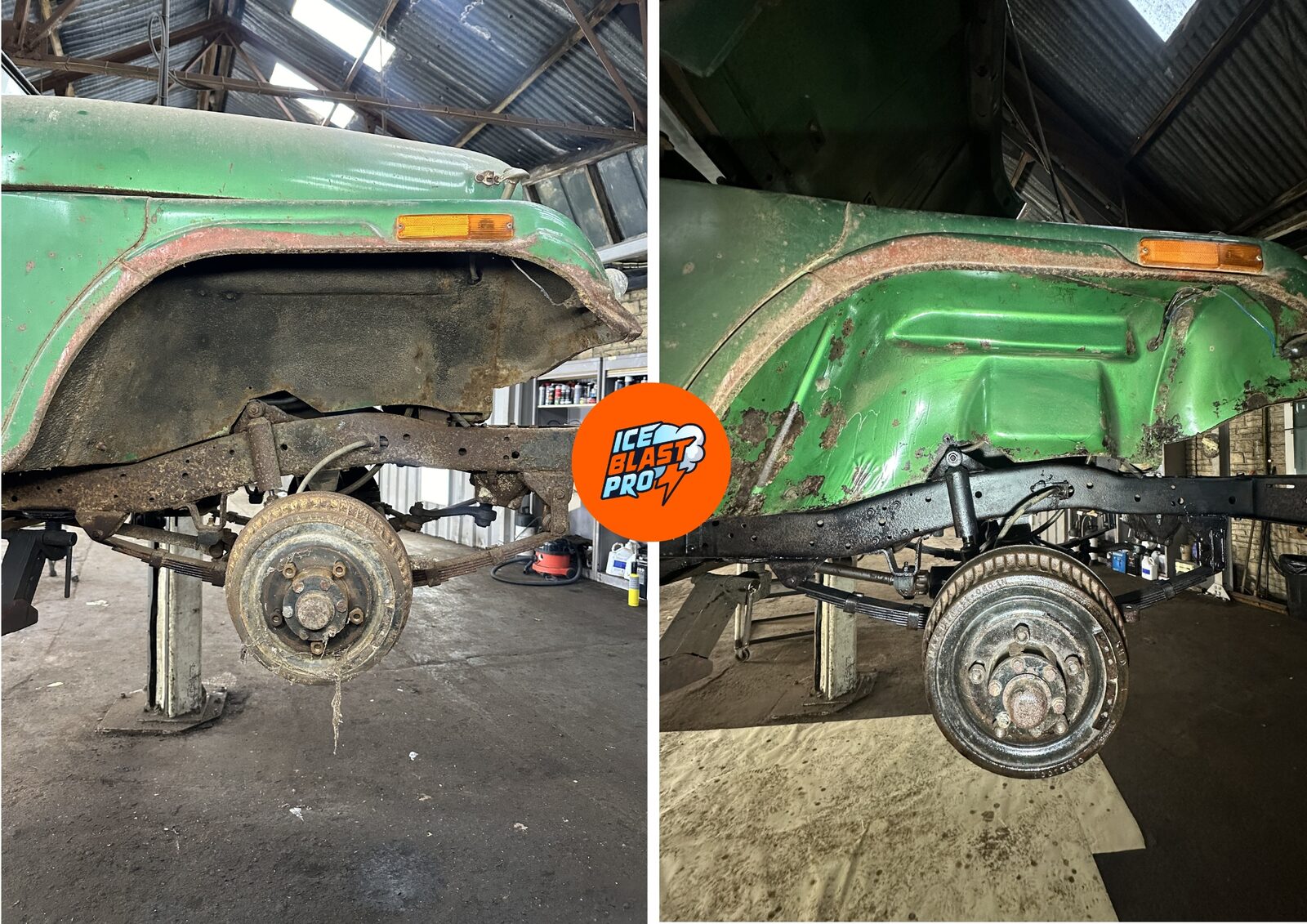
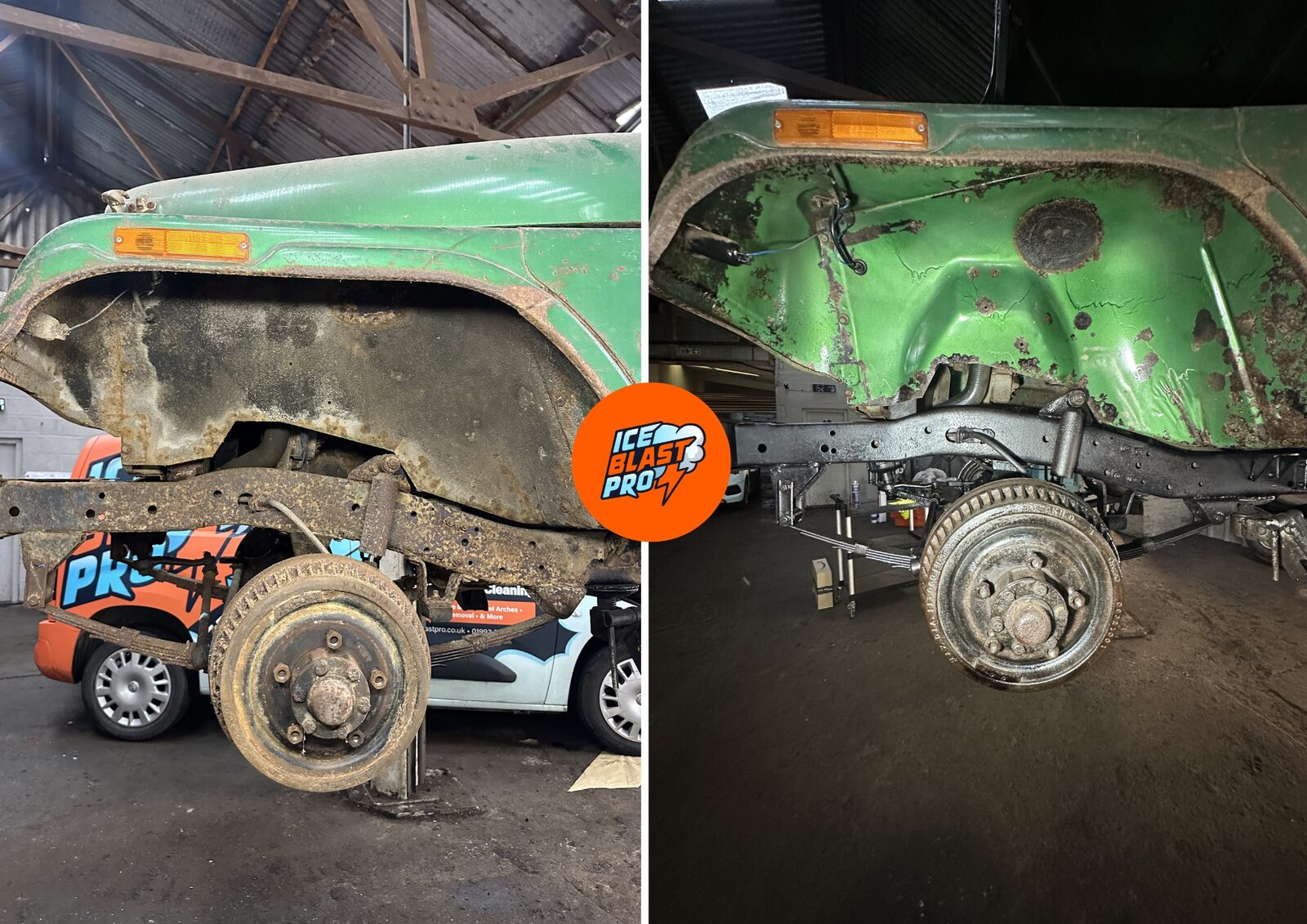
A 2008 Defender 110 taken through the full programme – chassis, axles, suspension and wheel arches dry ice cleaned, the corrosion treated, then sealed with Dinitrol. Same corner, before and after.
More 4x4s through the workshop
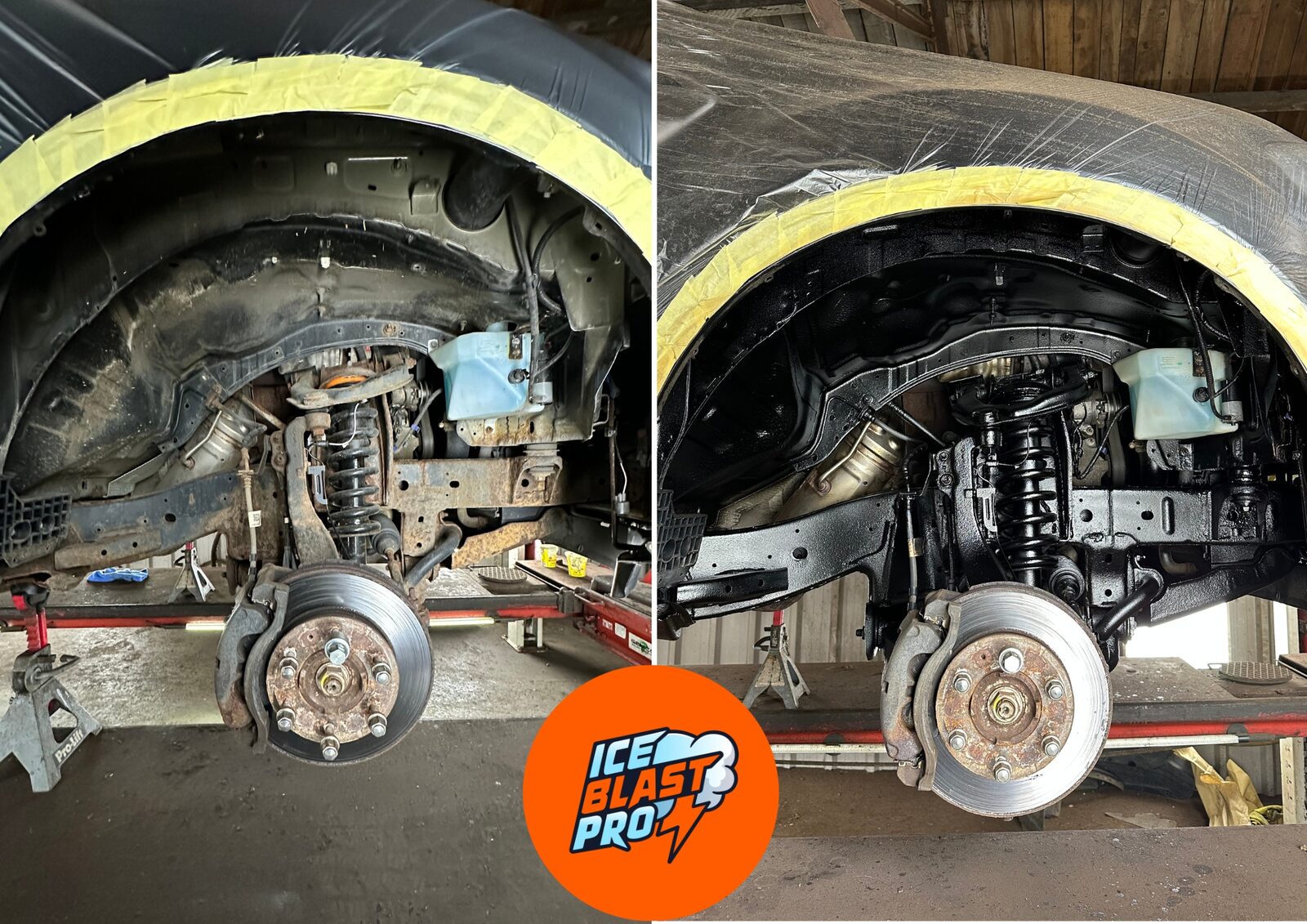
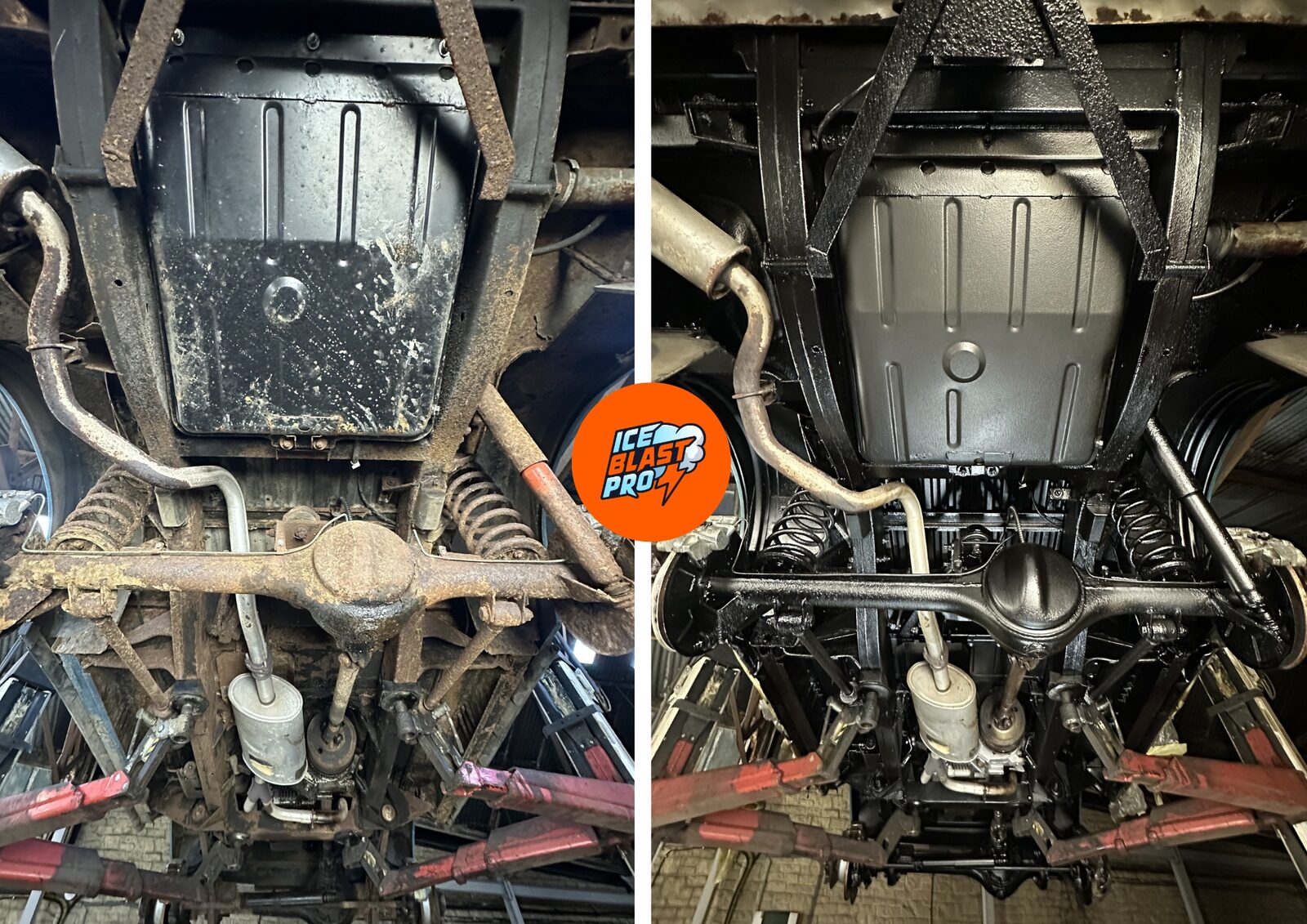
Pickups, classics and hard-used off-roaders all rot in the same places – arches, chassis rails and suspension. We clean each one back to honest metal first, so the true condition is on show before anything is treated or sealed.
Keeping ahead of it
A working 4x4 earns its corrosion the hard way, so protection is a cycle rather than a one-off. We check and top up the coatings and chassis wax as part of annual maintenance, and a hard-used vehicle may need attention more often. Any corrosion treatment is handled as a proper stage – we never seal over rust to make the chassis look finished.
Common questions
Do you treat the chassis as well as the underbody?
Yes – on a 4x4 the ladder chassis, outriggers and box sections are the whole point. These are the structural members that rot from the inside, so we clean them, inspect them, treat any corrosion and protect both the outer surfaces and the internal cavities. Surface protection alone is not enough on a chassis vehicle.
My 4x4 is used off-road and green-laning – is that a problem?
It is exactly what this is for. Mud, water and grit pack into the chassis, outriggers and suspension and hold moisture against the metal long after a drive. We clean all of it out with dry ice, expose the true condition, treat what needs it and protect the metal so the next trip does not start the rot again. A maintenance cycle keeps it in check.
Which protection do you use on a 4x4?
It depends on the vehicle and how hard it works. We have Lanoguard, Dinitrol, Bilt Hamber and premium options available and match the system to the use case – typically a durable coating on the exposed underside and a creeping wax through the chassis cavities. We recommend based on condition and use rather than on a single brand.
How often does a working 4x4 need re-treating?
More often than a garaged road car, because it earns its keep in mud and salt. The protected surfaces and chassis wax are checked and topped up as part of an annual inspection, and a hard-working vehicle may need more frequent attention. The point is to stay ahead of corrosion rather than catch it once the chassis is already going.
Stop your 4x4 rotting from the chassis out
Tell us about your vehicle and what you want to achieve, and we'll recommend the right preservation programme with a quote to match.
Get Instant Quote