Rust Treatment & Corrosion Protection
We do not seal over corrosion to make an underside look finished. We clean the surface, assess what is active, stabilise corrosion where required and apply the right protection system for the vehicle’s condition, use and long-term ownership.
Rust treatment and corrosion protection is the stage that follows proper cleaning and inspection. Once contamination, loose coatings and surface corrosion have been removed, active corrosion is treated using a chemical stabilisation process to help neutralise and control it.
Only once the affected areas are prepared do we apply a suitable protection system to seal and protect the metal. We never seal over active rust just to make an underside look finished – corrosion is treated first, protection second.
What causes rust on cars?
Rust forms when iron and steel react with oxygen and moisture, creating iron oxide. On cars, this process is accelerated by road salt, trapped dirt, damaged coatings, failed underseal and repeated wet-dry cycles.
UK vehicles are especially vulnerable because they are exposed to winter road salt, damp storage, rainfall, humidity and contamination from everyday road use. Even a well-maintained vehicle can begin to corrode underneath if moisture reaches bare or poorly protected metal.
Most modern vehicles leave the factory with primers, coatings and underbody protection. The problem starts when those coatings become chipped, thin, cracked, contaminated or separated from the metal beneath. Once moisture and salt sit against the steel, corrosion can begin and spread unseen under paint, underseal or dirt.
Common areas where rust develops include wheel arches, inner arch liners, sills, jacking points, subframes, suspension mounts, chassis rails, floor pans, brake lines, fuel lines and exposed brackets.
How do you stop a car from rusting?
Stopping rust properly is not about covering it up. It is about cleaning, inspecting, stabilising and protecting the metal correctly.
1. Remove contamination properly
Dirt, oil, salt, road grime and failing underseal can trap moisture against the metal. These need to be removed before any serious rust treatment or protection is applied.
Dry ice blasting is useful because it can remove contamination and loose material without soaking the vehicle in water or aggressively stripping sound factory finishes.
2. Stabilise existing corrosion
If corrosion is already present, loose rust and failed coatings must be removed so the true condition can be assessed. Any remaining corrosion should then be treated, stabilised or repaired before protection is applied.
Sealing over active rust, damp contamination or failing underseal can trap the problem underneath and allow corrosion to continue spreading out of sight.
3. Apply the right long-term protection
Once the underside is clean and stable, the right protection system can be applied. This may include clear wax, cavity wax, black underbody coating, rust stabiliser or premium clear protection, depending on the condition of the vehicle and how it is used.
For solid vehicles, early protection helps preserve originality. For vehicles already showing early corrosion, proper preparation and stabilisation can stop the problem escalating. Long-term rust prevention depends on preparation first, protection second.
Can you treat rust before underseal?
Yes – and it is the only order that works. Rust has to be cleaned back, assessed and stabilised on sound metal first; underseal, wax or protective coatings then go on over prepared, treated metal. Treating the corrosion before any protective layer is exactly what stops it carrying on underneath a fresh-looking finish.
Can you underseal over rust?
You can – but it is the fastest way to make a problem worse. Coating over active rust seals moisture and oxygen against the metal and hides the corrosion while it keeps spreading underneath. The car looks finished; the steel carries on rotting out of sight until it shows somewhere you cannot ignore.
That is why we will not do it. Underseal, wax and protective coatings only belong on sound, prepared metal that has been cleaned, assessed and – where corrosion is active – properly stabilised first.
We filmed exactly this on a Lancia Delta Integrale – rust spreading under fresh-looking underseal. Watch the video and read the full write-up on whether you can underseal over rust.
What is the difference between surface rust and structural corrosion?
Not all rust is equal. Surface rust is light oxidation sitting on top of otherwise sound metal – common, expected on an older car, and very treatable once it is cleaned back and stabilised. Structural corrosion has eaten into the steel itself: pitting, scale and, at its worst, perforation in chassis rails, sills or floorpans.
The two need very different responses. Surface rust is stabilised and protected; structural corrosion has to be removed back to sound metal, and where the steel is too far gone it needs repair or welding rather than a coating. Telling them apart honestly is the whole point of the assessment.
What rust treatment is best for – and what it is not
Best for
- Stabilising active surface corrosion on sound steel
- Treating chassis rails, box sections and floorpans after cleaning
- Neutralising rust before underseal, wax or coatings go on
- Long-term corrosion protection on classic and prestige cars
- Underbodies exposed by dry ice or laser cleaning
Not suitable for
- Replacing perforated or structural metal (that needs welding)
- Sealing over active rust to hide it
- Cosmetic-only quick fixes with no surface preparation
- Full paint stripping or bodywork
- Rust that has already eaten through a panel
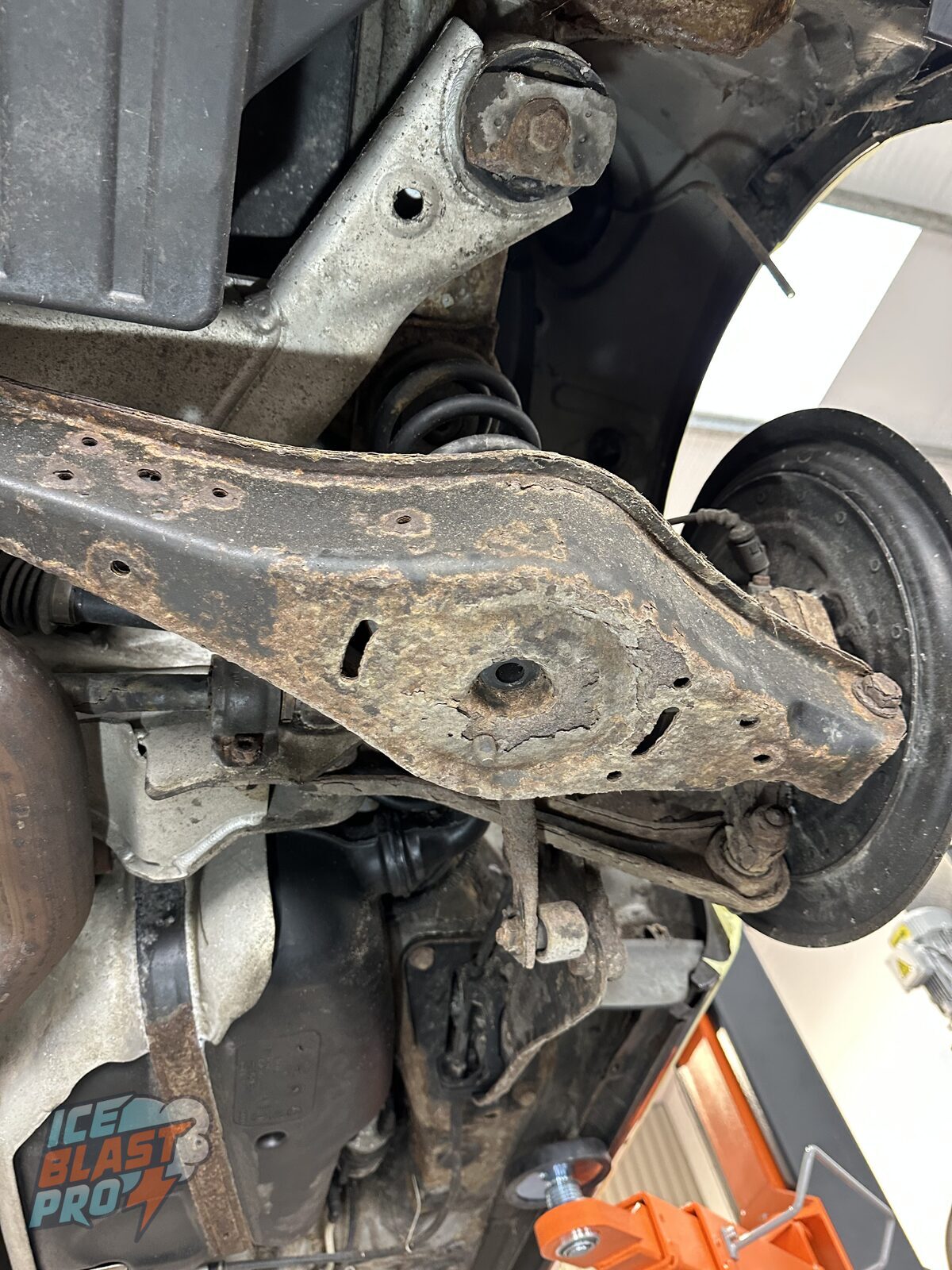
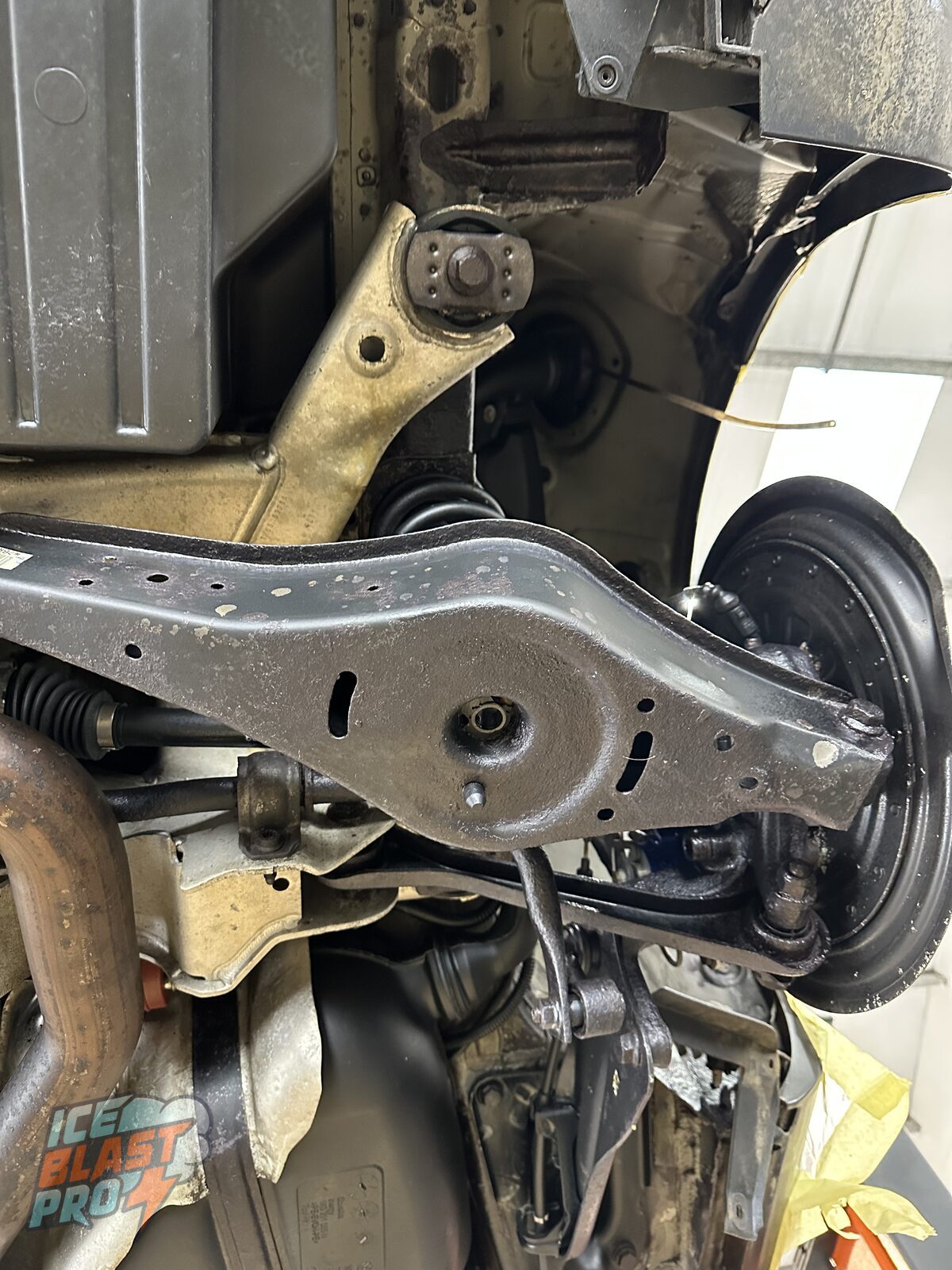
Before and after: corrosion treated, not hidden
Is dry ice blasting good for rust treatment?
Dry ice blasting is one of the most effective ways to prepare a car’s underside for rust treatment and corrosion protection.
It removes road grime, oil, salt, loose corrosion, failing underseal and trapped contamination without introducing water or aggressively abrading the metal. This makes it especially useful for classic cars, performance vehicles, collector cars and vehicles where preserving sound factory finishes matters.
Dry ice blasting does not repair rust, replace welding or rebuild damaged metal. Its value is in revealing the true condition underneath. Once the surface is clean and dry, we can see what is sound, what needs stabilising, and what should not simply be sealed over.
In UK conditions, where road salt and moisture accelerate corrosion, preparation is everything. Poor preparation can trap contamination beneath fresh underseal or wax, allowing corrosion to continue unseen. Correct rust protection starts with exposing the surface properly, treating what is there, then applying the right protection system.
Why dry ice blasting reveals the real condition
You cannot judge corrosion through decades of underseal and grime. Dry ice blasting removes loose oxidation, degraded coatings and contamination without water or abrasion, so the true state of the metal is exposed – surface rust, pitting, previous repairs and any weak spots all become visible.
That honest starting point is what makes everything after it reliable. We document what we find, share photographs and discuss the right next step before going further – so treatment is based on the real condition of the car, not a guess made through the dirt.
How rust is stabilised before protection
Clean and expose. The area is dry ice cleaned back to bare, treatable metal so the full extent of the corrosion is visible and nothing is hidden under contamination.
Neutralise and stabilise. Active corrosion is treated and stabilised as a separate stage, converting and halting the rust so it is no longer working against the steel.
Protect sound metal. Only once the surface is stable does protection go on – applied to prepared metal so the coating actually does its job rather than trapping a problem.
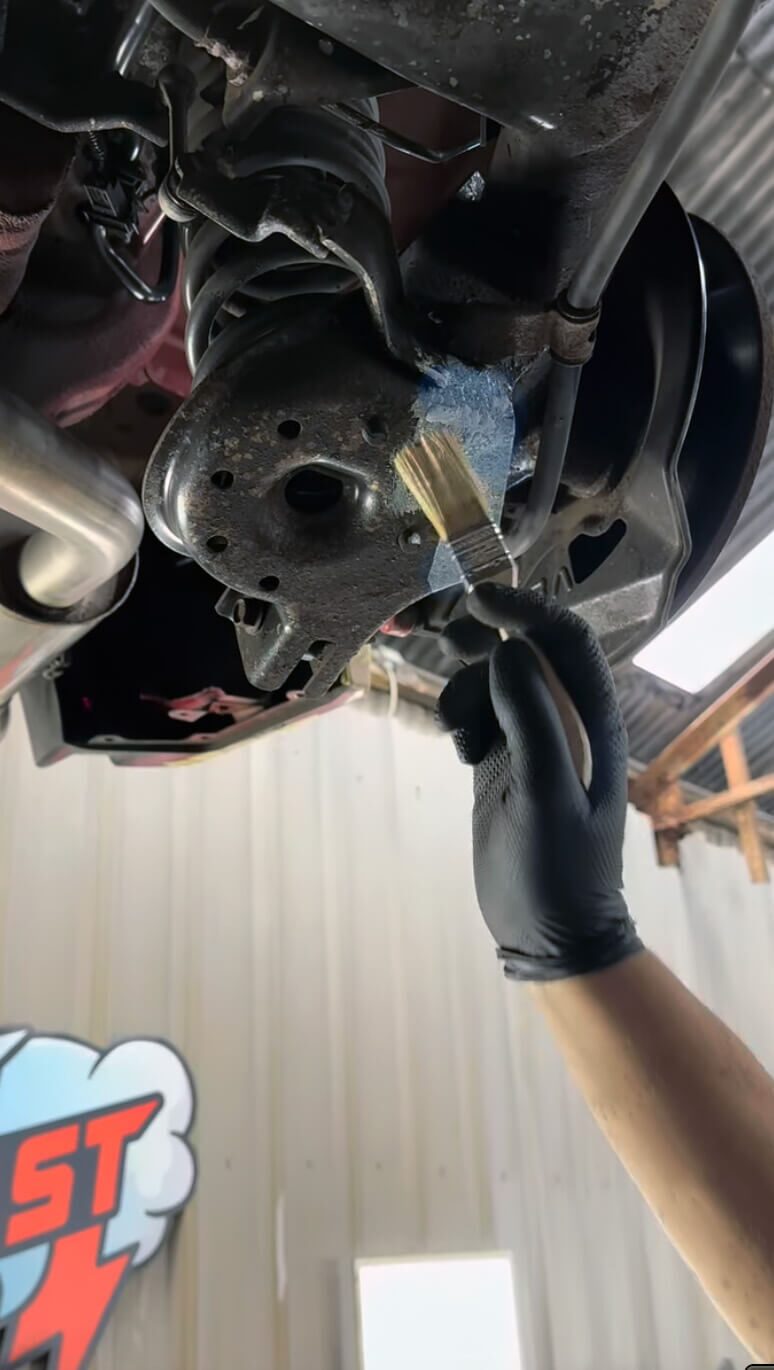
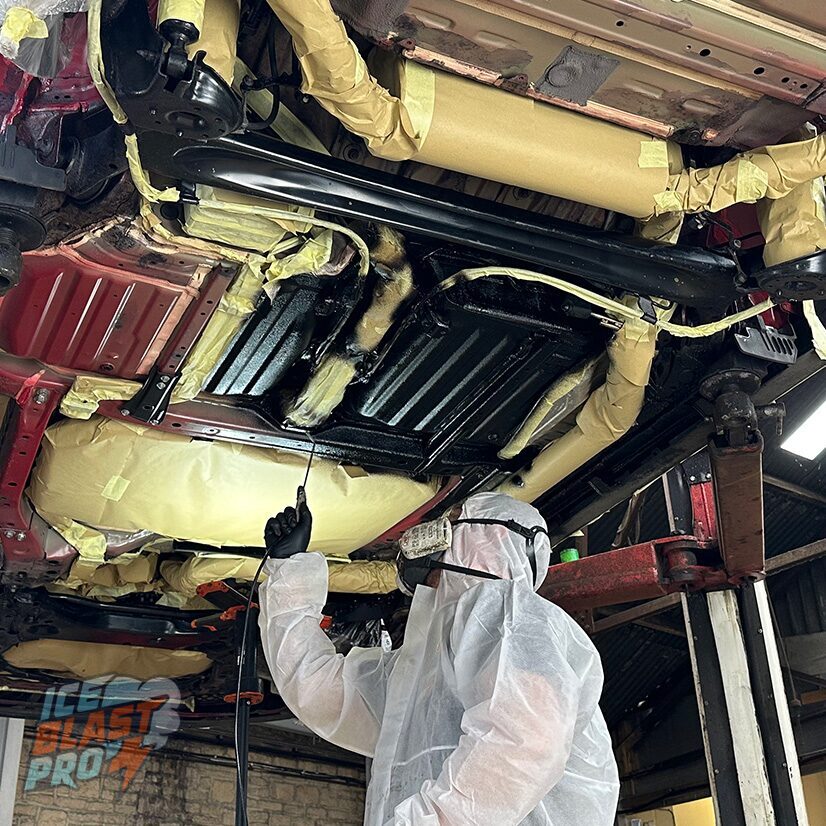
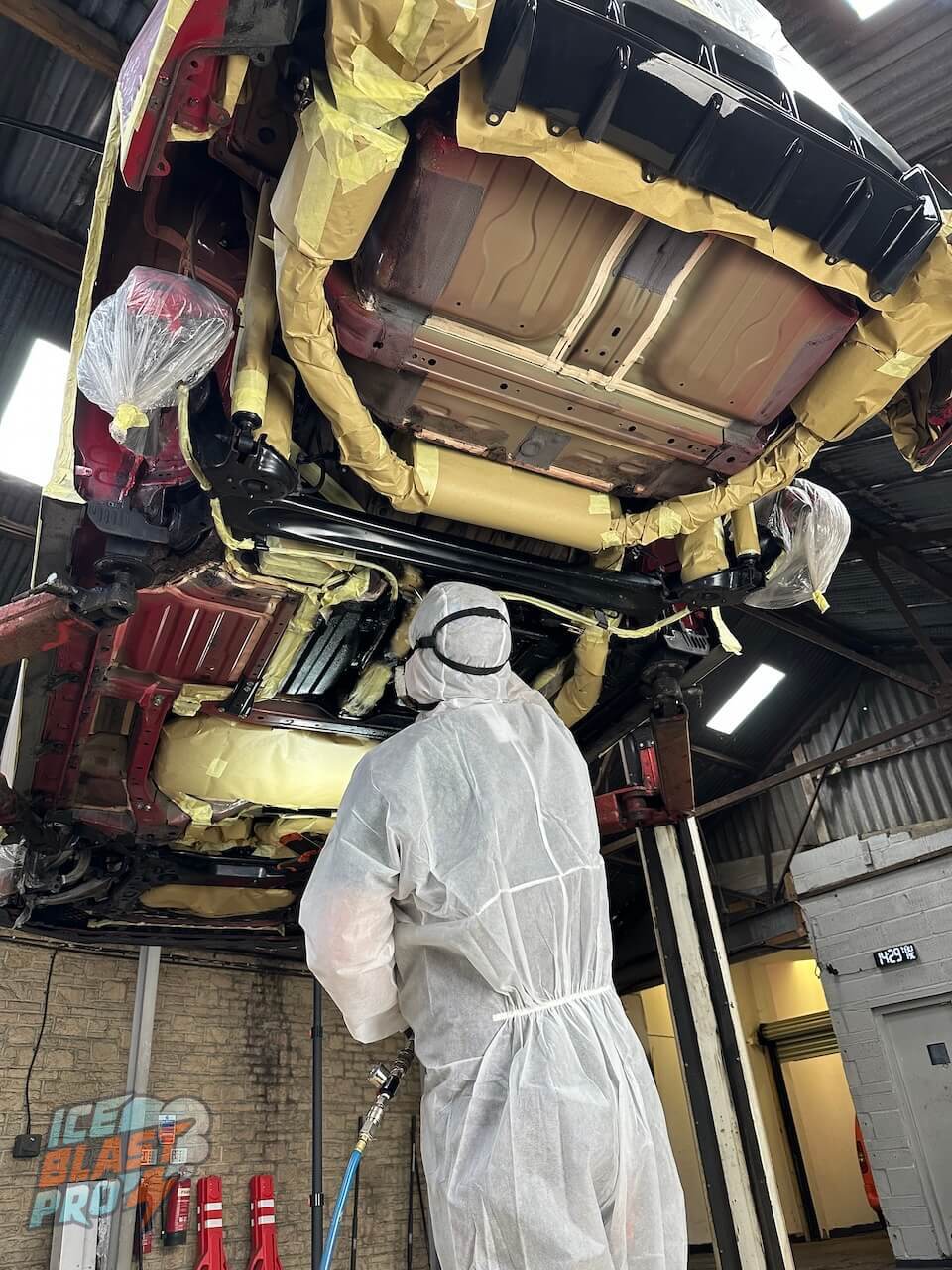
Treatment and protection in action
The same stages on real cars: active corrosion stabilised on cleaned metal first, then a protection system applied over prepared, sound steel.
When laser cleaning is needed
Where rust has pitted into the metal, or sits on delicate seams, edges and fasteners, blast media cannot reach the bottom of the corrosion. Laser cleaning takes rust off at that level with precise, controlled ablation that lifts the corrosion while leaving the sound steel beneath it undisturbed.
We use the two methods together: dry ice for area cleaning, laser for the deep, stubborn corrosion that has to come off before treatment and protection can be trusted.
When does rust need welding?
Sometimes cleaning reveals metal that is simply too far gone – perforation, heavy section loss or corrosion that has compromised a structural area. No treatment or coating can rebuild steel that is no longer there, and we will not pretend otherwise.
In those cases the honest answer is repair or welding before any preservation work continues. We stay in our specialism – dry ice blasting, corrosion stabilisation and long-term protection – and work alongside trusted specialists for fabrication and structural repair, introducing you where it helps.
What rust protection products do we use?
The right rust protection system depends on the vehicle, its condition, how it is used and how original you want the underside to look. We use proven specialist products from ranges including Lanoguard, Dinitrol, Bilt Hamber, Würth and Feynlab, chosen for their different strengths rather than applied as a one-size-fits-all coating.
- Clear protection – ideal where originality matters and the cleaned metal needs to remain visible for future inspection.
- Brown wax-based protection – a durable, maintainable coating with strong coverage and built-in corrosion inhibitors.
- Black protection systems – suited to vehicles that need a tougher, more uniform finish for regular road use.
- Cavity wax – injected into sills, chassis sections, seams and enclosed areas to protect the vehicle from the inside out.
- Premium ceramic-based protection – a higher-end finish used where long-term durability, appearance and resistance are the priority.
Each system has different benefits, appearance, longevity and maintenance requirements. That is why we recommend based on the vehicle, its condition and how it will be used – not simply by brand preference.
We use a varied range of trusted names in rust protection



Upgrade options
Whatever the condition, the protection finish is matched to the car. These are the systems we tailor around your underside once corrosion has been treated – step up the finish or swap what’s included in your programme.
Lanoguard Clear
ComplimentaryA clear, flexible moisture barrier applied as the complimentary protection included with your recommended programme.
Best for: vehicles where a straightforward clear moisture barrier is suitable while keeping the underside visible.
Bilt Hamber Dynax UC Clear
Medium-term clear satin coating with rust inhibitors. Keeps the underside visible.
Best for: performance and collector cars where originality matters.
Cavity wax
Internal cavity protection sprayed into sills and chassis rails – creeping wax that reaches the seams water can find but you can’t.
Best for: owners wanting protection inside the structure, not just the visible underside.
Dinitrol Black
Touch-dry black OEM-style wax with multi-year durability in UK conditions.
Best for: vehicles with patchy or corroded underside paint where a uniform clean finish is preferred.
Premium Clear Ceramic
High-solids glossy ceramic – our most durable clear protection option.
Best for: prestige and collector cars with clean, non-corroded undersides where a long-term clear finish is suitable.
If your car has aftermarket underseal that needs removing before treatment, this is handled as preparation work – we assess how involved it is and confirm it with you during inspection.
How to prevent rust returning
Stabilising and protecting metal is most of the battle; keeping it that way is the rest. Cavity wax in box sections and sills, a protection system matched to how the car is used, and keeping the underside clean through the winter all slow corrosion down before it can take hold again.
The single biggest factor is maintenance. A brief annual inspection tops up sealants in high-wear areas and catches anything early, which is exactly how an underbody preservation programme keeps a treated car sound for the long term.
New to rust and not sure where to start? Read our full guide to car rust treatment and prevention for what causes corrosion, whether rust can be stopped and how professional treatment and protection work.
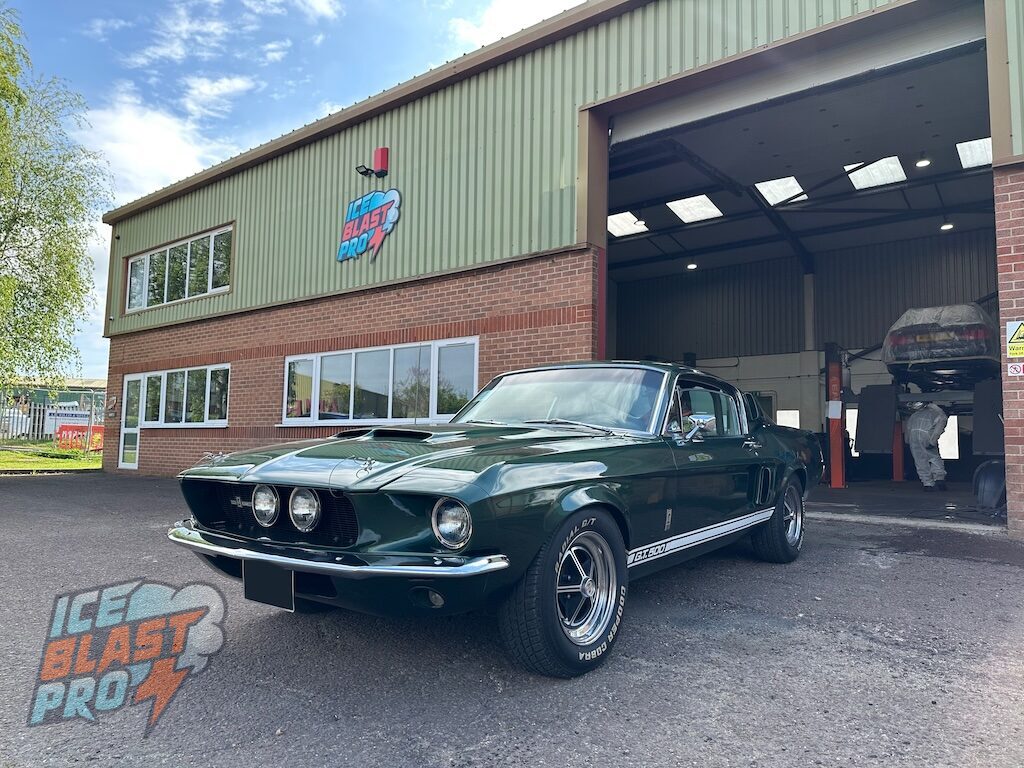
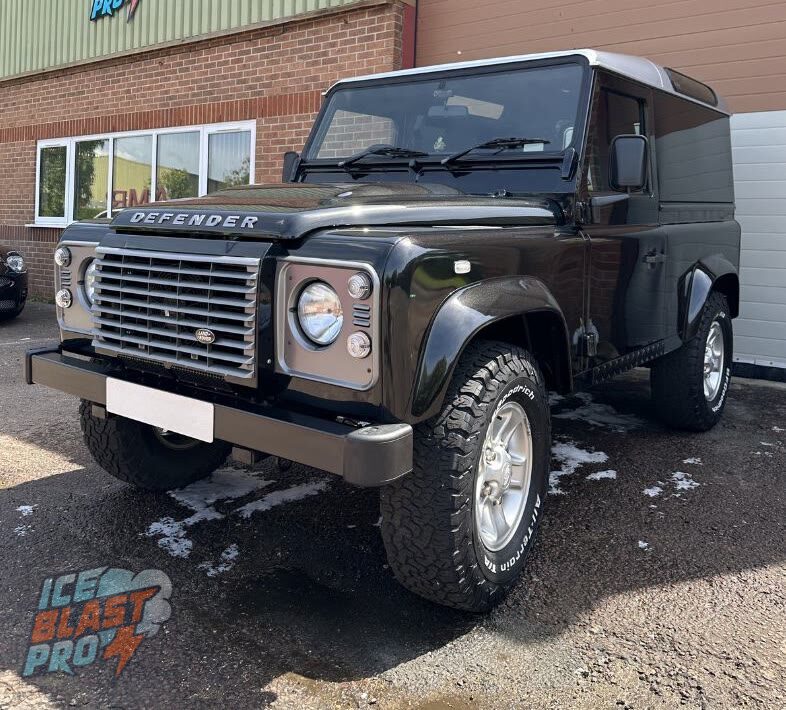
Proof: related case studies
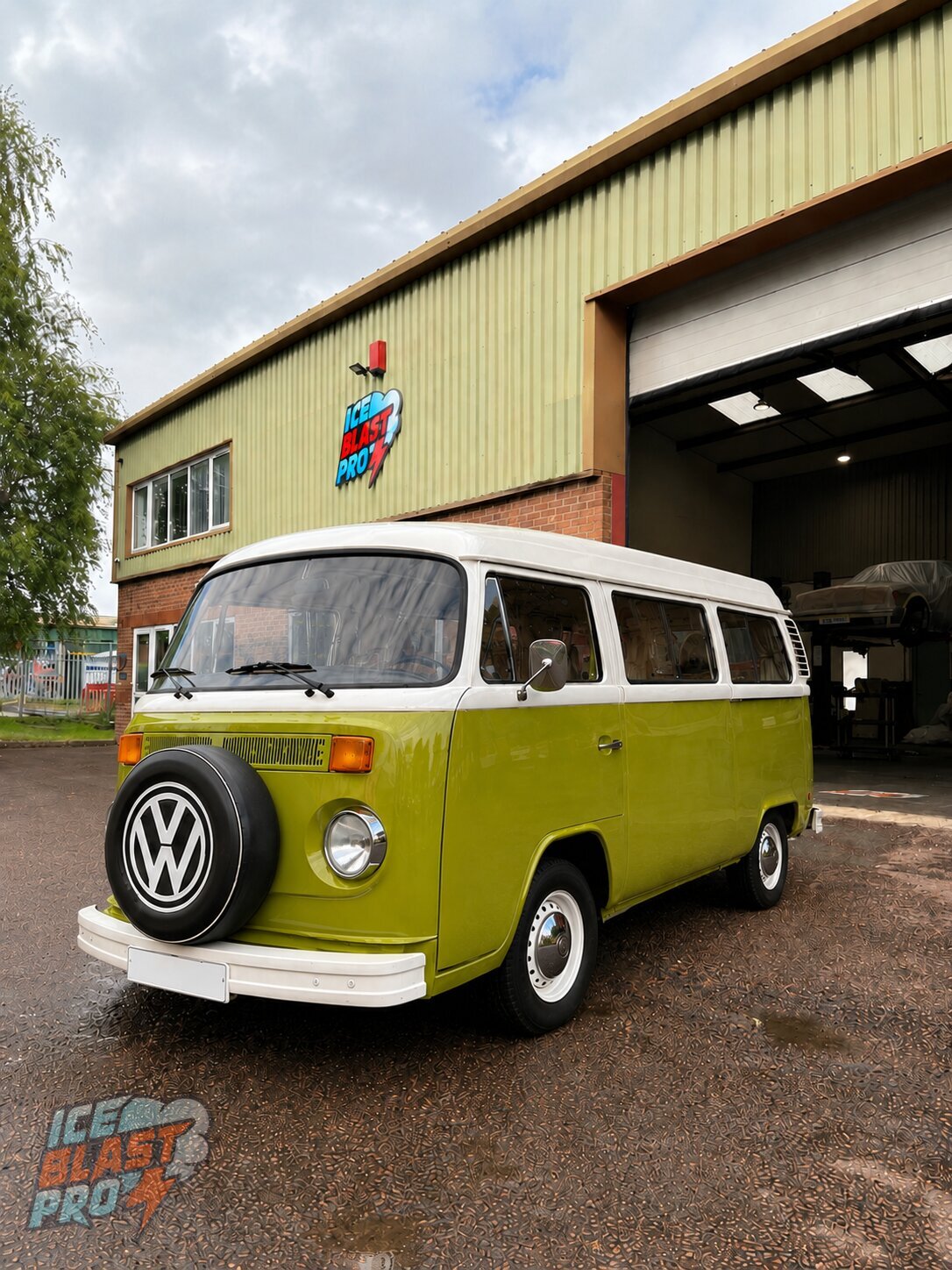
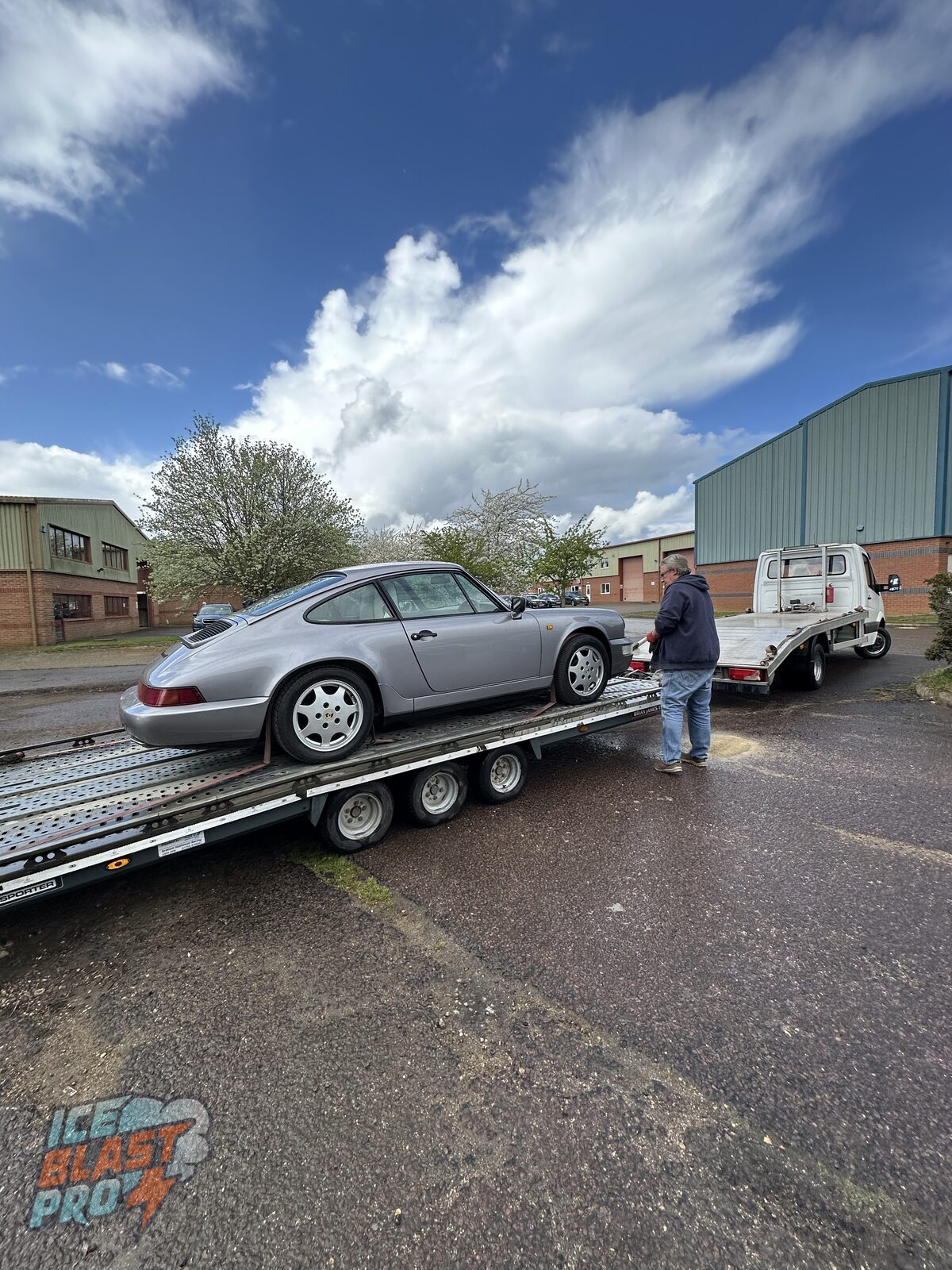
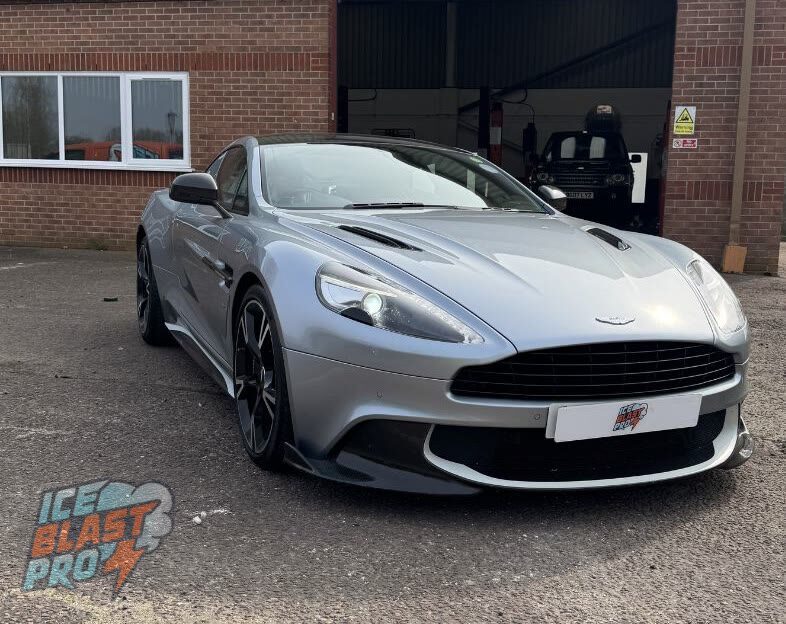
See every case study in full – real dry ice blasting, rust treatment and corrosion protection projects on classic, performance and prestige cars, documented before and after:
Common questions
Can dry ice blasting remove rust?
Dry ice blasting removes loose surface oxidation and contamination, exposing the true condition of the substrate underneath. Active corrosion is then stabilised with the appropriate rust treatment as a separate stage. The combination is what makes the long-term protection systems work; dry ice blasting alone is not enough.
What happens if corrosion holes or weak metal are discovered?
Once the contamination is removed, the true condition of the metalwork becomes visible. We document anything we find, share photographs, and discuss the appropriate next step before going further. We will not seal over a problem to make a job look finished.
Do you offer Lanoguard treatment?
Yes. Lanoguard is one of the protection systems available to us, alongside Dinitrol, Bilt Hamber and premium ceramic options. The right system depends on the vehicle, its use and how often it sees the road. We recommend based on condition rather than brand preference.
Stop corrosion before it spreads
Tell us about your vehicle and what you want to achieve, and we'll recommend the right preservation programme with a quote to match.
Get Instant Quote