Dry Ice Blasting Cost UK: Car & Underbody Pricing Guide
Targeted dry ice work usually starts from around £500–£750, full underbody and arches cleaning with basic protection from around £1,000–£2,000+, and comprehensive preservation can reach £3,000–£5,000+. Those are market-wide figures; our own preservation programmes typically start from around £2,150. The exact figure is condition-led and quoted per vehicle – here is how a quote is built and what drives the price.
Updated
Quick answer: how much does dry ice blasting cost in the UK?
In the UK, professional automotive dry ice blasting usually starts from around £500–£750 for targeted component cleaning, while full underbody and arches cleaning with basic protection commonly starts from around £1,000–£2,000+. More comprehensive preservation work involving engine bay cleaning, underseal removal, rust treatment, cavity wax and long-term protective coatings can reach £3,000–£5,000+, depending on the vehicle, access, condition and level of protection required.
These are guide ranges, not fixed package prices. Dry ice blasting is usually quoted by condition because two cars that look similar from the outside can need very different levels of access, preparation, blasting time, corrosion treatment and protection once they are on the lift.
Typical UK dry ice blasting cost ranges
Use this as a guide to where a project is likely to sit. The final quote depends on the vehicle’s condition, the access required, the level of contamination, whether underseal or corrosion is present, and what protection system is applied afterwards. It also reflects the equipment being used, the experience of the team, the workshop environment and the level of photo, video and treatment documentation included.
| Service type | Typical UK guide range | Best suited to |
|---|---|---|
| Targeted component cleaning | £500–£750 | Small areas, parts, batches or localised cleaning |
| Engine bay dry ice cleaning | From £300 localised; £500–£1,000+ for complete engine block | Engine bays, oil contamination, careful detailing and preservation work |
| Underbody & arches cleaning | £1,000–£2,000+ | Cleaner cars, underside preparation and basic protection |
| Underbody preservation programme | £2,000–£4,000+ | Cleaning, inspection, rust treatment and longer-term protection |
| Signature or high-detail preservation | £4,000–£5,000+ | Prestige, classic, collector and high-value vehicles |
These figures are intended as a guide only and are not a fixed price list. Get a quote based on your car and what you need.
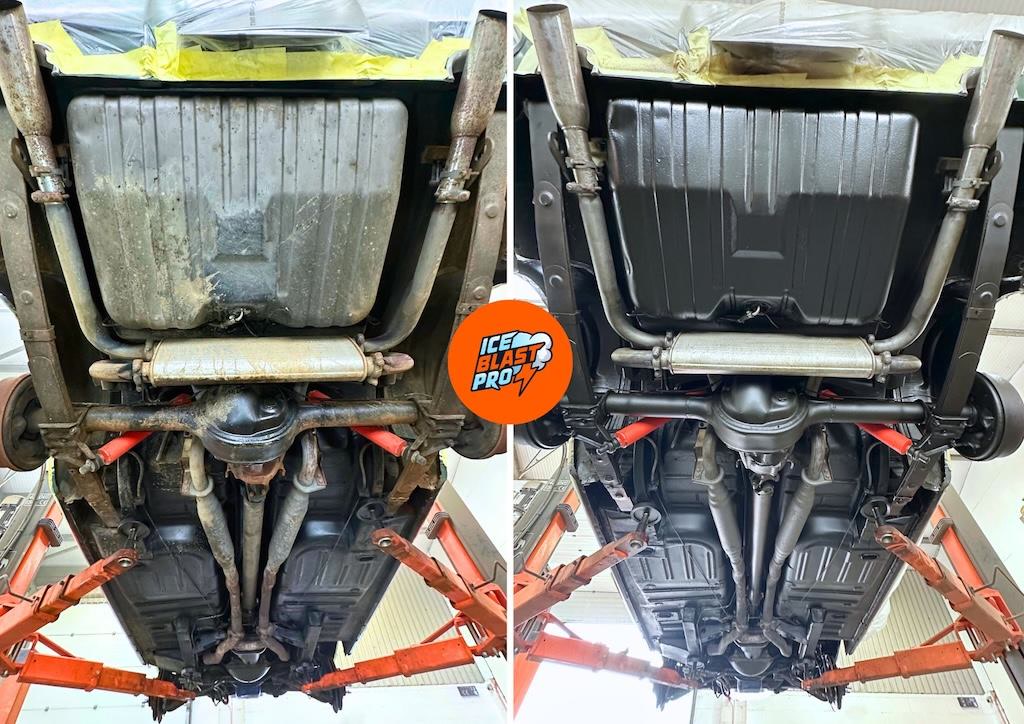
We don’t just clean it. We preserve it.
What we do is a complete underbody preservation programme – not a one-off wash. Every vehicle is cleaned with dry ice, fully inspected and documented, treated to neutralise active corrosion, then protected area-by-area with the finish each component actually needs – all recorded for the car’s history file.
Why dry ice blasting prices vary from car to car
Dry ice blasting prices vary because the cost is based on the vehicle’s condition, access requirements and the level of work needed after cleaning. A small targeted clean on an accessible component is very different from a full underbody and arches preservation project where wheels, arch liners and undertrays may need to be removed before blasting can begin.
Condition is one of the biggest variables. A clean, well-maintained car may only need light contamination removed. A vehicle with oil leaks, road salt, failing underseal or active corrosion will need more careful preparation, more dry ice and additional inspection after blasting. If deeper corrosion is uncovered, the work may also need rust stabilisation, coating, cavity wax or repair before long-term protection is applied.
The main cost factors are:
- Vehicle size and underbody complexity
- Access, and whether wheels, liners or undertrays must come off
- Oil, grease, road salt or general contamination
- Old underseal, wax or failing coatings
- Surface rust or deeper, active corrosion
- Dry ice usage and labour time
- The protection system applied afterwards
- The level of inspection, documentation and finishing required
This is why professional automotive dry ice blasting is usually quoted around the vehicle and its intended outcome, not just an hourly blasting rate. The cost reflects the full process: access, cleaning, inspection, treatment, protection and documentation.
What is usually included in a dry ice blasting quote?
A proper automotive dry ice blasting quote should explain more than the blasting itself. For vehicle work, the price may include:
- Inspection and lifting the vehicle
- Masking sensitive areas and removing wheels, arch liners or undertrays where required
- Dry ice blasting and corrosion assessment
- Photo documentation and advice on what should happen next
If the quote includes preservation, it may also cover rust stabilisation, protective coating, cavity wax, curing time, reassembly and documentation. This is why two dry ice blasting quotes can look very different. One may only cover exposed-area cleaning, while another may include the full process needed to inspect, treat and protect the vehicle properly. Before comparing prices, check what is included: access, preparation, cleaning, treatment, protection and documentation.
Underbody & arches dry ice blasting cost
Underbody and arches dry ice blasting in the UK commonly starts from around £1,000–£2,000+ when combined with basic protection. That is a market-wide range; our own preservation programmes typically start from around £2,150, because an IceBlastPro programme includes component removal where needed, multi-stage rust stabilisation and documented before and after – more than a basic clean. The final cost depends on the vehicle size, access, condition, old coatings, corrosion levels and the type of protection required afterwards.
This is a more involved job than simply pointing a dry ice gun at the underside. Wheels often need to be removed, arch liners, undertrays, heat shields or plastic covers may need to come off, and the exterior is protected before work begins. The wheels, bolts, clips and removed parts also need to be stored, organised and refitted properly – with anti-seize applied where appropriate and broken clips replaced where needed.
A proper service may include the wheel arches, suspension arms, subframes, chassis rails, jacking points, floorpans, brackets, brake line areas, fuel line areas and covered sections where access allows – the areas where road salt, moisture, oil, grease and old underseal often collect. Those details all add time, but they matter if the aim is preservation rather than a quick underside clean. See our full underbody preservation programmes for what each level includes.
Engine bay dry ice cleaning cost
Engine bay dry ice cleaning is usually priced differently from underbody blasting because the work is more delicate and focused. An engine bay contains painted surfaces, plastics, rubber, wiring, labels, hoses, sensors, clips and aged materials that need careful pressure control and masking. As a guide, localised engine bay cleaning may start from around £300+, while fuller engine bay cleaning usually sits around £500–£1,000+, depending on the size of the bay, the level of oil contamination, access, age of the vehicle and how much detailing or protection is required afterwards.
Dry ice is well suited to engine bays because it introduces no water and leaves no secondary blasting media behind, which makes it useful around complex mechanical assemblies. If engine bay cleaning is added to an underbody preservation package, the overall price will increase because it adds time, masking, inspection and finishing work – but for many classic, prestige and collector cars it is often worth including because it creates a more complete preservation record.
Underseal & heavy coating removal cost
Underseal removal is one of the biggest variables in dry ice blasting cost. Some old wax, underseal or protective coating comes away relatively easily. Other coatings are thick, rubberised, bitumen-based, layered or bonded tightly to the underside.
Because of this, underseal removal is difficult to price accurately without photos, video, inspection or test patches. Thick material usually requires more time, more dry ice, more careful pressure control and repeated passes, and in some cases dry ice may be used alongside other methods such as laser cleaning.
Once the underseal is removed, the exposed underside can then be properly inspected. If we find corrosion, trapped moisture, weak metal or previous repairs, the wider preservation project may need extra treatment, repair planning or protection before the vehicle is sealed again. That is why underseal removal should be treated as part of a preservation process, not just a cleaning job.
Rust treatment & protection costs after blasting
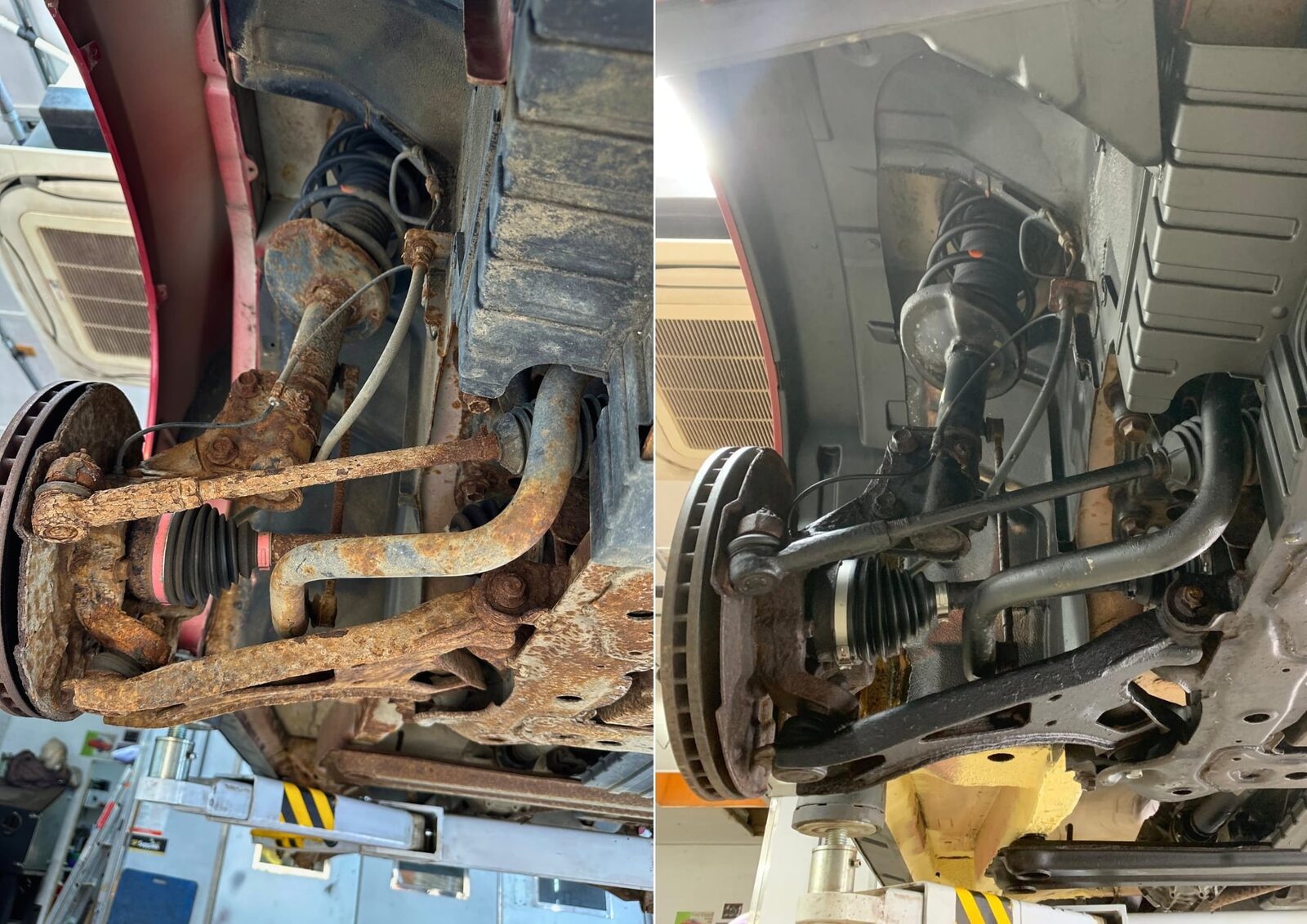
Dry ice blasting can remove contamination, road salt, oil, grease, loose surface corrosion and failing coatings. It is an excellent preparation method for rust treatment, but it does not repair pitted metal, rebuild weak areas or stop deeper corrosion by itself. This is why rust treatment and protection can add to the final cost after blasting.
For long-term corrosion protection, the process should usually follow three stages: preparation, stabilisation and protection. Preparation is the dry ice blasting stage – it removes the contamination so the surface can be inspected. Stabilisation deals with active corrosion that remains in the metal. Protection then helps defend the cleaned and treated areas from moisture, road salt and future deterioration. The final cost depends on how much rust is present, whether it is surface or structural corrosion, how much treatment is required, and what type of protection is selected – clear wax, black underbody wax, cavity wax, ceramic protection and premium coating systems all differ.
Why is dry ice blasting so expensive?
Dry ice blasting is expensive because it requires specialist machinery, high-output compressed air, skilled technicians, safety equipment, dry ice pellets and a controlled working environment. It is not the same as pressure washing or basic steam cleaning. The dry ice itself is also a consumable: once produced and delivered, it begins to sublimate – slowly turning from solid CO₂ into gas – and heavily contaminated areas, old coatings or larger vehicles use more material.
For cars, the cost is not only the blasting time. Professional automotive dry ice blasting often includes inspection, vehicle lifting, masking, removing wheels, arch liners and undertrays, testing areas, cleaning, documenting the work and advising on what needs to happen afterwards. The better question is not simply “why is dry ice blasting so expensive?” It is “what is included in the price?” If the work is being done to protect a classic, performance or prestige vehicle long term, the value is in the full process, not just the cleaning method.
Is dry ice blasting worth it?
Dry ice blasting is worth it when the goal is careful cleaning, accurate inspection and long-term vehicle preservation. If the aim is only to make a dirty area look better quickly, there may be cheaper methods available. For classic, performance, prestige and collector cars, it is valuable because it removes contamination without adding water or leaving abrasive media behind, while helping preserve original finishes and materials when used correctly.
The biggest benefit is visibility: dry ice blasting exposes the true condition of the underside, which allows rust, failing coatings, previous repairs and weak areas to be assessed properly. It is not a complete rust solution on its own – it is the preparation stage – and the long-term value comes when cleaning is followed by the right rust stabilisation, protective coating, cavity wax or preservation system. In simple terms, dry ice blasting is worth it when the objective is preservation, not just appearance.
When is dry ice blasting not worth the cost?
Dry ice blasting is not always the best-value option. The right method depends on the vehicle, its condition and what you want to achieve. It may not be worth the cost when:
- The vehicle only needs a basic cosmetic wash
- You are not planning to keep the vehicle long term
- The underside is already too far gone structurally
- Welding or major repair is needed before any cleaning
- The budget does not allow for proper protection afterwards
- The value of the vehicle does not justify the process
- You only want the cheapest possible clean
In these cases a simpler method may achieve the goal for less. Dry ice blasting earns its cost when the aim is inspection, preparation and long-term preservation – not when a quick surface clean is all that is needed. If you are unsure which applies to your car, it helps to understand what dry ice blasting is, whether it is safe for cars and what it can and cannot do with rust.
Dry ice blasting vs sandblasting or shot blasting cost
Dry ice blasting is usually more expensive than sandblasting or shot blasting on a simple hourly basis, but the methods are not directly comparable. Sandblasting and shot blasting are abrasive – effective for heavy-duty stripping, bare metal restoration or removed components, but they can be too aggressive for certain vehicle areas, pitting metal, thinning delicate surfaces, damaging original finishes and leaving media trapped in seams and cavities.
For the wider picture, see how dry ice blasting compares with traditional cleaning costs.
Dry ice blasting is non-abrasive, dry, and leaves no secondary blasting media behind because the solid CO₂ pellets sublimate on impact. This makes it better suited to automotive preservation, underbody cleaning, engine bays, wheel arches and suspension components. Sandblasting may be cheaper for certain bare metal jobs, especially if parts are removed; for in-situ underbody cleaning and preservation, dry ice blasting is often the safer and more controlled option.
Can you hire a dry ice blaster or do it yourself?
Dry ice blasting equipment can sometimes be hired, but DIY dry ice blasting is rarely straightforward for automotive underbody work. The equipment is only one part of the process – you also need a suitable compressor, the correct nozzles, dry ice supply, ventilation, protective equipment, masking materials and enough experience to control pressure around sensitive vehicle areas.
Car underbodies are complex, containing brake lines, fuel lines, wiring, rubber, plastics, labels, coatings, brackets, seams and aged materials. Poor technique can damage fragile finishes, disturb coatings, miss hidden contamination or expose corrosion without treating it properly afterwards. There is also a practical issue with dry ice supply: it starts sublimating as soon as it is produced, so timing, storage and usage need to be planned carefully. DIY may be possible for small parts, but for full underbody work, engine bay cleaning, underseal removal or preservation, professional equipment and experience usually make a significant difference.
Dry ice safety questions
Dry ice should be handled carefully because it is solid CO₂ at around −79°C. Direct contact with bare skin can cause cold burns, and dry ice should never be handled without suitable gloves or protection. There are three important safety rules:
- Do not touch dry ice with bare hands.
- Do not store it in an airtight container.
- Do not use or store large amounts in an enclosed, unventilated space.
Dry ice turns directly from solid into carbon dioxide gas. In a poorly ventilated area, CO₂ can displace oxygen, which is why ventilation matters during storage, transport and blasting. The fumes are not toxic in the same way as a chemical poison, but too much CO₂ in an enclosed space can create an asphyxiation risk. This is one reason automotive dry ice blasting should be carried out in a controlled environment, with the right ventilation, protective equipment and trained technicians.
What is not usually included in a basic dry ice blasting price?
A basic dry ice blasting price does not usually include the following unless they are specifically included in the quote:
- Welding, replacement parts and major corrosion repairs
- Fabrication and extensive restoration work
- Full underseal removal where heavy coatings are present
- Collection and delivery
- Premium coatings or cavity wax
This matters because dry ice blasting can reveal issues hidden under dirt, wax, underseal or old coatings. If weak metal, corrosion holes, seized fixings or previous repairs are discovered, those items may need to be quoted separately. A clear quote should explain what is included, what is optional and what would be charged separately if discovered during the work.
How to get an accurate dry ice blasting quote
The best way to get an accurate quote is to provide clear information about the vehicle, its condition and what you want to achieve. A make and model is useful, but it is rarely enough on its own. The most helpful details are:
- Vehicle make, model and year
- Underside photos or a short video
- Visible rust areas
- Whether old underseal or wax is present
- Whether the vehicle has undertrays or arch liners
- Whether you want the engine bay included
- How the car is used and stored
Photos and videos help because cost depends heavily on access, contamination, corrosion and coating thickness. A proper quote should explain what is included – access, dry ice blasting, rust assessment, protection, documentation, curing time and any optional upgrades – as well as what is not. If you are unsure what level of work your vehicle needs, send underside photos or a short video first so the correct recommendation can be made before the car is booked in.
FAQs about dry ice blasting cost
How much does dry ice cleaning cost in the UK?
In the UK, automotive dry ice cleaning usually starts from around £500–£750 for targeted component cleaning. Localised engine bay work may start from around £300+, while fuller engine bay dry ice cleaning is usually closer to £500–£1,000+. Underbody and arches dry ice blasting with basic protection commonly starts from around £1,000–£2,000+. Full preservation projects involving rust treatment, underseal removal, cavity wax or long-term coatings can cost £3,000–£5,000+ depending on the vehicle.
How much is an ice blast?
An automotive ice blast can cost anywhere from a few hundred pounds for a small targeted area to several thousand pounds for a full underbody preservation programme. The price depends on what is being cleaned, how much access is needed, how contaminated the vehicle is, and whether rust treatment or protection is required afterwards.
How expensive is dry ice cleaning?
Dry ice cleaning is more expensive than basic pressure washing or steam cleaning because it uses specialist machinery, dry ice pellets, high-output compressed air and trained technicians. For vehicles, the cost also reflects access, masking, careful pressure control, inspection and documentation. It is usually chosen when the goal is safe preparation and preservation, not just a quick surface clean.
Why is dry ice blasting so expensive?
Dry ice blasting is expensive because the process requires industrial equipment, a large compressor, skilled labour, dry ice pellets, safety equipment and controlled working conditions. On vehicles, the price often includes more than blasting. It may also include removing wheels, arch liners and undertrays, masking sensitive areas, inspecting corrosion, applying protection and documenting the work.
How much does underbody ice blasting cost?
Underbody dry ice blasting in the UK commonly starts from around £1,000–£2,000+ when combined with basic protection. Our own preservation programmes typically start from around £2,150, reflecting the fuller scope we include as standard. The cost can increase if the vehicle has heavy road grime, oil contamination, thick underseal, failing wax, active corrosion, difficult access or requires rust stabilisation and long-term protection afterwards.
Is dry ice cleaning worth it?
Dry ice cleaning is worth it when the goal is careful preparation, inspection and preservation. It may not be necessary for a quick cosmetic clean, but it is valuable for classic, performance and prestige cars where original finishes, underbody condition and long-term corrosion protection matter. Its biggest benefit is revealing the true condition of the vehicle without adding moisture or abrasive media.
Is dry ice blasting cost-effective?
Dry ice blasting can be cost-effective for classic, performance and prestige vehicles because it reveals hidden corrosion early, cleans areas that are difficult to reach by hand and prepares surfaces properly for protection – often reducing unnecessary stripping and rework. For a basic cosmetic clean on a low-value vehicle, a simpler method may be more cost-effective. The value comes from what the process reveals and prepares, not just the finished look.
Does dry ice blasting reduce future maintenance costs?
It can help. By removing road salt and contamination, exposing corrosion early and preparing clean surfaces for rust treatment and protection, dry ice blasting can slow future deterioration and make problems easier to catch sooner. It does not replace ongoing inspection, maintenance or future protection top-ups, but as the first stage of a preservation programme it can reduce the risk of larger, more expensive corrosion repairs later.
Is dry ice blasting more expensive than sandblasting?
Dry ice blasting is usually more expensive than sandblasting on a simple hourly basis, but the two methods are used for different outcomes. Sandblasting is abrasive and can be useful for stripped parts or bare metal restoration. Dry ice blasting is non-abrasive, dry and leaves no media behind, making it better suited to in-situ vehicle cleaning and preservation work.
How much does it cost to sandblast a car in the UK?
The cost to sandblast a car in the UK varies depending on whether it is a full shell, individual panels, chassis parts or small components. It can be cheaper than dry ice blasting for some stripped or removed parts, but it is not always suitable for delicate vehicle areas. Sandblasting is abrasive, so it needs to be chosen carefully depending on the material, finish and restoration goal.
How much does shotblasting cost?
Shotblasting costs vary depending on the size of the part, the material, the level of corrosion and whether the item is already removed from the vehicle. It is often used for heavy-duty components, industrial parts or stripped metalwork. For complete vehicle underbodies, engine bays or delicate classic car areas, shotblasting can be too aggressive unless used very selectively.
What are the disadvantages of dry ice blasting?
The main disadvantages of dry ice blasting are cost, equipment requirements, noise, dry ice supply, ventilation requirements and the fact that it does not repair deeper corrosion. It can remove contamination and loose corrosion, but it is not a complete rust solution by itself. For long-term preservation, blasting should be followed by inspection, rust treatment and protection where needed.
What should I send to get an accurate dry ice blasting quote?
To get an accurate quote, send the vehicle make, model and year, underside photos or a short video, details of visible rust, any old underseal or wax, whether the vehicle has undertrays or arch liners, and whether you want the engine bay included. It also helps to explain how the vehicle is used and whether the aim is cleaning, preservation or long-term rust protection.
Final thoughts
Dry ice blasting costs vary because the service itself varies. At the lower end, it may be used for light cleaning or targeted component work. At the higher end, it becomes part of a structured underbody preservation process that includes inspection, access, dry ice blasting, rust stabilisation, protection, curing time and documentation.
If you are looking for the lowest possible price, there are providers who focus purely on blasting. If you are looking for long-term preservation carried out methodically, transparently and with documented standards, the investment reflects that process. If you’d like to discuss your vehicle, send us the make, model, year and underside photos or a short video and we’ll advise whether it needs a targeted dry ice clean, underbody and arches treatment, underseal removal, rust treatment or a full preservation programme.
Written by the IceBlastPro automotive preservation team. Reviewed by the IceBlastPro workshop team, based on practical experience carrying out automotive dry ice blasting, underbody preservation, underseal removal, rust treatment and long-term corrosion protection on classic, performance and prestige vehicles.
Get an accurate quote
Tell us about your vehicle and what you want to achieve, and we'll recommend the right preservation programme with a quote to match.
Get Instant Quote