Underbody Preservation
A condition-led preservation programme for classic, performance and prestige cars. We dry ice clean the underside, assess corrosion, stabilise rust where required, apply suitable long-term protection and document the work for the vehicle’s history file.
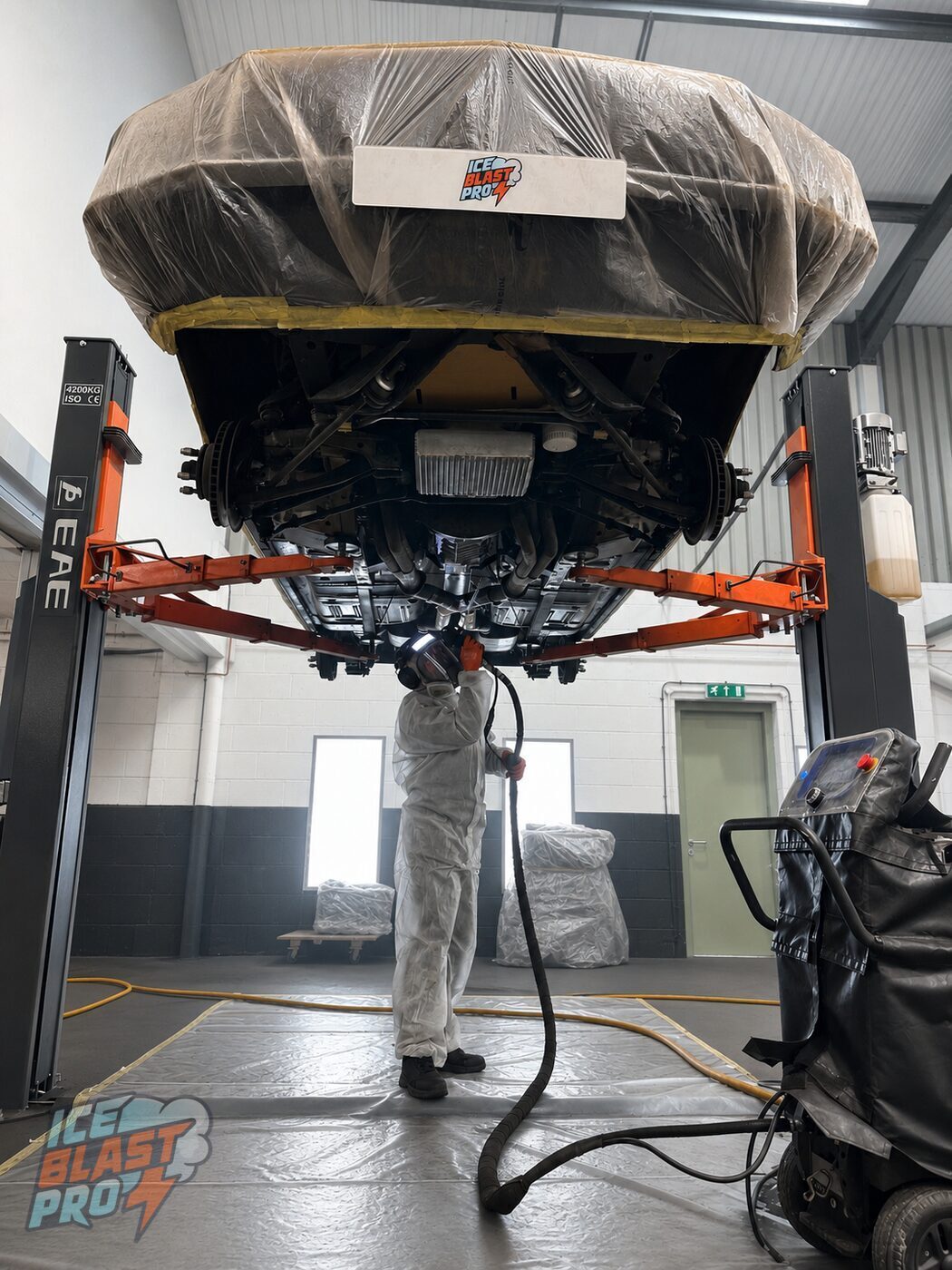
An IceBlastPro underbody preservation programme is for owners who want more than a quick underside clean. We clean, inspect, treat, protect and document the vehicle properly, using dry ice blasting, rust treatment, corrosion protection and long-term underside protection matched to the car.
It is designed for classic, performance, prestige and collector vehicles where the goal is to reveal what is underneath, deal with corrosion properly and protect the vehicle for the future – not simply make the underside look cleaner.
Who an underbody preservation programme is best for
A good fit for
- Owners who want the underside properly cleaned, inspected, treated, protected and documented
- Classic, performance, prestige and collector vehicles being kept long term
- Vehicles with old underseal, surface corrosion, road grime or unknown underside history
- Cars being prepared for storage, sale, winter use or long-term ownership
- Owners who want a clear record of what was found, treated and protected
Less suited to
- A quick cosmetic clean with no treatment or protection afterwards
- Spraying over existing dirt, moisture or corrosion
- Hiding rust to make the underside look finished
- Vehicles needing major structural repair before preservation can begin
- Owners looking for the cheapest clean rather than the right preservation process
Why underbody preservation matters
The underside is where a valued car quietly deteriorates. Road salt, trapped moisture and cracked, decades-old underseal work away at the metal in the places no one looks – chassis rails, floorpans, sills and box sections – long before anything shows on the panels above. By the time corrosion is visible, it is usually well established.
Underbody preservation gets ahead of that. Done properly it protects the structure that holds the car’s value, keeps a sound car sound and gives a serious buyer a documented reason to trust the underside. It is the difference between a car that survives the next winter and one that is steadily eaten from below.
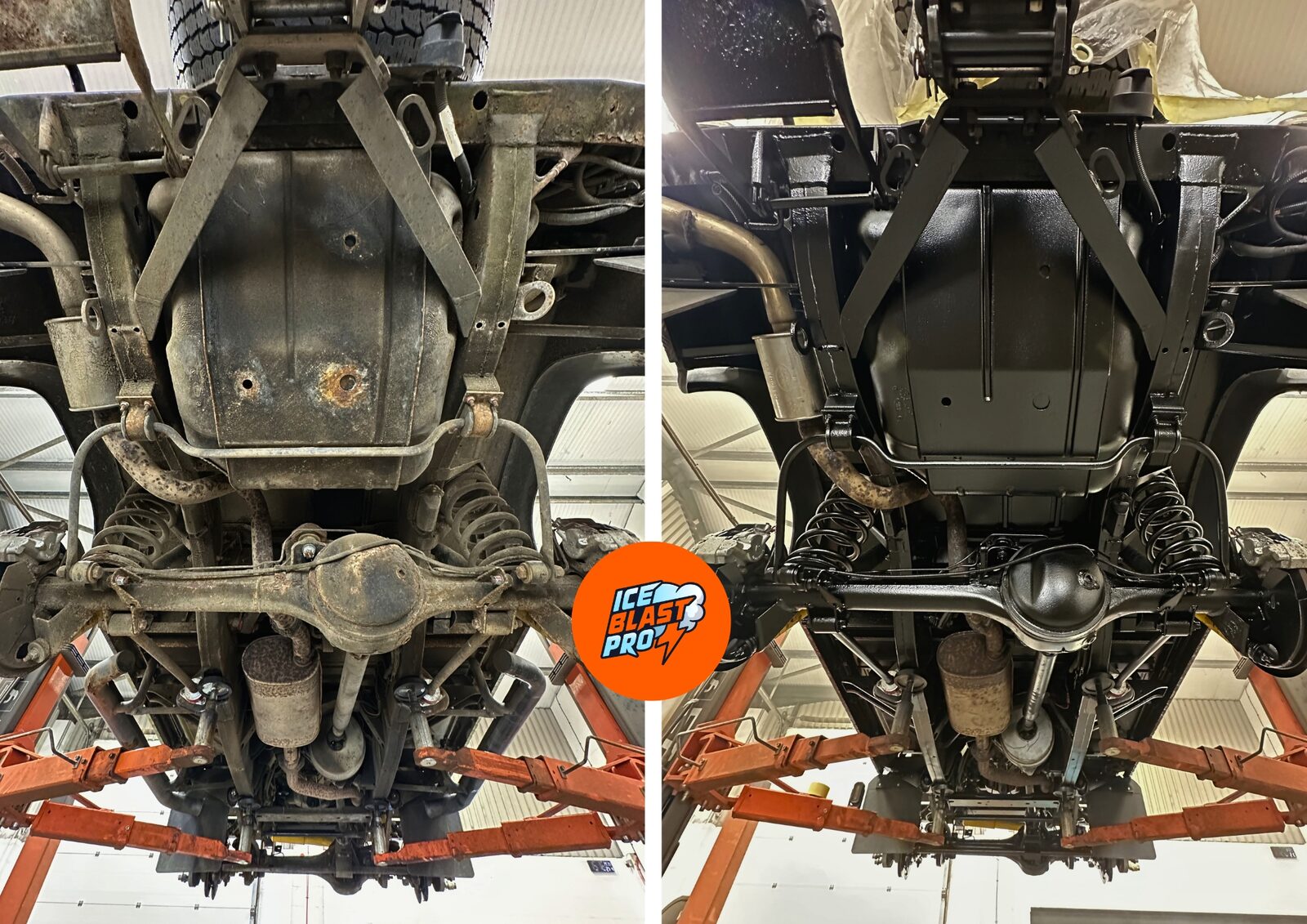
Before and after: a real underbody preservation
Quick clean vs underbody preservation
| Quick clean | Underbody preservation |
|---|---|
| Cosmetic | Condition-led |
| Cleans visible dirt | Reveals hidden corrosion |
| No treatment | Rust stabilisation where required |
| No record | Photo and video documentation |
| Short-term | Long-term protection plan |
| No protection | Tailored rust protection |
THE PRESERVATION PROGRAMME
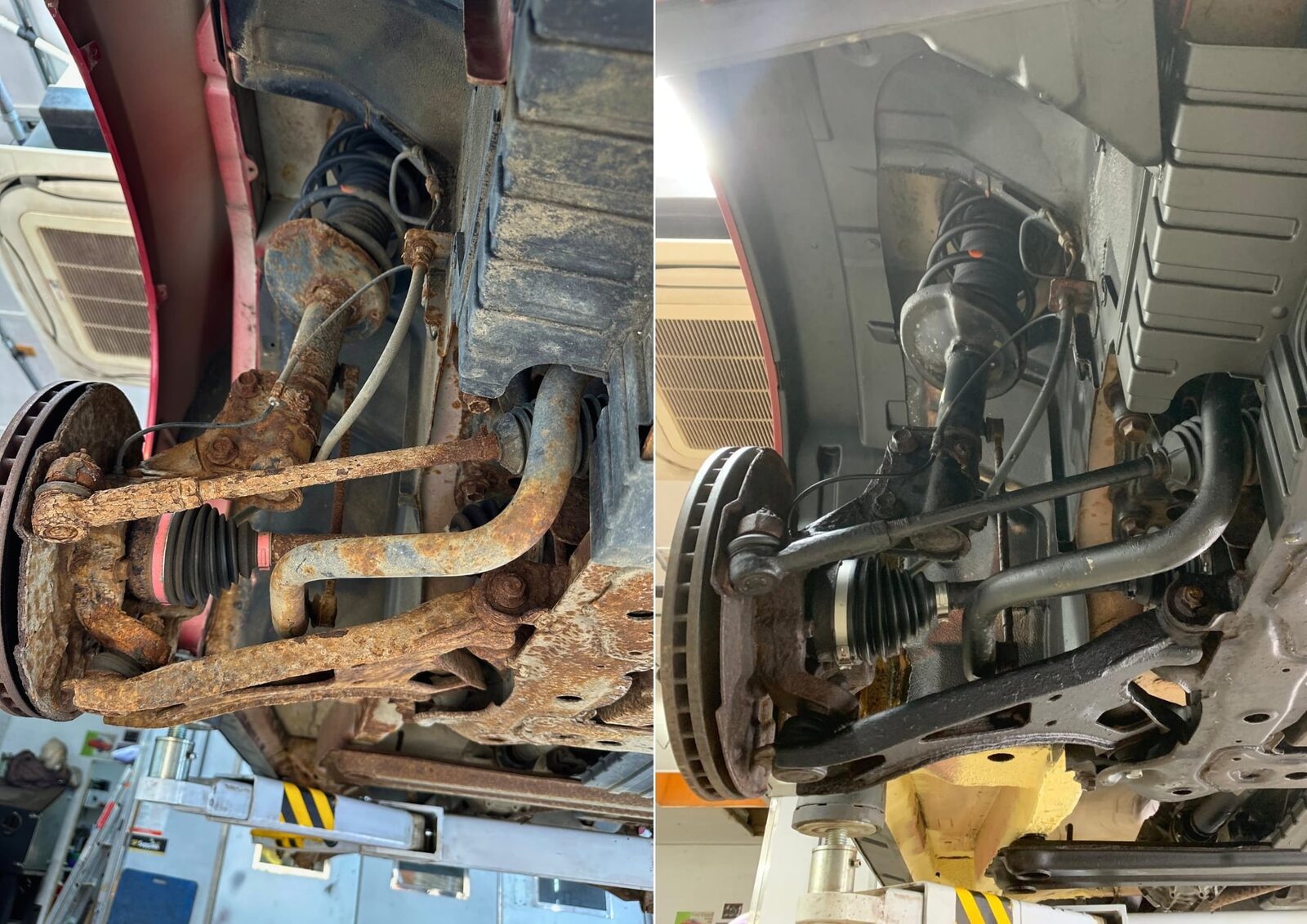
Most underbodies hide corrosion under coatings that look perfectly clean. On classic cars especially, corroded subframes and weakening suspension components are common, and unfortunately most owners will choose to seal over rather than treat.
We’d rather treat it. Sealing over corrosion doesn’t do the car any favours in the long run, and suspension components can be hard to find and replace, so it’s far better to get the work done correctly the first time.
Our programme is built differently. We expose the real condition with dry ice and laser cleaning, and only once we know what’s actually there do we put it right. That might mean welding, rust treatment, stone chip, paint touch-in, or any combination – whatever the car needs to be brought back to the standard it deserves. Then comes protection, matched to the vehicle and to how you intend to use it.
What we inspect before treatment
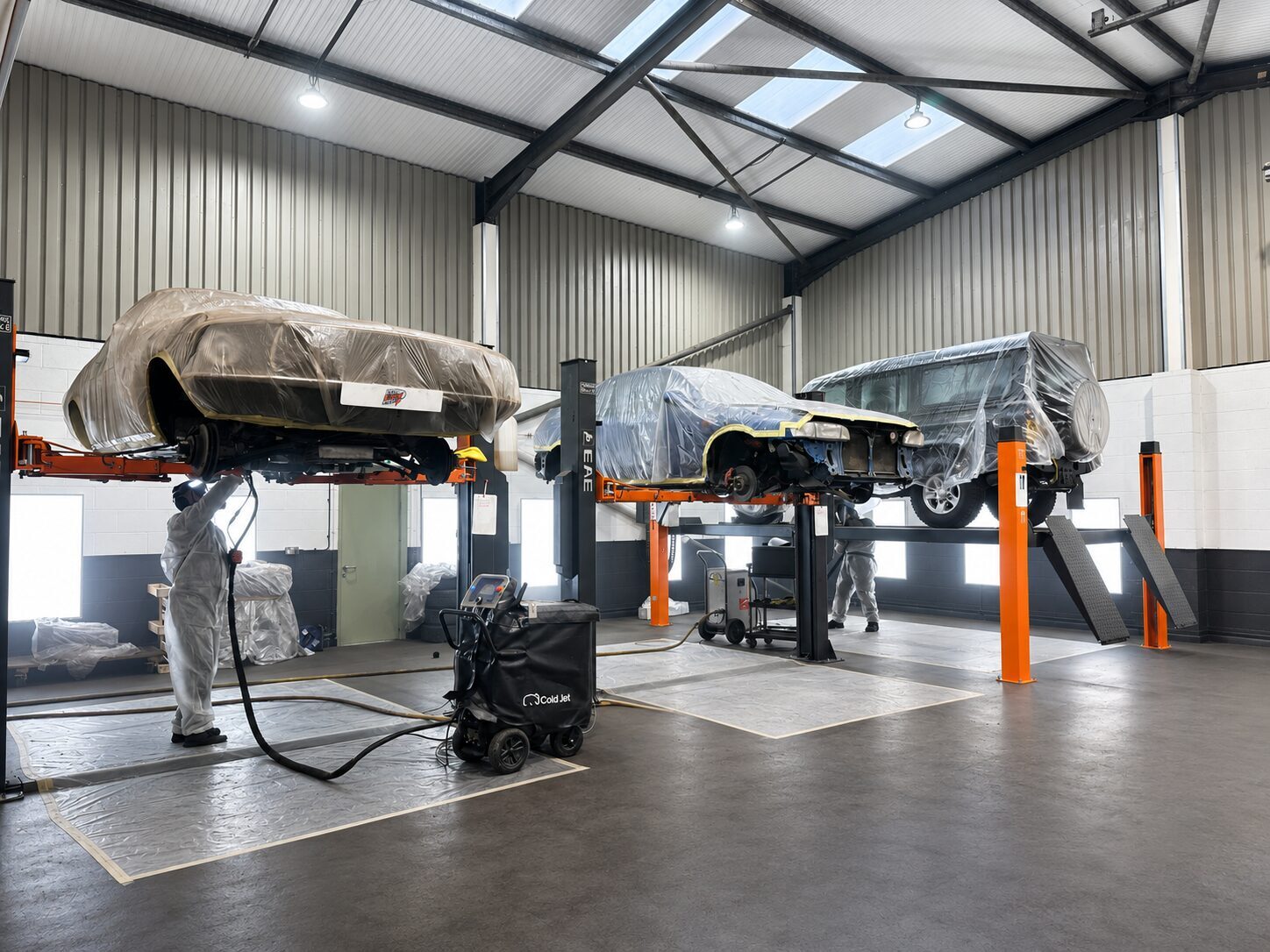
Preservation starts with dry ice blasting to remove degraded underseal and contamination without water or abrasion. Only then can the true condition of the metal be assessed.
- Chassis rails and box sections – for active corrosion, pitting and previous repairs.
- Floorpans, sills and seams – the moisture traps where rust usually begins.
- Suspension, arches and mountings – condition of the metal and hardware around them.
- Hardware, clips and fasteners – anything missing, seized or in need of replacement.
Everything we find is photographed and discussed before further work – we will not seal over a problem to make the job look finished.
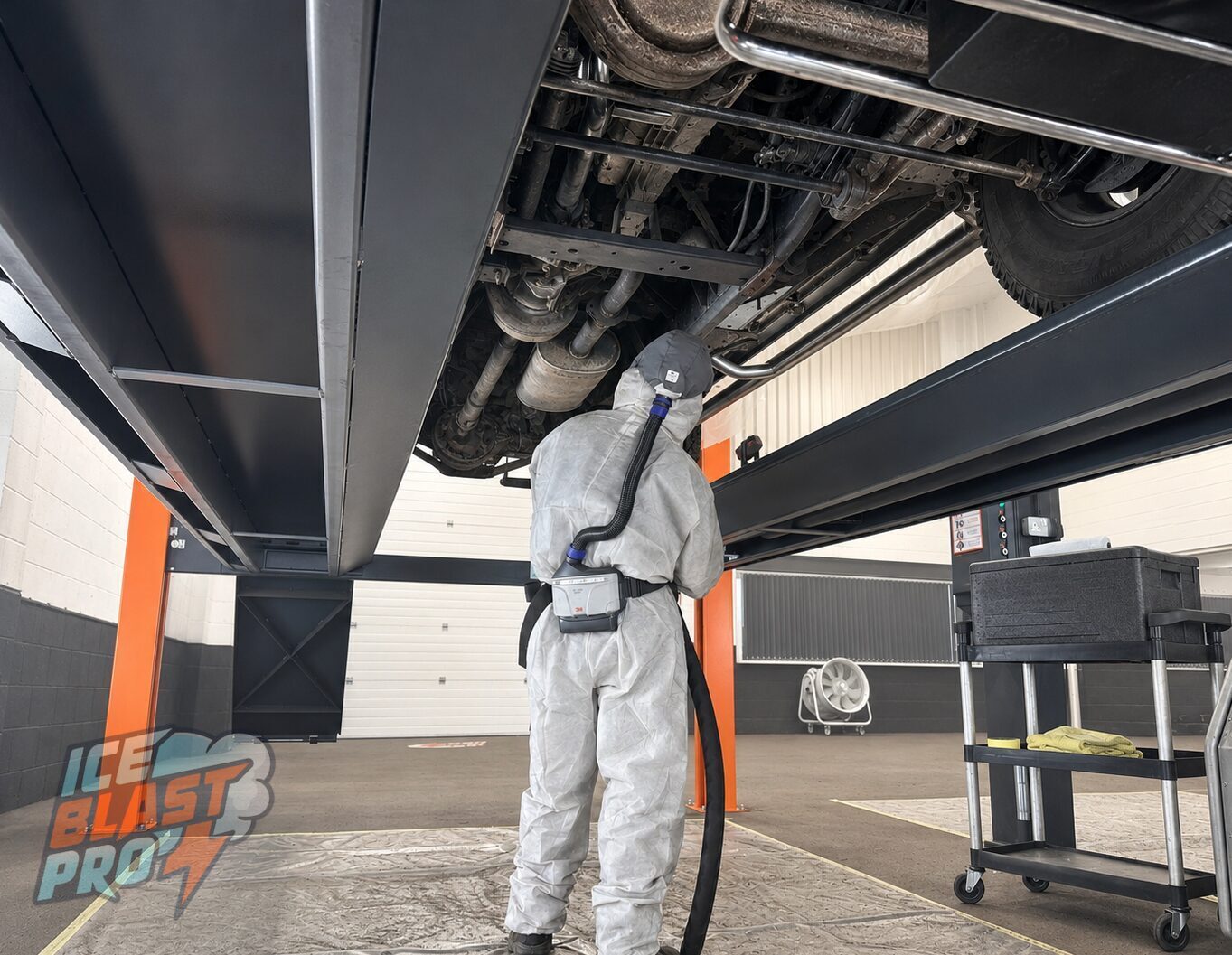
The IceBlastPro preservation process
Clean. Dry ice blasting strips degraded underseal, grime and loose oxidation back to clean, treatable metal – no moisture, no abrasion, no media to remove afterwards.
Assess and treat. The exposed metal is inspected and photographed, active corrosion is stabilised, deep pitting is addressed with laser cleaning where it is needed, and welding is carried out where required.
Protect and document. A protection system matched to the car is applied, cavities are waxed, and the whole job is recorded in photographs and a report for the history file.
Underbody & Arches vs Full Preservation vs Signature
Underbody & Arches
Underbody dry ice blasting with baseline protection.
5-day workshop process- Full underbody dry ice blasting
- Multi-stage rust stabilisation
- Complimentary Lanoguard clear protection
- Vehicle wrapped & protected during work
- Wheels, liners & trays removed
- Before/after photos, videos & report
Full Preservation
Underbody and engine bay, with medium-term protection.
5-day workshop process- Full underbody dry ice blasting
- Full engine bay dry ice blasting
- Multi-stage rust stabilisation
- Bilt Hamber Dynax UC clear protection (upgrades available)
- Cavity wax injection
- Heat-resistant engine bay coating
- Anti-seize on refitted fasteners
- Vehicle wrapped & protected during work
- Full exterior clean
- Before/after photos, videos & report
The Signature
Premium long-term preservation with ceramic detail.
5 to 10 day workshop process- Everything in Full Preservation
- Enhanced multi-stage rust stabilisation
- Premium long-term protection (clear or black)
- Ceramic engine bay coating
- Pro exterior detail + ceramic
- Replacement clips/bolts if required
- Enhanced documentation
Which programme is right depends on the car and how it is used. Underbody & Arches suits a sound car that needs protecting; Full Preservation adds the engine bay and longer-term coatings; the Signature is the full premium specification with the most durable systems and the fullest documentation.
Upgrade options
If you’d like to step up the protection finish, or swap what’s included in your chosen programme, these are the options we tailor around the car.
Lanoguard Clear
ComplimentaryA clear, flexible moisture barrier applied as the complimentary protection included with your recommended programme.
Best for: vehicles where a straightforward clear moisture barrier is suitable while keeping the underside visible.
Bilt Hamber Dynax UC Clear
Medium-term clear satin coating with rust inhibitors. Keeps the underside visible.
Best for: performance and collector cars where originality matters.
Cavity wax
Internal cavity protection sprayed into sills and chassis rails – creeping wax that reaches the seams water can find but you can’t.
Best for: owners wanting protection inside the structure, not just the visible underside.
Dinitrol Black
Touch-dry black OEM-style wax with multi-year durability in UK conditions.
Best for: vehicles with patchy or corroded underside paint where a uniform clean finish is preferred.
Premium Clear Ceramic
High-solids glossy ceramic – our most durable clear protection option.
Best for: prestige and collector cars with clean, non-corroded undersides where a long-term clear finish is suitable.
If your car has aftermarket underseal that needs removing before treatment, this is handled as preparation work – we assess how involved it is and confirm it with you during inspection.
We use a varied range of trusted names in rust protection



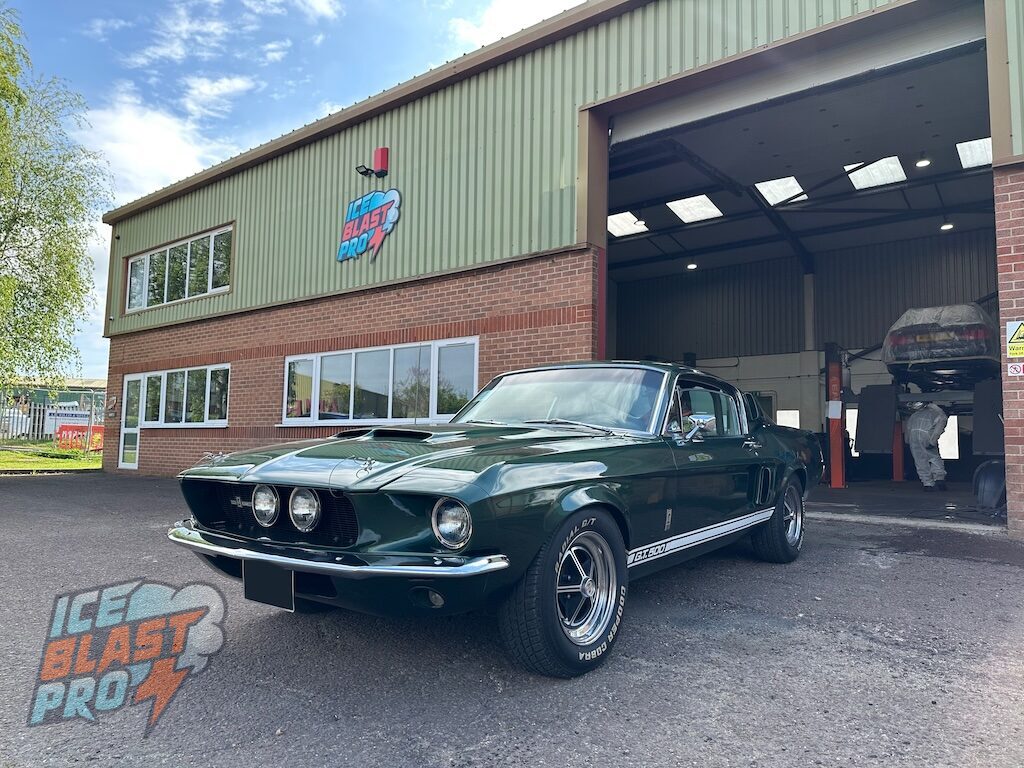
 Preservation Case Study
Ford Mustang
Shelby GT500
See what we didRust treatment before protection
Protection only works on sound, prepared metal. If there is active corrosion when the underside is cleaned, it is stabilised and neutralised as a separate stage before any coating goes on – sealing over rust simply traps it and lets it spread out of sight.
Where corrosion has pitted into the steel or sits on delicate seams and fasteners, treatment is part of a wider plan covered in full on our rust treatment and corrosion protection page, supported where needed by laser cleaning.
Clear protection, black protection and cavity wax
- Clear protection – keeps the cleaned metal visible, ideal where originality and the ability to inspect the underside matter, and easy to maintain over time.
- Black protection – a tougher, more durable finish for cars used harder or through wet winters, where appearance under the car is less of a priority than coverage.
- Cavity wax injection – creeping wax fed into box sections, sills and cavities to protect the closed areas where rust starts but cleaning and coatings cannot reach.
We recommend the system based on the vehicle and how it is used rather than brand preference. Full details of the specific products are on the rust treatment page.
How long underbody preservation takes
Most projects are with us for around a week, including inspection, blasting, rust treatment, curing time, protection application, reassembly and documentation. Signature Programme projects can take up to two weeks to allow for the full premium specification and full curing windows. We agree timings before booking so you know exactly when to drop the car off and collect it.
How long protection lasts
Once an underside is properly cleaned and protected, the protection system does the work. How long it lasts depends on the system chosen: the clear Bilt Hamber coating typically lasts around twenty-four months, while Dinitrol and premium ceramic systems can last up to seven years, extending to ten years with annual maintenance. The annual preservation inspection keeps the protection performing.
Annual inspection and maintenance
Preservation is not a one-off. A brief annual inspection lets us top up sealants in high-wear areas, check the cavities and confirm the protection is doing its job before any problem can take hold. These annual checks are what keep the protection sound – and full reblasting is rarely needed unless a car has been used through several wet winters without maintenance.
Underbody preservation across the UK
Customers travel to our Oxfordshire workshop from the Cotswolds, London and across the UK for specialist underbody preservation.
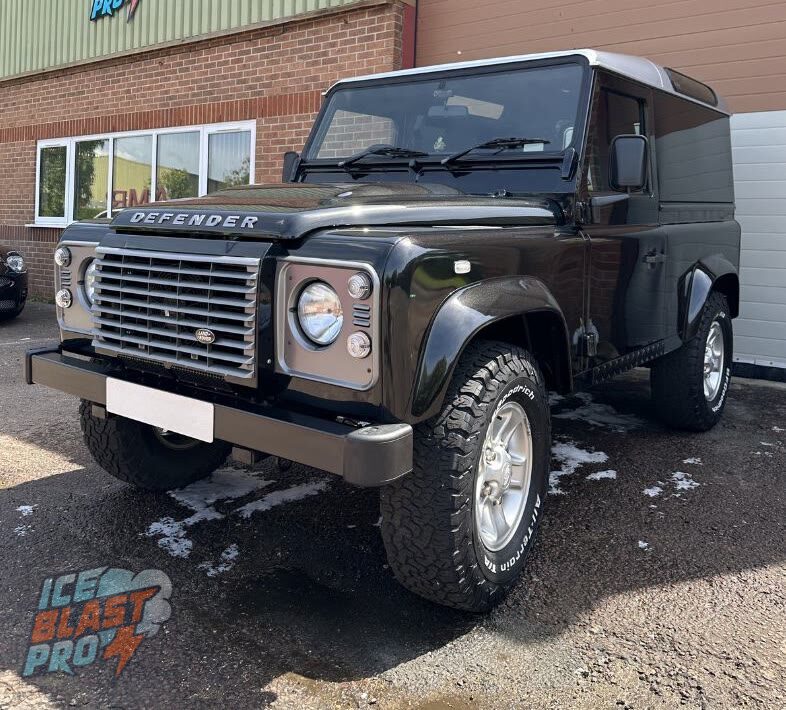
Proof: related case studies
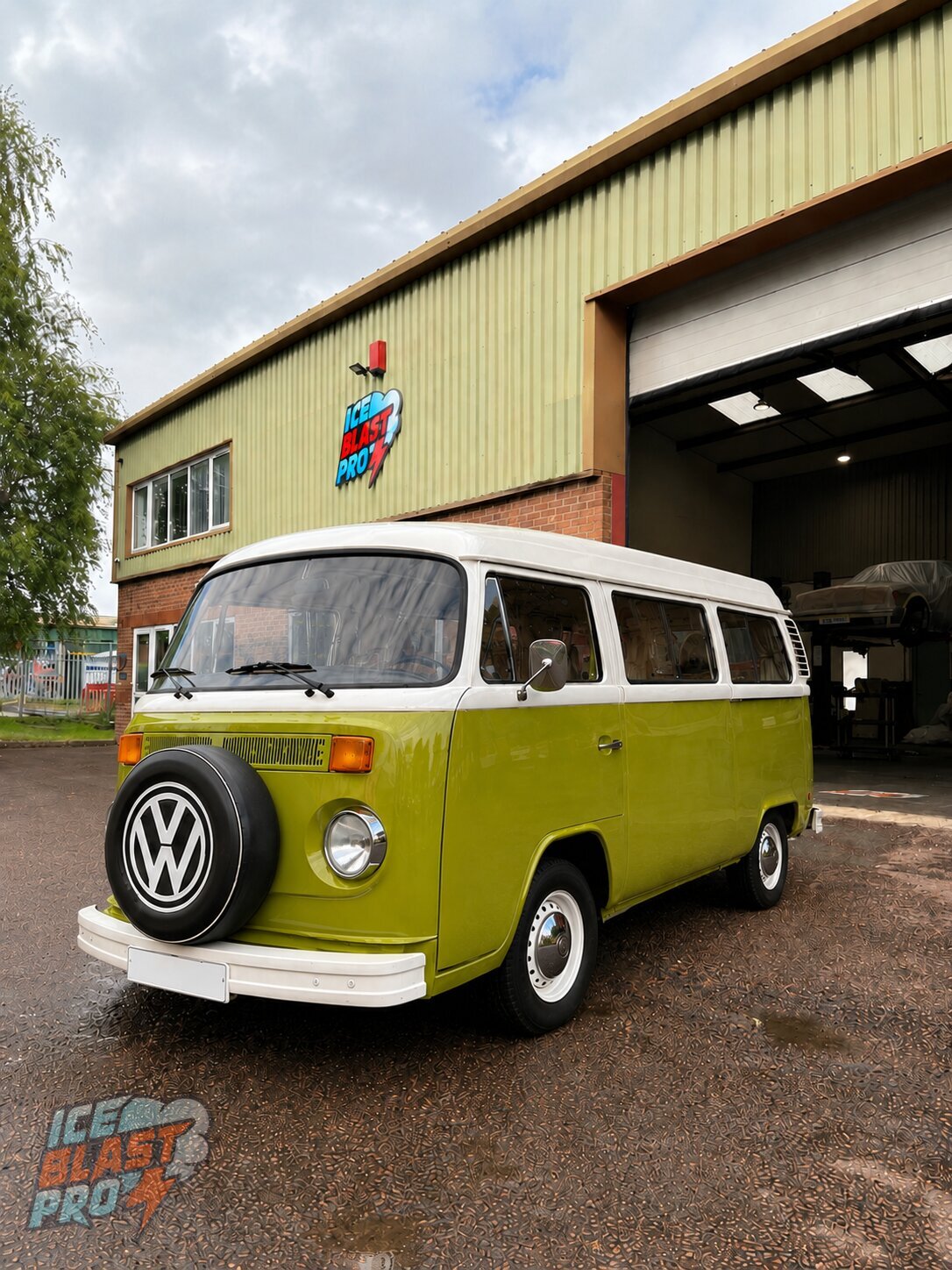
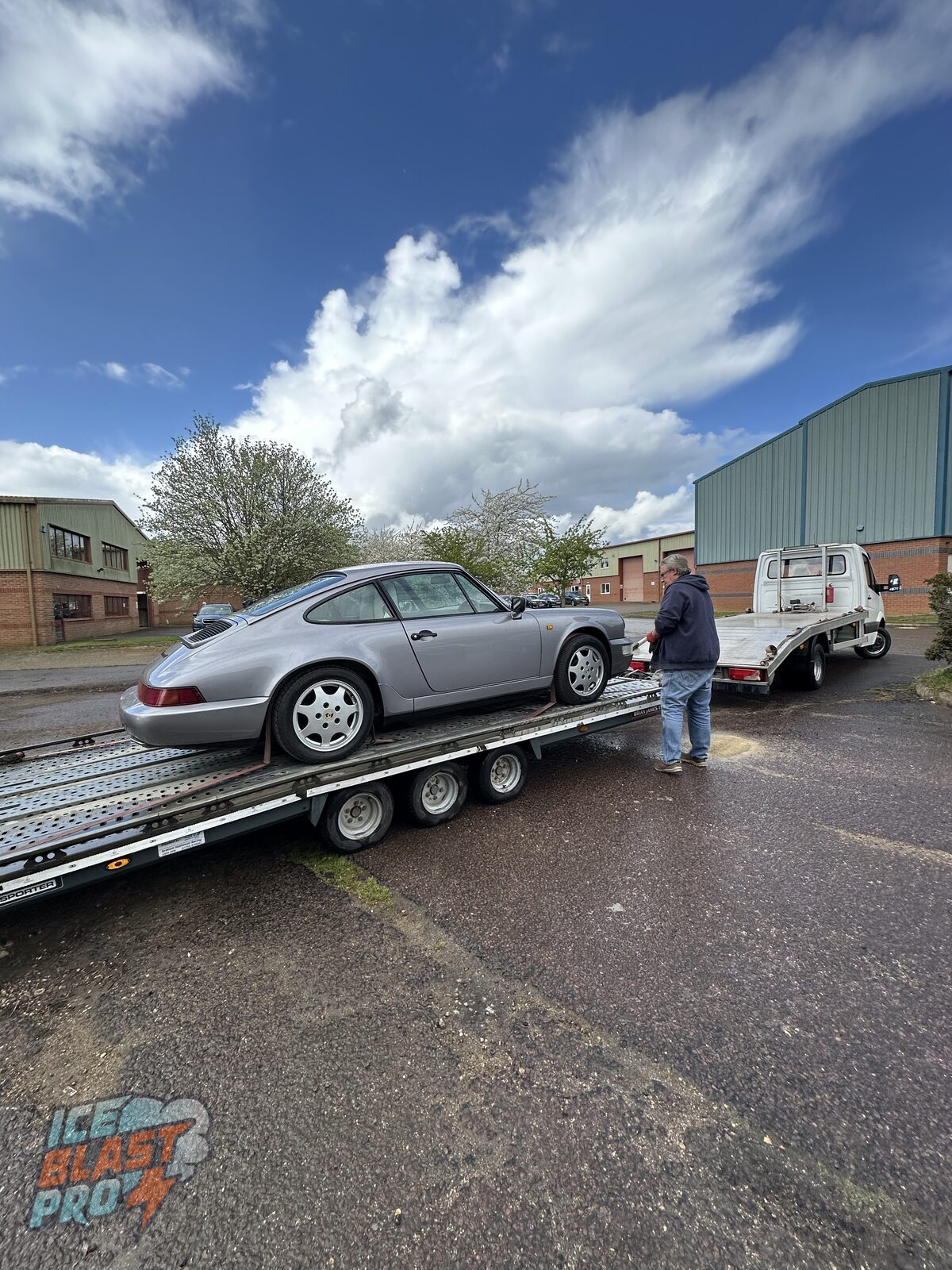
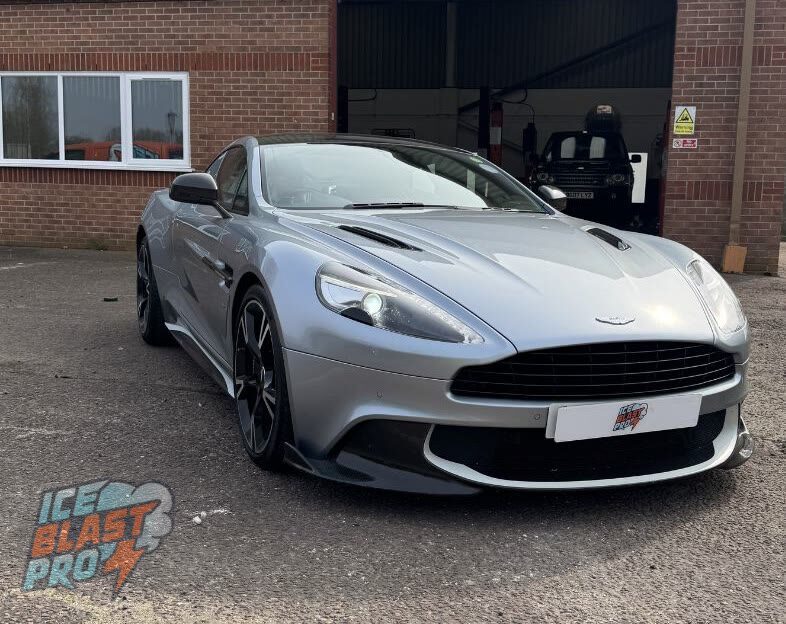
See full preservation programmes – clean, treat, protect and document – carried out on real cars:
Common questions
How long does dry ice blasting take, and will you need to keep my car?
Most projects are with us for around a week, including inspection, blasting, rust treatment, curing time, protection application, reassembly and documentation. Signature Programme projects can take up to two weeks to allow for the full premium specification and full curing windows. We agree timings before booking so you know exactly when to drop the car off and collect it.
How often should dry ice blasting be carried out?
Once an underbody has been properly cleaned and protected, the protection system does the work. Annual inspection is recommended to top up sealants in high-wear areas. Full reblasting is rarely needed unless the car has been used through several wet winters without maintenance.
Can dry ice blasting improve resale value?
A documented preservation history makes a real difference to a serious buyer. Photographs, treatment records and a clean, protected underbody all support the asking price and shorten the conversation when the car changes hands.
Protect your car for the long term
Tell us about your vehicle and what you want to achieve, and we'll recommend the right preservation programme with a quote to match.
Get Instant Quote