Laser Cleaning for Pitted Rust and Corrosion
Pulsed fibre laser cleaning is used where dry ice blasting cannot reach deeply enough: pitted corrosion, seams, edges, fasteners and localised areas that need precise rust removal before treatment and protection.
Laser cleaning is a targeted automotive cleaning method used for oxidation, bonded corrosion, pitted rust, seams, fasteners and stubborn surface marks where precision matters. It is not a replacement for dry ice blasting across a whole underside; it is used where controlled surface preparation is required before treatment and protection.
What laser cleaning is best for – and what it is not
Best for
- Deep, pitted corrosion blasting cannot reach the bottom of
- Seams, edges, folds and factory spot-welds
- Seized fasteners, bolt heads, captive nuts and threads
- Oxidation on alloy casings, castings and components
- Precise, localised removal where surrounding metal must stay untouched
Not suitable for
- Cleaning a whole underbody quickly (dry ice is the right tool)
- Removing sound paint or healthy factory finishes
- Replacing metal lost to perforation or section loss
- Structural repair or welding
- A cure-all used in place of the right cleaning method
When laser cleaning is better than dry ice blasting
Dry ice blasting is the right tool for cleaning a whole underbody or engine bay back to treatable metal – fast, non-abrasive and moisture-free across large areas. Laser cleaning is the opposite kind of tool: precise, localised and able to reach into corrosion that blast media simply passes over.
So the choice is about the job, not which is better. When the goal is removing deep, pitted rust from a specific area, lifting corrosion off a delicate seam, or taking a coating off without touching the metal underneath, the laser does what dry ice cannot – and we use the two together rather than choosing one.
Laser cleaning for pitted rust
When rust has pitted into the steel, the corrosion sits below the surface where blast media cannot reach the bottom of it. A pulsed fibre laser is absorbed by the rust and reflected by sound metal, so each pulse ablates a microscopic layer of corrosion and draws it away through extraction – without abrasion and without heating the steel enough to damage it.
For a car owner the outcome is concrete: pitted areas on chassis rails, mounting points or brackets are taken back to clean, sound metal that can actually be stabilised and protected, instead of being coated over while the pitting keeps working underneath.
Laser cleaning oxidation on alloy casings
Not all laser work is about steel. On alloy casings, castings and cast components, oxidation and bonded surface corrosion can be lifted away without the abrasives or chemicals that would pit, stain or distort the metal. Each pulse removes the oxide layer and surface contamination while leaving the alloy beneath it untouched.
That makes it well suited to engine and casing components where both appearance and material integrity matter – cleaning oxidation back to sound alloy ready for inspection, treatment or protection, rather than masking it under a coating.
Laser cleaning around weld seams, edges and fasteners
Weld seams, panel edges and folds are exactly where rust gathers and where aggressive cleaning does the most harm. The laser is controlled to the millimetre, so corrosion can be lifted off a seam or edge without distorting thin metal or blasting away the detail around it. The same control lifts corrosion from bolt heads, captive nuts and threads, so seized fasteners can often be freed and reused rather than drilled out.
On a classic or prestige car that means original seams, factory spot-welds and delicate edges can be cleaned and prepared for treatment without losing the character – or the structural detail – that makes the underside worth preserving.
Laser cleaning before rust treatment
Rust treatment and protection only work on sound, prepared metal. Where corrosion is deep or sits somewhere blasting cannot fully clean, laser cleaning prepares that surface first – removing the rust right down to clean steel so the stabiliser and coating bond properly.
It feeds straight into the wider rust treatment and corrosion protection process: clean the area, take pitted and seam corrosion off with the laser, then stabilise and protect the prepared metal.
What laser cleaning cannot fix
Laser cleaning removes corrosion; it does not replace metal. Where rust has perforated a panel or eaten away a structural section, there is nothing sound left for the laser to clean back to – that is a case for repair or welding, not ablation. We will always say so rather than tidy the edges of a hole and coat over it.
It is also a precision, localised tool, not a fast way to clean a whole underbody – that is what dry ice blasting is for. Used in the right place it is exceptional; used as a cure-all it is the wrong tool.
How laser cleaning fits into underbody preservation
Laser cleaning is rarely a standalone job – it is one stage in a complete underbody preservation programme. We clean the area with dry ice blasting, use the laser on the deep, pitted and seam corrosion that has to come off, then move into treatment and protection on properly prepared metal.
The result is an underside that has been cleaned, corrected and protected to a standard you can see – and that we document for the car’s history file.
Proof: related case studies
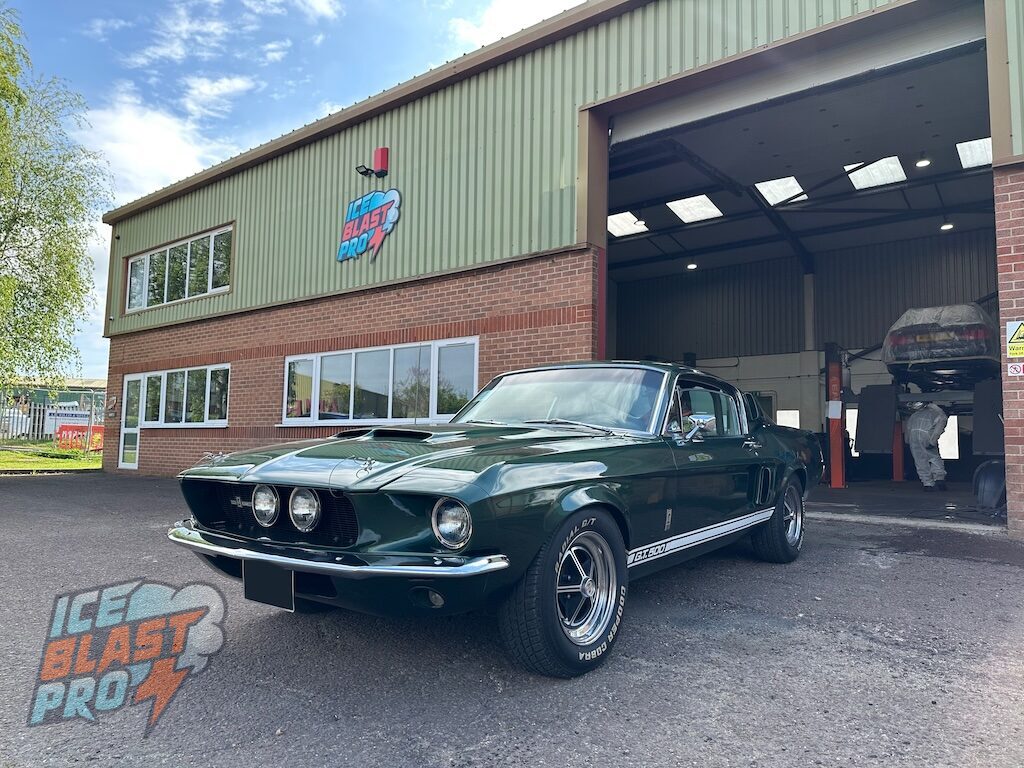
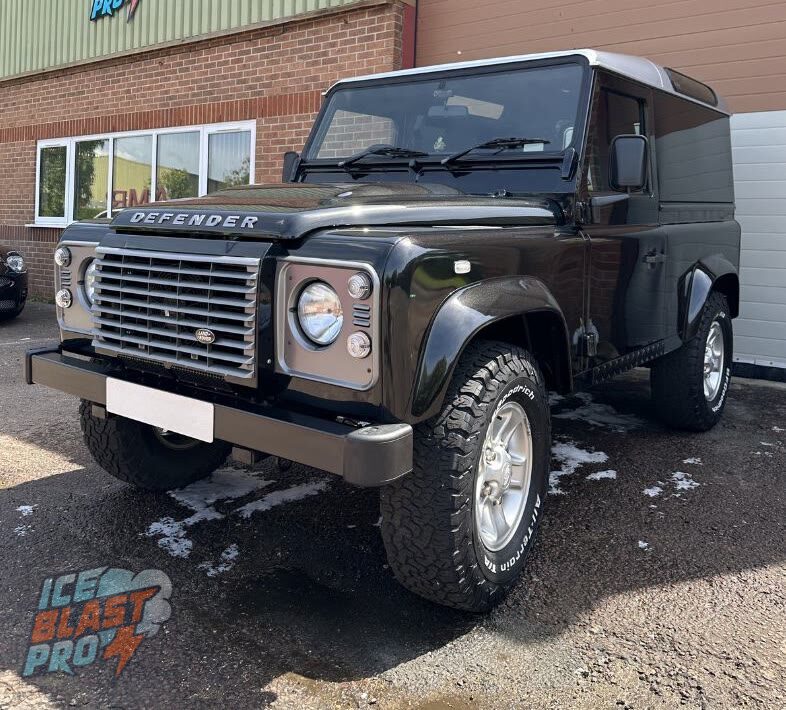
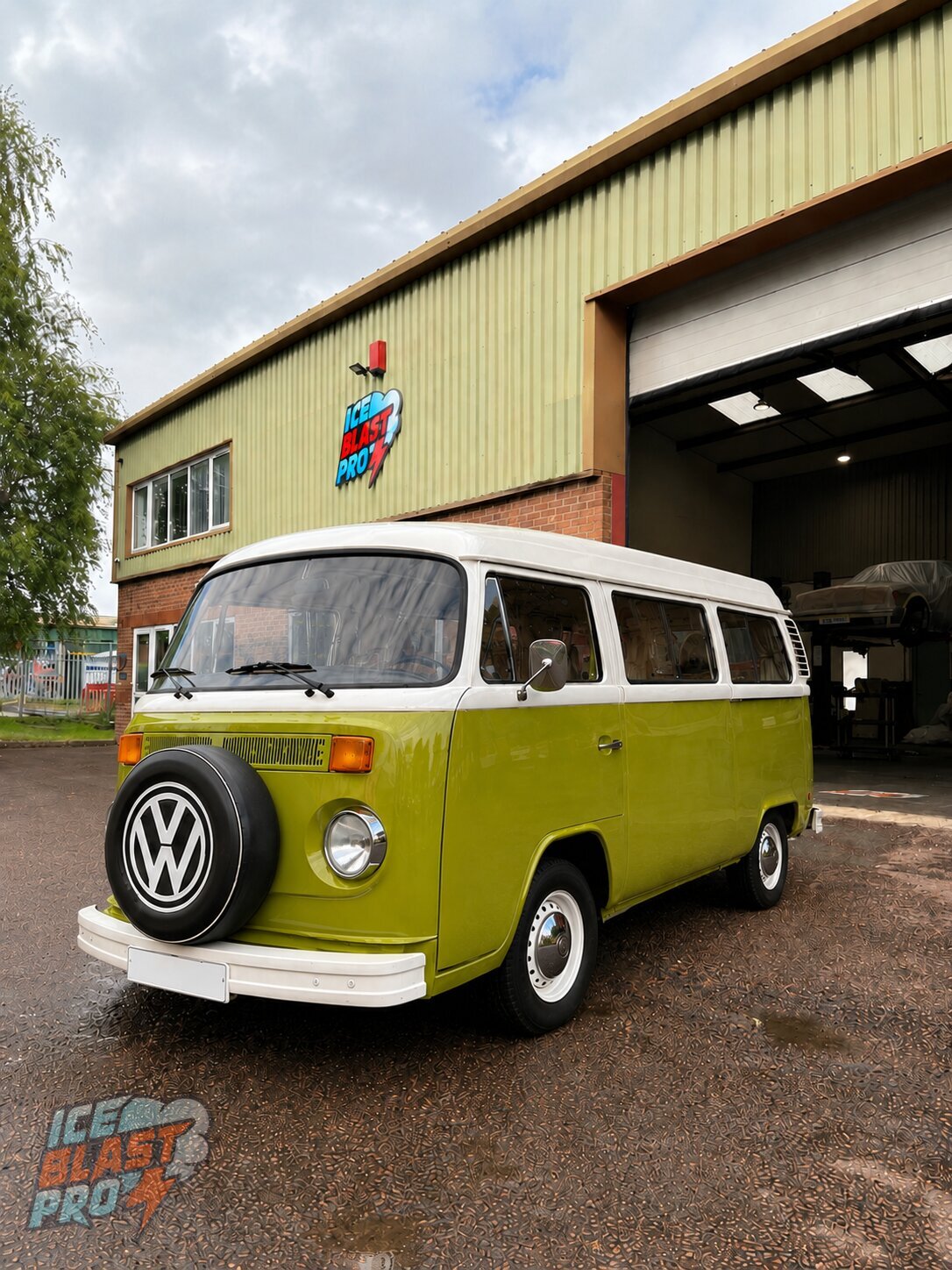
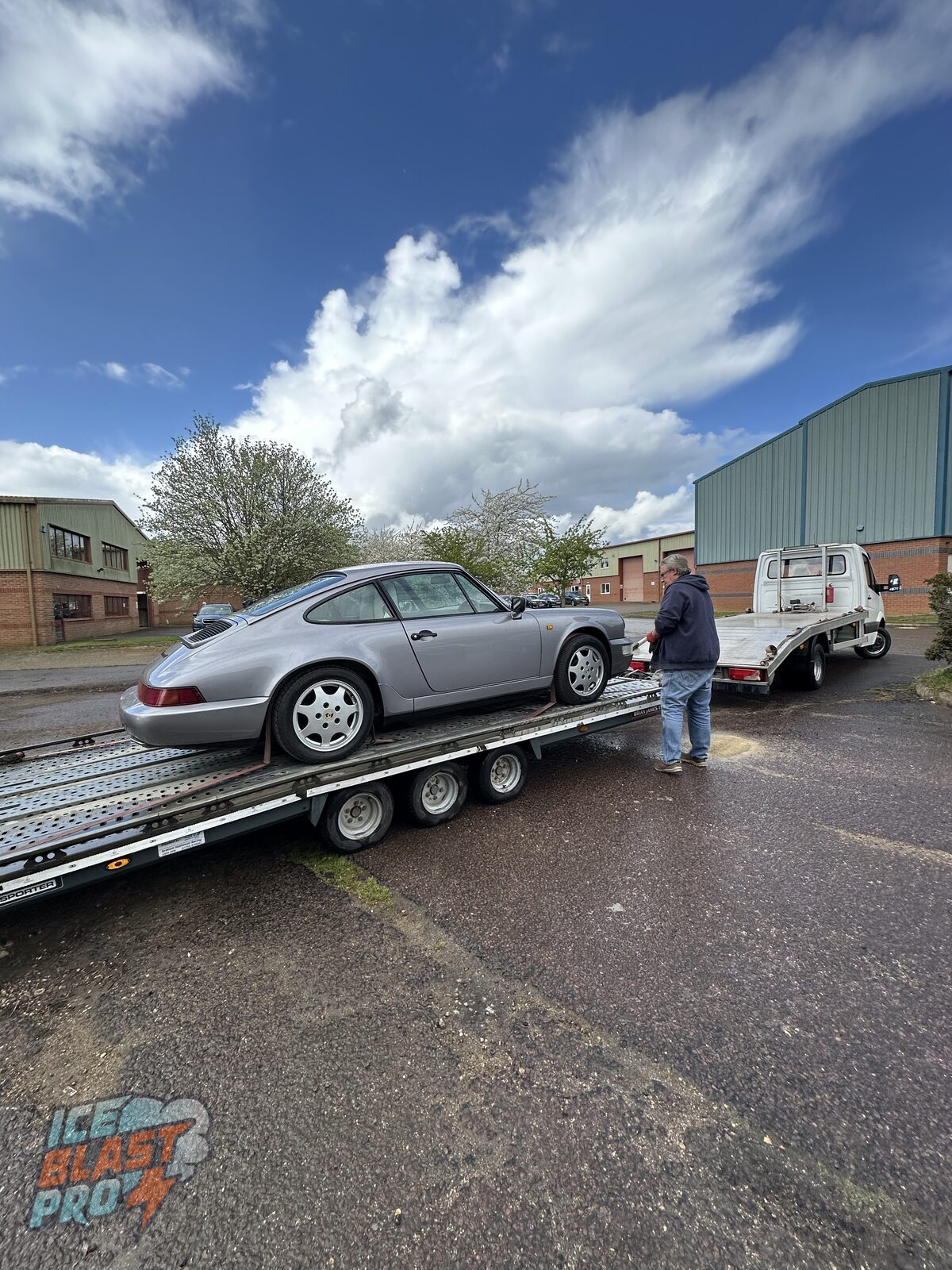
Laser cleaning is one precision stage within a full preservation job. See projects where deep corrosion was taken back to sound metal before treatment and protection:
Common questions
Can dry ice blasting remove rust?
Dry ice blasting removes loose surface oxidation and contamination, exposing the true condition of the substrate underneath. Active corrosion is then stabilised with the appropriate rust treatment as a separate stage. The combination is what makes the long-term protection systems work; dry ice blasting alone is not enough.
What happens if corrosion holes or weak metal are discovered?
Once the contamination is removed, the true condition of the metalwork becomes visible. We document anything we find, share photographs, and discuss the appropriate next step before going further. We will not seal over a problem to make a job look finished.
Will dry ice blasting damage original paint, undersealing or factory finishes?
No. The technique is non-abrasive and non-chemical, and it does not remove sound original coatings. Factory undersealing and original paint are preserved while contamination, loose oxidation and degraded overlays come away. Pressure is always adjusted to suit the surface in front of the operator.
Tackle the corrosion blasting can't reach
Tell us about your vehicle and what you want to achieve, and we'll recommend the right preservation programme with a quote to match.
Get Instant Quote