Engine Bay Dry Ice Cleaning: Is It Safe?
Yes – when it is done correctly by an experienced operator. Dry ice lifts baked-on oil, grease and grime out of an engine bay without water, solvents or abrasion, so it is safe around looms, sensors, brake lines and original finishes. Here is when it is the right choice, what it removes, the risks, and how it compares with pressure washing, steam and WD-40.
Engine bay dry ice cleaning is a controlled, water-free way to clean around the areas most owners worry about – looms, sensors, connectors, brake hardware, ancillaries and original finishes. It uses frozen carbon dioxide to lift oil, grease, grime and contamination without soaking the bay, leaving grit behind or relying on harsh chemicals.
It is best used when the goal is careful cleaning, better presentation and clearer inspection. It is not a jet wash, a mechanical repair or a way to strip everything back aggressively. The engine bay is assessed first, sensitive areas are masked or worked around, and pressure, nozzle choice and technique are matched to the vehicle.
Who engine bay dry ice cleaning is best for
A good fit for
- Engine bays with baked-on oil, grease, dust, road grime and general contamination
- Classic, performance, prestige and collector vehicles where original finishes, labels, plating and markings matter
- Owners who want a cleaner, more presentable bay without soaking connectors, sensors or electrics
- Vehicles being prepared for sale, show, concours, storage or long-term ownership
- Revealing leaks, perished hoses, corrosion or previous repairs that may be hidden under grime
Not designed for
- Mechanical repair, fault diagnosis or fixing oil leaks
- Making aged aluminium, castings or plated parts look brand new
- Stripping sound finishes, labels, decals or original markings
- Heavy rust removal from structural areas or the underside of the vehicle
- A fast jet-wash-style clean where appearance matters more than careful preservation
Before and after: an engine bay cleaned without water
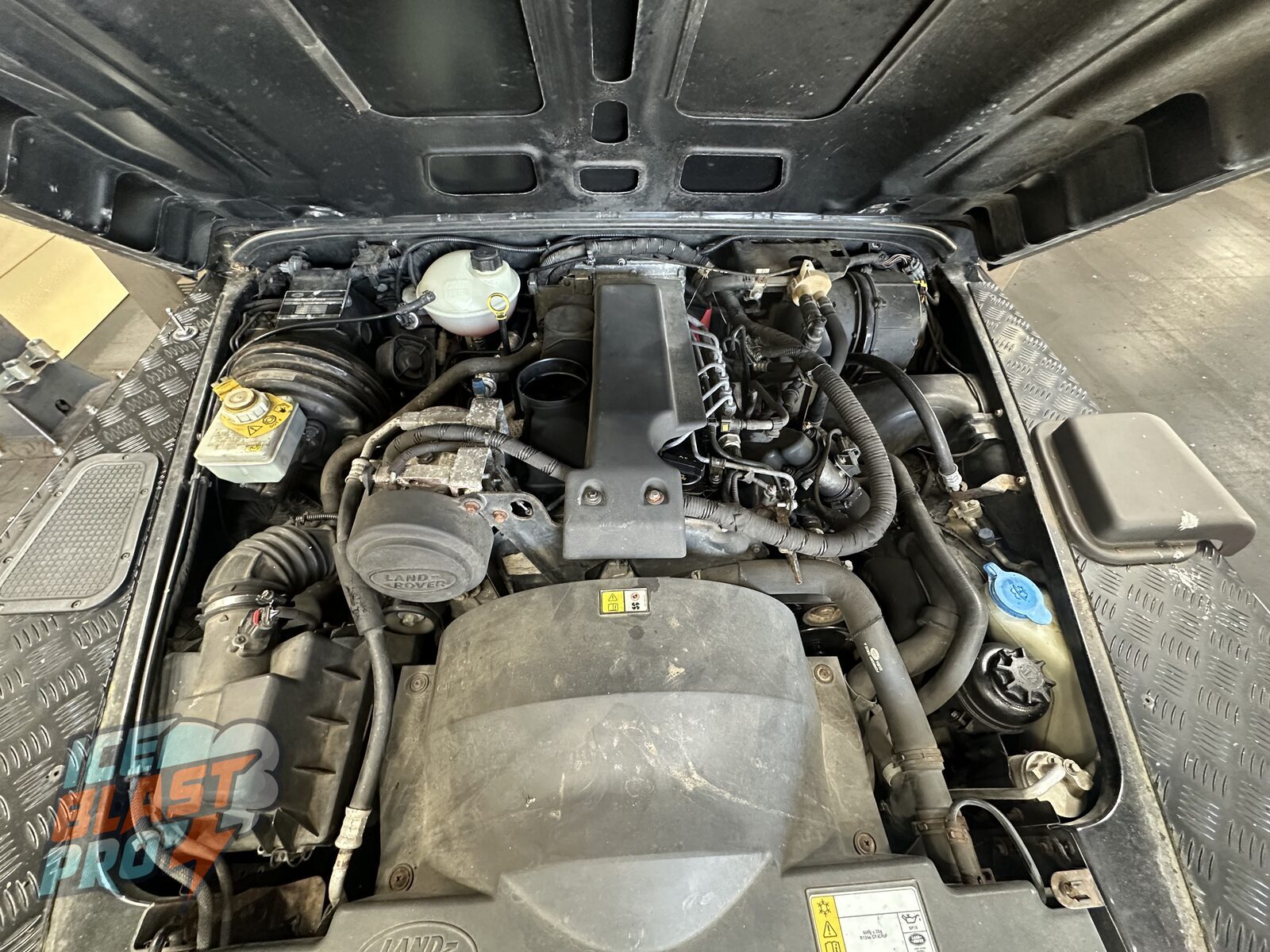
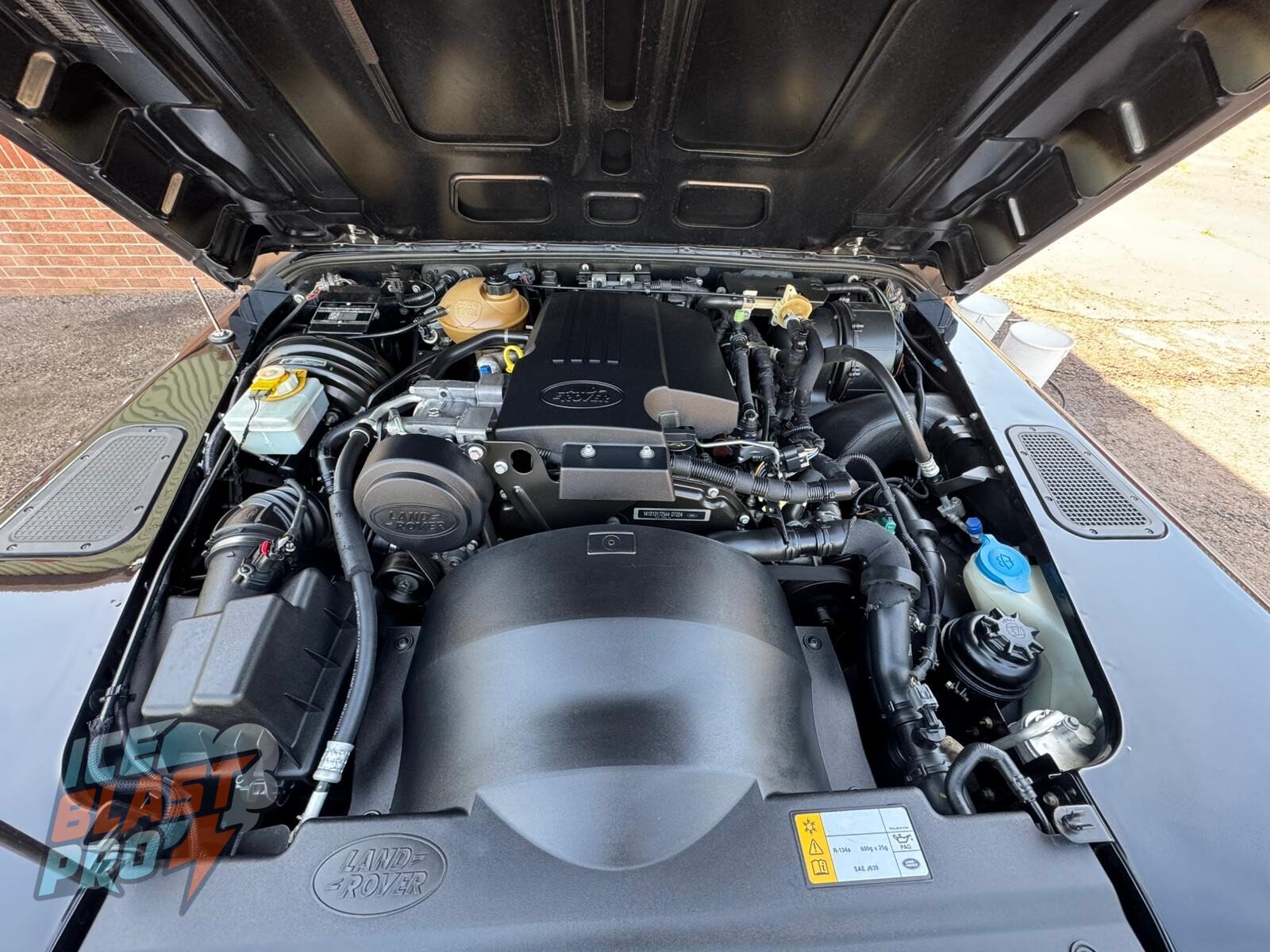
Why engine bays are different
An engine bay is the most sensitive area to clean on any vehicle. It is full of electrical connectors, sensors, control modules, alternators, brake and fuel components – all things that do not mix with water, solvents or abrasive grit. That is why so many owners leave the bay alone, or risk damage having it pressure washed.
Dry ice changes the equation. Because the spent ice turns straight to gas, the cleaning happens dry and in place, with nothing left to run into a connector or settle into a cavity. Baked-on oil and grease are frozen, made brittle and lifted away, rather than being smeared around or flushed into places that then corrode.
What areas need extra care
Dry ice removes the water risk, but an engine bay still has to be read before it is cleaned. The operator drops the pressure, changes nozzle or works around the most delicate areas rather than blasting everything the same way. Extra care is taken around:
- Electrical connectors, sensors and wiring looms
- ECUs and control modules
- Old or perished rubber hoses
- Brittle plastics, clips and aged adhesives
- Labels, stickers and stamped markings worth keeping
- Loose paint, failing coatings or old sealant
- Battery, air intake and exposed filter areas
- Aftermarket modifications and previous repairs
None of these mean dry ice cleaning cannot be used. They mean the bay is assessed first and the process is adjusted to suit it.
What engine bay cleaning involves
Mask and prepare. Sensitive components are identified and protected where needed, and the bay is assessed so the work is matched to its condition.
Clean. Dry ice lifts oil, grease, road grime and loose contamination around looms, brackets and the block – without water, solvent or abrasion.
Protect and finish. Where required a heat-resistant or ceramic coating is applied so the bay stays cleaner for longer and is better protected against future contamination.
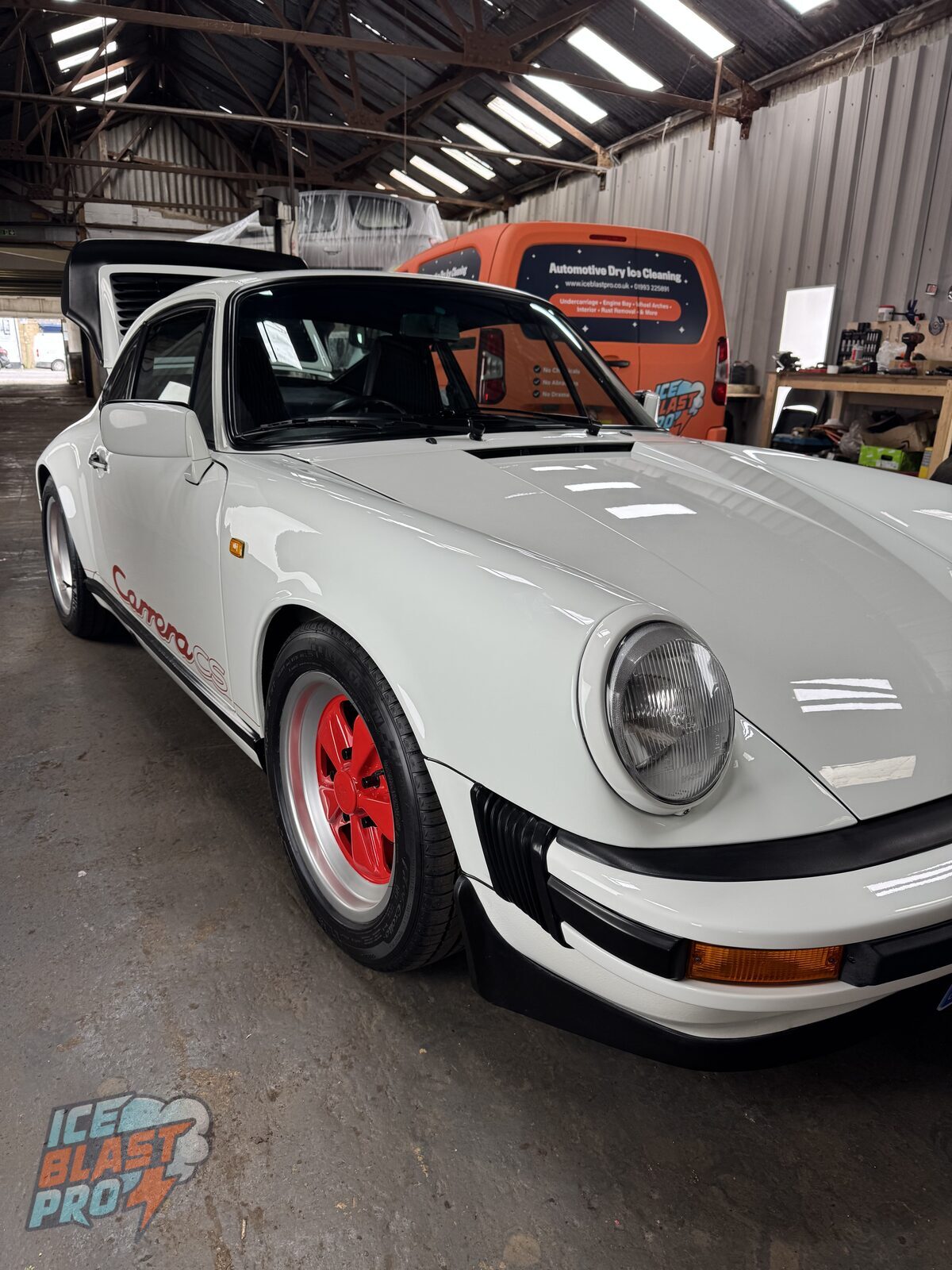
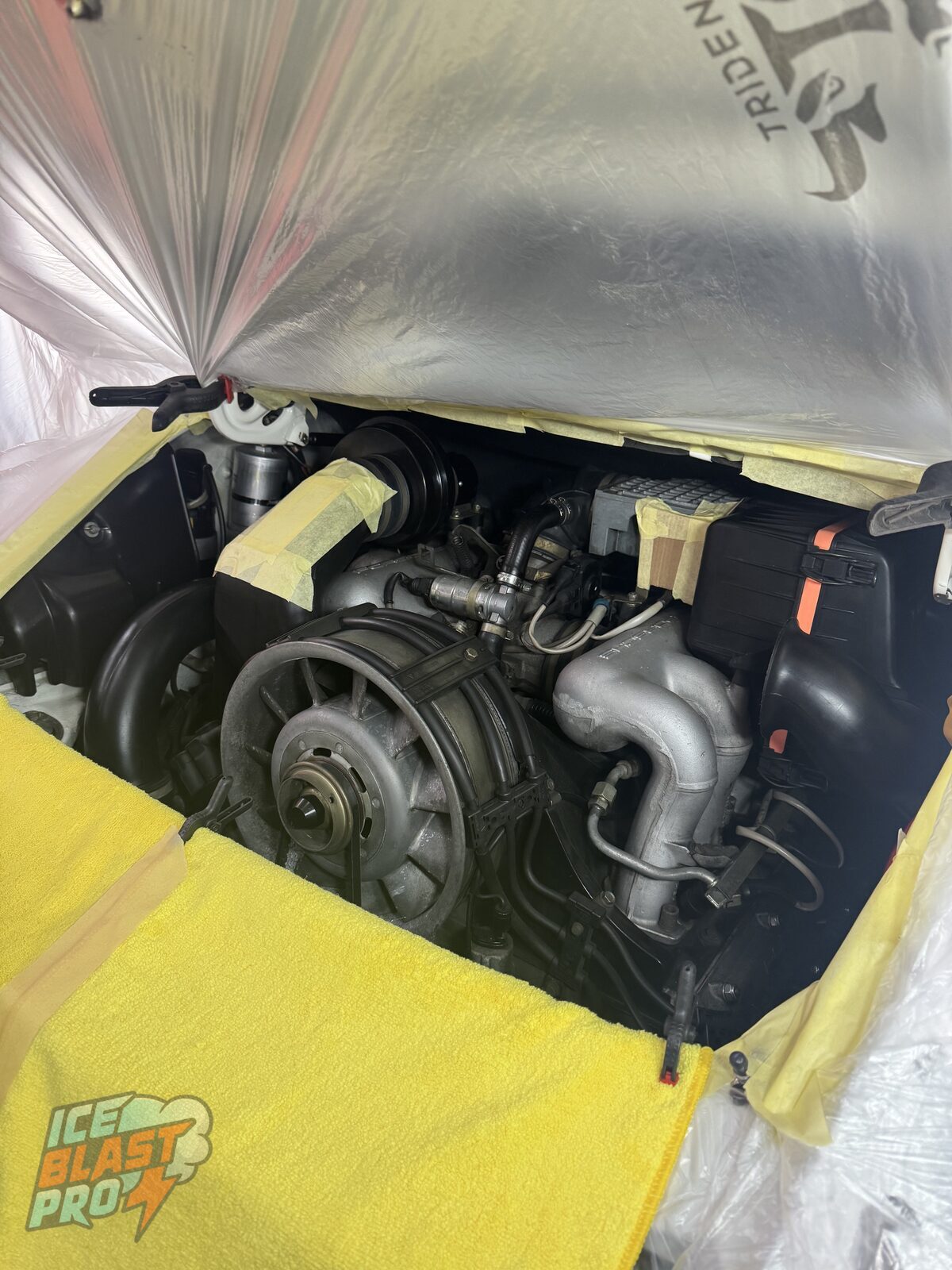
Concours prep: a Porsche 911 Carrera CS
A Porsche 911 Carrera CS in for engine bay dry ice cleaning ahead of a concours event. The surrounding panels and delicate areas are masked off and protected first, so the bay is fully prepped before any blasting begins.
How dry ice compares for engine bays
Versus pressure washing. A jet wash can shift grime, but it forces water into connectors, sensors, seams and trapped areas that are then hard to dry. Dry ice is a dry process, which is why it is better suited to classic, performance and prestige bays where water ingress is the real risk. Dry ice vs pressure washing.
Versus steam cleaning. Steam lifts grease but still adds moisture and heat, which is not ideal around old wiring, sensors, adhesives, plastics and labels. Dry ice is preferred where the goal is a dry, controlled clean with no residue left behind.
Versus sandblasting. Sandblasting is abrasive and leaves media behind, so it is the wrong choice for an assembled bay full of wiring, rubber and finishes. It only suits removed parts being stripped and refinished. Dry ice vs sandblasting.
Versus WD-40 and degreasers. WD-40 can displace moisture and loosen light dirt, but it is not a full cleaning method and can leave an oily film that attracts dust. Dry ice lifts the contamination away instead of smearing it. See the full comparison.
Is it risky, and what are the limits?
Engine bay cleaning of any kind carries some risk, and dry ice is no exception. Done well it is one of the safest methods; done carelessly it can lift weak paint or failing coatings, disturb brittle clips, or reveal a problem that was already there. That is why every job starts with inspection.
It is also honest to say what dry ice does not do. It will not repair rust, pitting or structural corrosion – it can clean around it and expose it, but the repair is a separate job. It costs more than basic detailing, needs specialist equipment, ventilation and PPE, and the result depends heavily on operator skill. It is a strong method, but it is not always necessary for every car.
Detailing, restoration and preservation
Engine bay cleaning suits very different goals. For a well-kept road car it is a careful detail that lifts years of grime without risk. During a restoration it exposes original finishes, plating and markings so they can be assessed or preserved. And as part of a full preservation programme it pairs naturally with an underbody clean so the whole underside of the car is brought up to the same standard.
The perfect base for protection
A clean bay is also the right moment to protect it. Once the contamination is gone, a heat-resistant or ceramic coating makes the finish far easier to maintain and far more resistant to the next build-up of oil and grime. On performance and prestige cars this is often combined with underbody preservation and cavity wax so the engine bay and the underside are protected together.
Proof: related case studies
See dry ice cleaning and preservation on performance and prestige cars – including engine bay work on the Shelby GT500 and rear subframe corrosion treatment on the Vanquish V12 S:




Common questions
Is dry ice cleaning safe for a modern engine bay?
Yes, when carried out by a trained operator. Dry ice sublimates to gas on impact, so there is no liquid soaking into looms, sensors, fuses or control modules and no abrasive grit left behind. Pressure and standoff distance are matched to the area, and anything that should not be exposed is masked or worked around. It is far safer for electronics than pressure washing or steam.
Can you clean an engine with dry ice?
Yes. Dry ice cleaning is used on engine covers, alloy casings, brackets, painted metal, plastics, slam panels, inner wings and visible mechanical areas where oil, grease and dust build up. The aim is not to blast everything at full pressure – the technician adjusts around delicate components and avoids aggressive blasting on sensitive parts.
What does dry ice cleaning remove from an engine bay?
It lifts oil, grease, dust, road grime, old wax, dried residue and general contamination, plus loose surface corrosion and failing coatings. It is especially good at clearing dirt from the tight, complex shapes around brackets and casings that are hard to reach by hand.
Why not just use a degreaser and a jet wash?
Solvent and water cleaning relies on flooding the bay and forcing contamination away, which is exactly what you do not want around electrical connectors, alternators and ECUs. It also tends to smear oil rather than lift it, and water finds its way into places that then corrode. Dry ice freezes and lifts baked-on oil, grease and grime in place, dry, without that risk.
Is WD-40 safe to clean an engine bay?
WD-40 can displace moisture and loosen light grime, but it is not a complete engine bay cleaning method. It can leave an oily residue that attracts dust and is no substitute for proper degreasing, detailing or dry ice cleaning on a valuable or classic vehicle.
What do car dealers use to clean engine compartments?
Dealers and detailers typically use a mix of degreasers, brushes, steam, compressed air, dressings, wipes and controlled rinsing depending on the car. For high-value, classic or sensitive vehicles, dry ice cleaning is a more controlled option because it does not rely on soaking the bay with water.
Does engine bay dry ice cleaning damage paint?
It should not damage sound paint when the right pressure, nozzle, distance and technique are used. Loose paint, weak lacquer, cracked coatings or failed underseal may lift during cleaning, which is why the bay is inspected first – if a finish is already failing, cleaning can reveal it.
Can dry ice cleaning remove rust from an engine bay?
It can remove loose surface corrosion and the contamination around rust, but it does not repair pitted metal, holes or structural corrosion. In a bay that is useful because it exposes the areas that may need rust stabilisation, coating or repair as a separate step.
Can you protect the engine bay after cleaning?
Yes. A clean bay is the right moment to apply protection. Depending on the car and how it is used we can apply a heat-resistant coating, and on premium work a ceramic engine bay coating, so the finish is easier to keep clean and better protected against future contamination. This is part of our Full Preservation and Signature programmes.
Will it damage original finishes, labels or plating on a classic?
No. The process is non-abrasive and non-chemical, so factory paint, plating, decals and original markings are preserved while the grime on top of them comes away. For concours and originality-led work this is a major advantage over abrasive or solvent methods that strip or fade original detail.
Are the fumes from dry ice harmful?
Dry ice turns into carbon dioxide gas as it sublimates. CO2 is not a chemical poison, but it can displace oxygen in an enclosed or poorly ventilated space, which is why the work is done with proper ventilation and trained operators. Anyone feeling unwell should move to fresh air straight away.
What are three things you should never do with dry ice?
Never touch it with bare hands, never store it in an airtight container, and never use or store large amounts in an enclosed, unventilated space. It should be handled with insulated gloves or proper tools and always used with ventilation.
Is dry ice legal in the UK?
Yes. Dry ice is legal in the UK, but it has to be handled, stored and transported safely. The main risks are cold burns, pressure build-up in sealed containers and carbon dioxide build-up in poorly ventilated spaces.
How much does engine bay dry ice cleaning cost in the UK?
It depends on the vehicle, access, how contaminated the bay is, how sensitive the components are and whether it is part of a wider preservation package. A light clean costs less than a full programme; prestige, classic or heavily contaminated bays need more time, masking and care. See the cost guide for broader pricing.
Clean the engine bay without the water risk
Tell us about your vehicle and what you want to achieve, and we'll recommend the right preservation programme with a quote to match.
Get Instant Quote