Automotive Dry Ice Blasting
A non-abrasive, water-free cleaning process for classic, performance and prestige vehicles. Dry ice blasting removes oil, road salt, grime, loose corrosion and failing coatings from underbodies, arches, engine bays and complex assemblies without leaving moisture or abrasive media behind.
Automotive dry ice blasting is a dry, non-abrasive cleaning process used to remove grime, oil, road salt, loose underseal and surface contamination from vehicle undersides, arches and engine bays without adding water or abrasive media.
What is automotive dry ice blasting?
Automotive dry ice blasting is a preservation-led cleaning technique built around protecting original materials. Solid CO₂ pellets the size of a grain of rice are accelerated in compressed air at a contaminated surface. On impact the extreme cold – roughly −79°C – causes thermal shock that breaks the bond between the contaminant and the metal beneath it. The pellet then sublimates: solid CO₂ turns straight to gas and expands around 800× in volume, lifting the contamination clear.
Nothing is left behind. No moisture driven into seams and cavities, no abrasion of the substrate and no spent media to clean up. It is the only practical way to bring an entire underbody, engine bay or wheel arch back to a clean, treatable condition without dismantling the vehicle.
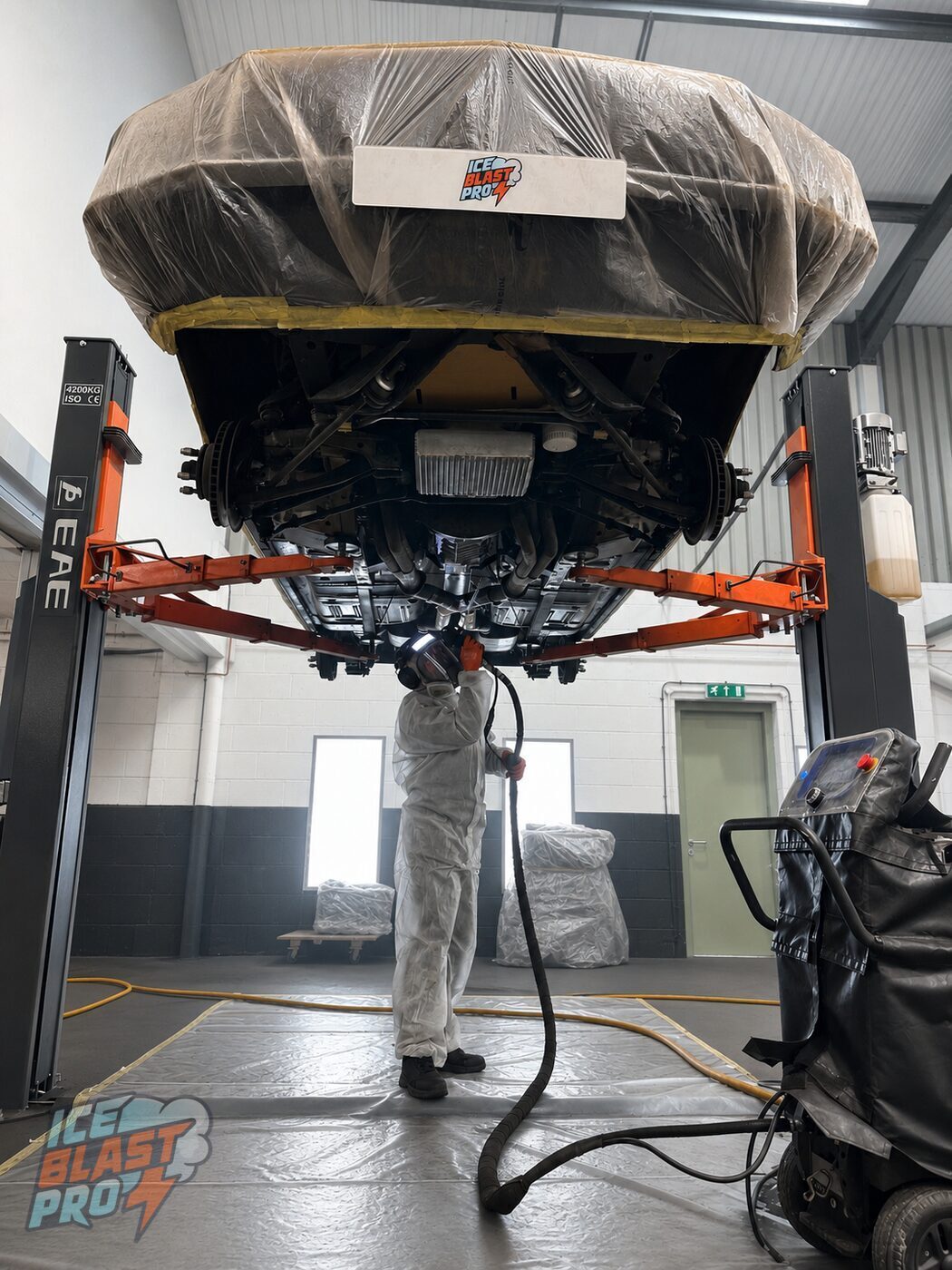
Automotive dry ice blasting in the UK
Automotive dry ice blasting has become increasingly popular with classic, performance and prestige car owners because it offers a controlled way to clean areas that are difficult to reach by hand or unsafe to clean with water. If the process is new to you, our guide to what dry ice blasting is explains how it works in plain terms.
On UK roads, underbodies and wheel arches take a constant beating from road salt, moisture, mud, grease and old coatings. Over time these hide corrosion and make it hard to judge the true condition of the car. Dry ice blasting lifts that contamination without adding water or leaving abrasive grit behind, which makes it a strong first step before inspection, rust treatment and long-term preservation.
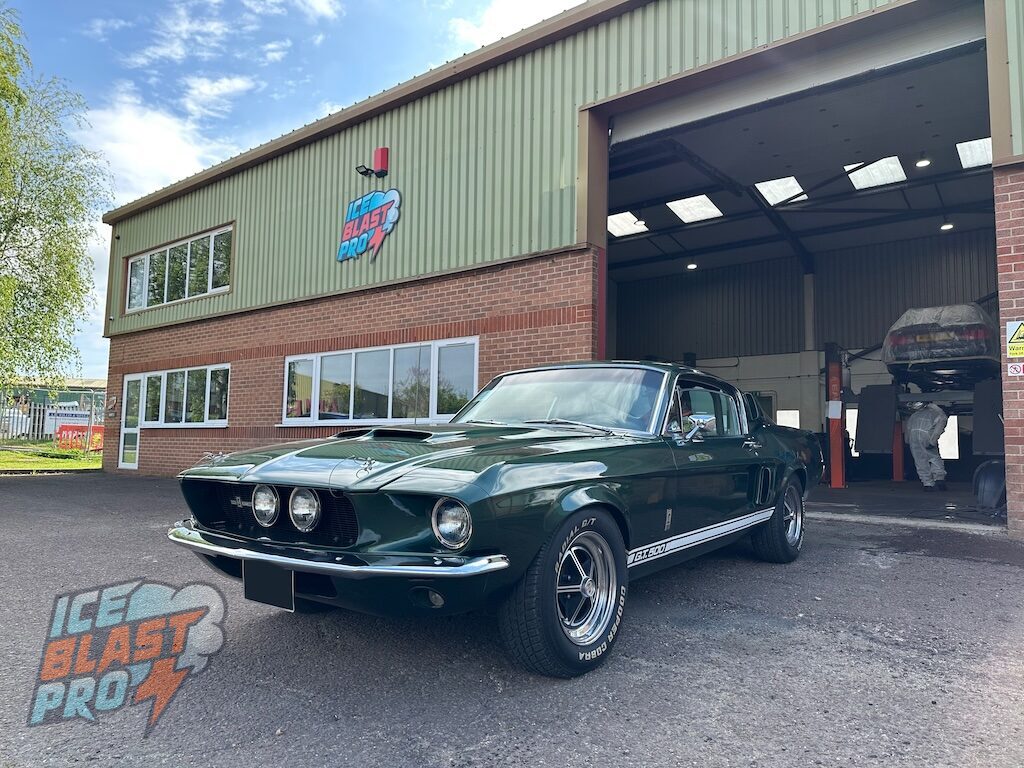
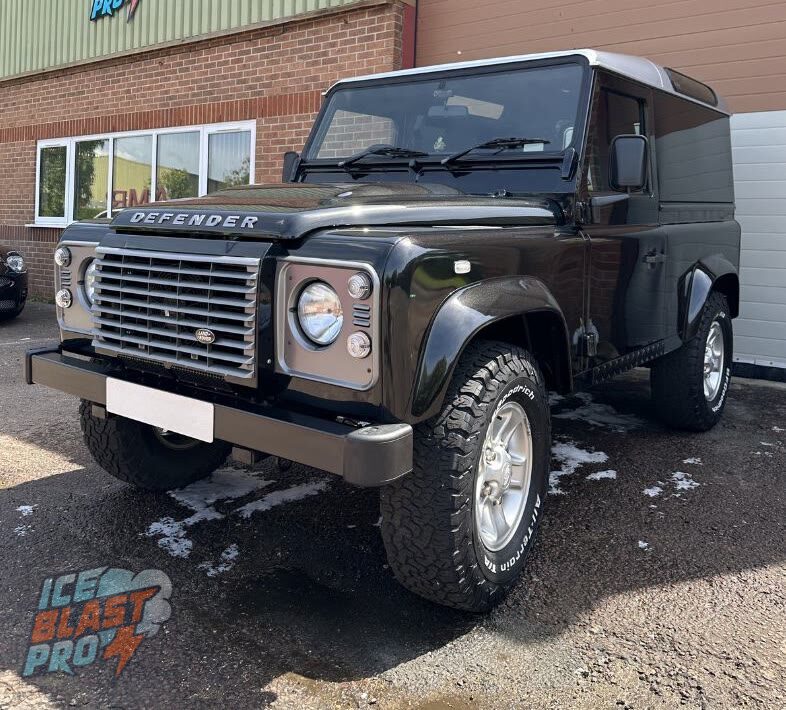
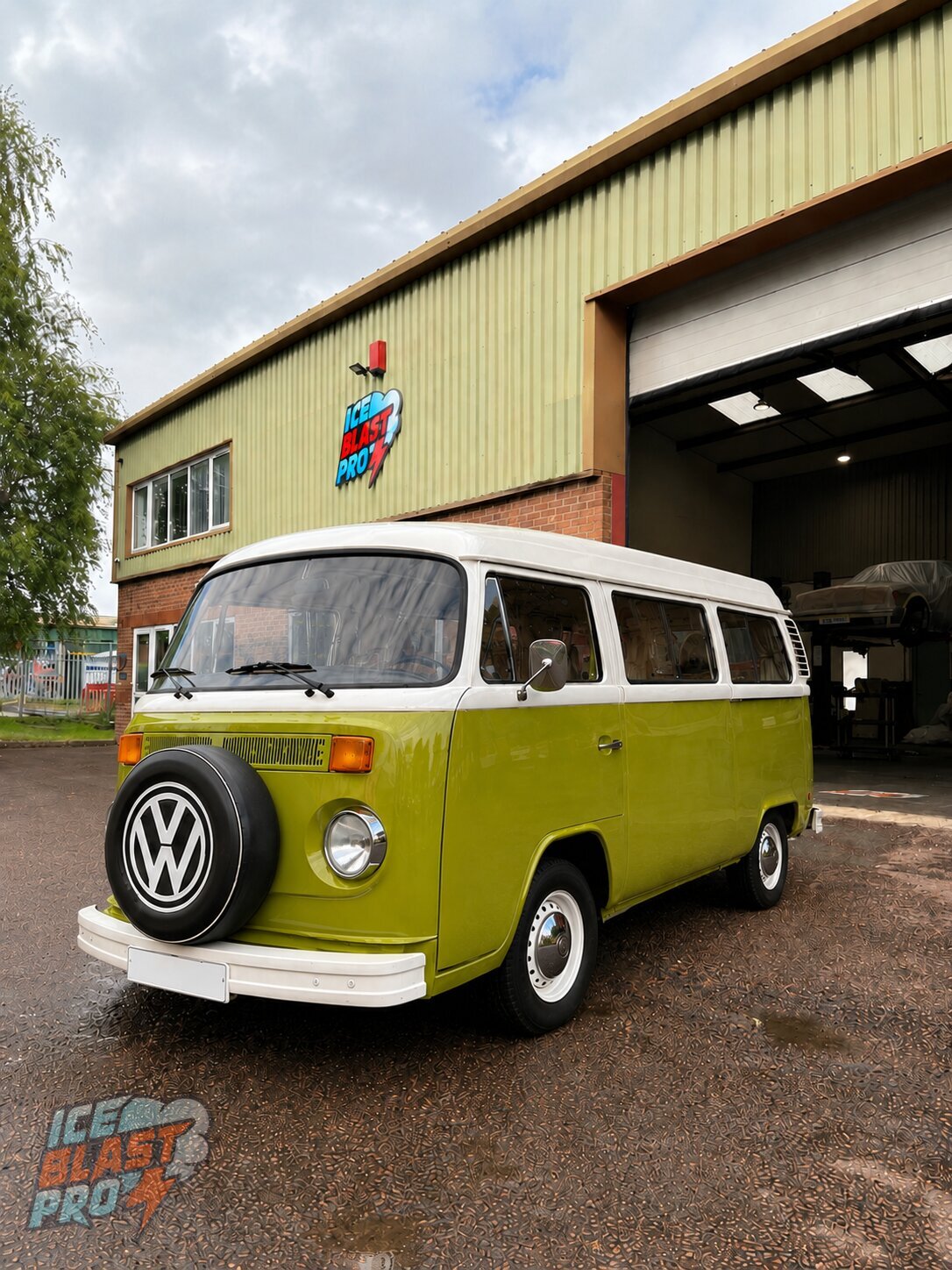
The cars we work on
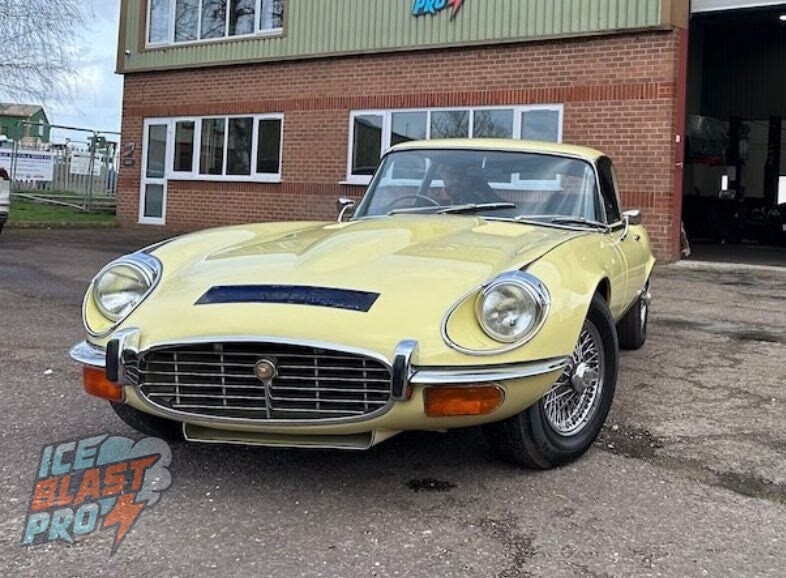
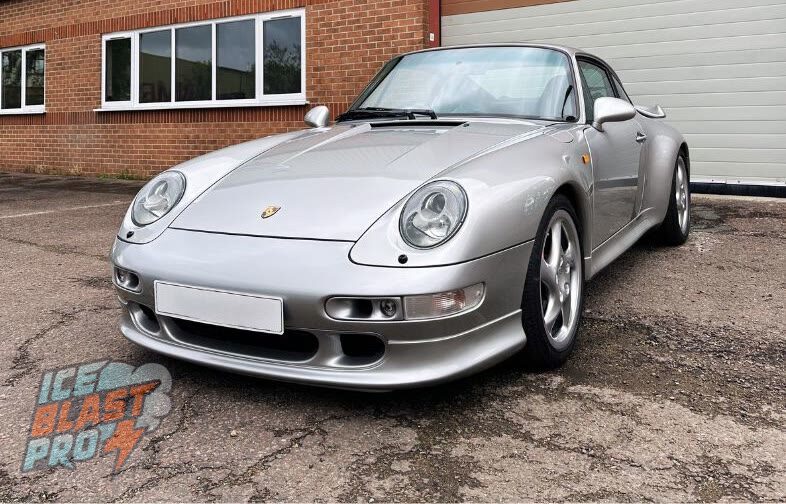
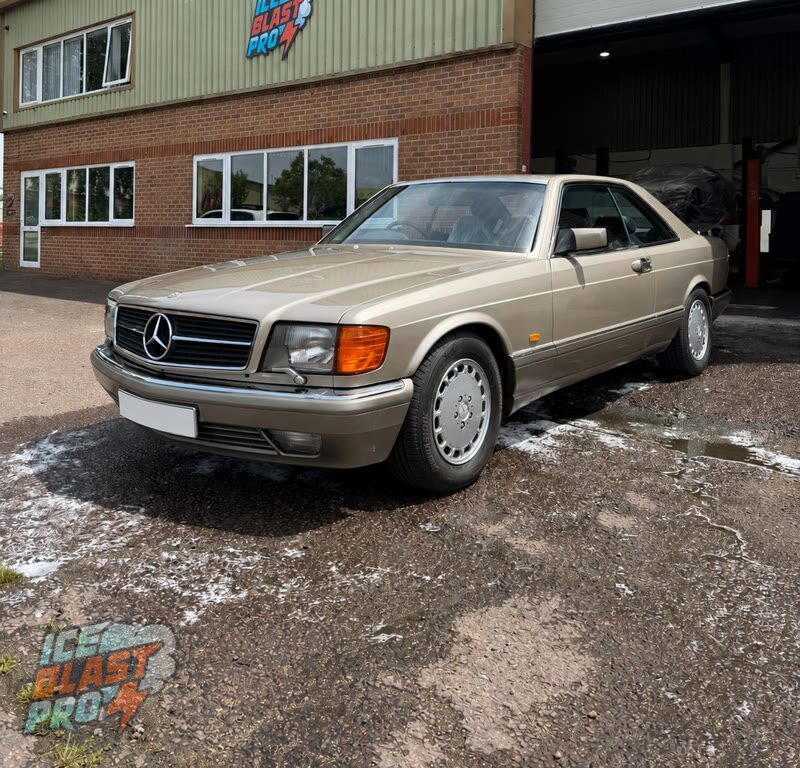
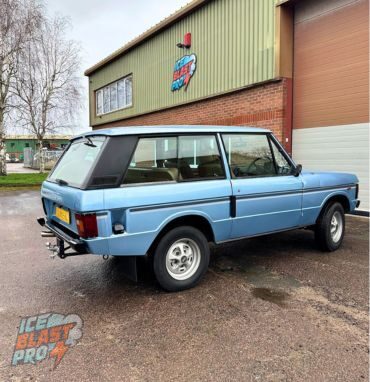
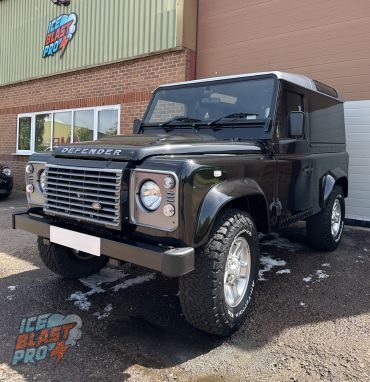
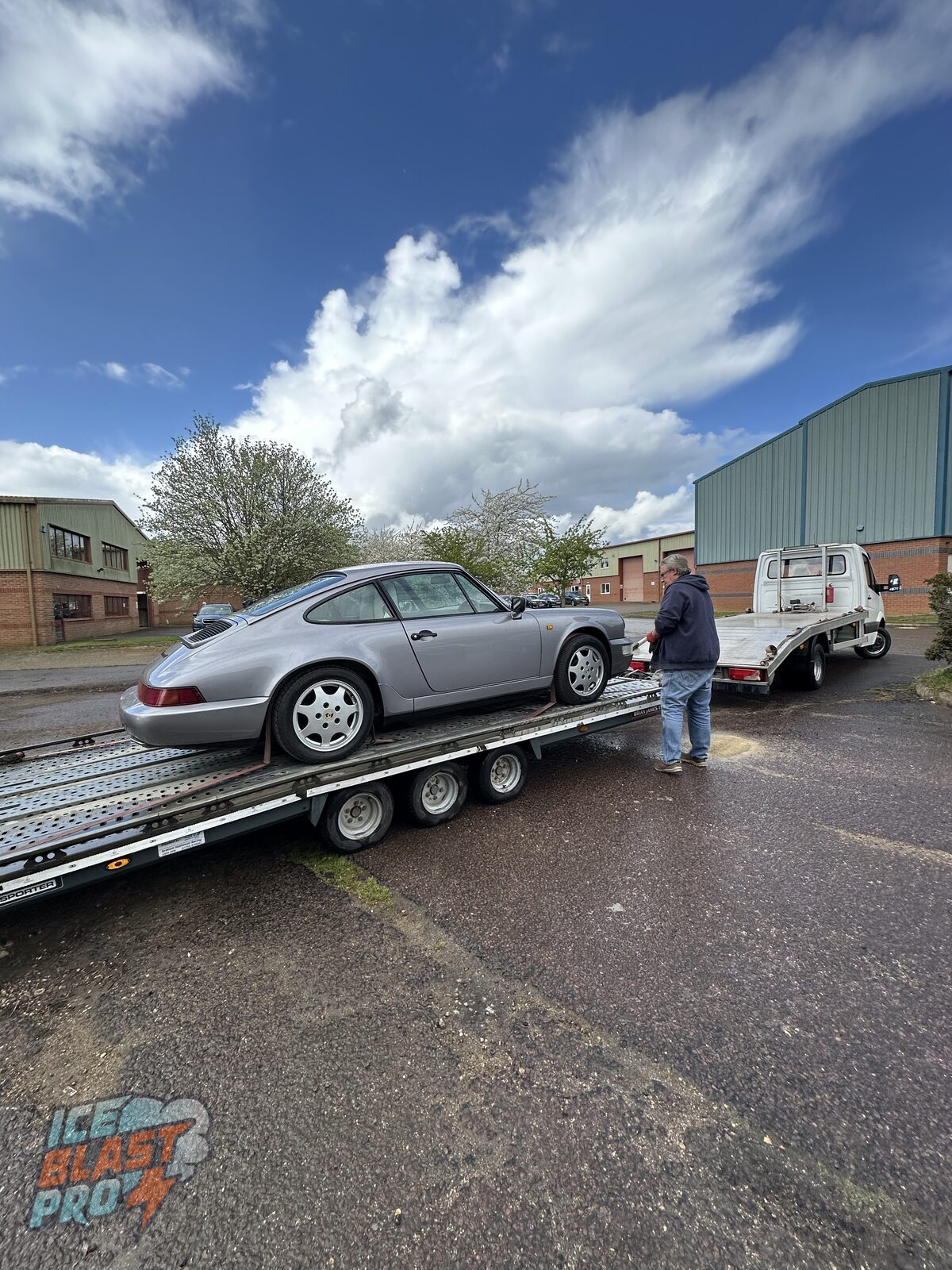
From classics and performance cars to prestige saloons and working 4x4s, these are some of the vehicles that have come through the workshop – the kind of cars we clean, inspect, treat and protect with automotive dry ice blasting.

What dry ice blasting is best for – and what it is not
Best for
- Classic, performance and prestige underbodies and chassis
- Engine bays around looms, sensors and ancillaries
- Wheel arches, suspension and complex assemblies
- Removing degraded underseal, road salt and baked-on grime
- Preparing metal for inspection, treatment and protection
Not suitable for
- Cutting active, pitted rust out of the steel
- Removing sound paint or healthy factory finishes
- Replacing welding where metal has perforated
- Whole-car bodywork or paint-strip preparation
- A substitute for proper corrosion treatment
What dry ice blasting can remove
- Degraded underseal and overspray – failing factory and aftermarket coatings that trap moisture against the metal.
- Road salt, grime and built-up dirt – decades of winter road contamination from chassis rails and box sections.
- Baked-on oil and grease – from engine bays, transmissions, axles and suspension components.
- Loose surface oxidation – flaking surface rust and scale that hides the true condition of the metal.
- Old wax, sound deadening and adhesives – where they have broken down and need to come off before re-protection.
What dry ice blasting does not remove
Pressure, nozzle and standoff distance are matched to the surface in front of the operator, so contamination comes away while the materials worth keeping stay untouched. Dry ice blasting does not remove:
- Sound original paint and healthy factory finishes – it lifts contamination, not the coatings worth keeping.
- Solid, structural metal – it cleans grime and loose oxidation; it does not cut steel away.
- Active, pitted corrosion – rust set deep in the steel is stabilised, or lifted with laser cleaning, as a separate stage.
- Damage that needs repair – perforation or section loss is a case for welding, not cleaning.
Where we use dry ice blasting on vehicles
- Underbodies and chassis – back to clean, treatable metal across the full floorpan, rails and box sections.
- Wheel arches and suspension – complex assemblies other methods cannot reach safely.
- Engine bays – around looms, sensors and ancillaries without water ingress.
- Bare metalwork during restoration – bulkheads, transmission tunnels and exposed structural areas.
Dry ice blasting for underbodies and arches
The underside is where a classic, performance or prestige car quietly deteriorates. Old underseal cracks, traps road salt and holds moisture against the steel, and conventional cleaning either misses the contamination or forces water into exactly the cavities you want to keep dry. Dry ice blasting strips the degraded coating and grime from chassis rails, floorpans, sills and arches without abrasion or moisture, so the real condition of the metal is visible.
That clean surface is the foundation of every underbody preservation programme – there is no point protecting metal until you can see what you are protecting.
Dry ice blasting for engine bays
Engine bays collect baked-on oil, grease and grime around looms, sensors, connectors and ancillaries – all the places you cannot safely point a pressure washer. Because dry ice leaves no moisture behind, it lifts contamination from these areas without risking water ingress into electrical components or trapped corrosion afterwards.
The result is a presentation-grade engine bay that also lets you inspect for leaks, perished hoses and corrosion that grime was hiding. Sensitive components are masked or worked around, and pressure is adjusted for the surface throughout.
Can dry ice blasting remove rust?
Dry ice blasting removes loose surface oxidation and flaking scale, which exposes the true condition of the metal underneath. It does not cut active corrosion out of pitted steel, and it is not a substitute for proper rust treatment. Cleaning is the first stage, not the cure.
Once the surface is clean, active corrosion is stabilised as a separate stage during rust treatment and corrosion protection, and where rust has pitted deep or sits on delicate seams, laser cleaning takes it off at a level blasting cannot reach. We will not seal over corrosion to make a job look finished.
Dry ice blasting vs pressure washing and sandblasting
Pressure washing drives water into seams, cavities and electrical components – exactly where you do not want it on a car you intend to keep. It cleans the surface you can see and leaves moisture in the places that matter most.
Sandblasting is abrasive. It removes substrate along with the contamination, leaves pitting and warps thin panels, usually requires dismantling first and leaves spent media behind – appropriate for aggressive media removal, but not for preserving original materials.
Dry ice blasting sublimates on impact: no moisture, no abrasion and no spent media. It is the right choice when the goal is preservation – cleaning an entire underbody or engine bay back to treatable metal in situ, without dismantling the car or harming what is sound.
What happens after the vehicle is cleaned?
A clean underside is the start of the work, not the end of it. Once contamination is removed we inspect the bare metal, photograph anything we find and discuss the right next step before going further. Active corrosion is stabilised, deep pitting is addressed with laser cleaning where needed, and the metal is then protected with a system matched to how the car is used.
For owners looking to preserve the vehicle properly, this becomes a full underbody preservation programme: clean, treat, protect and document – with the work recorded for the vehicle’s history file.
How long does dry ice blasting take?
Time on the gun depends on the vehicle and how much contamination there is. A focused engine bay or wheel-arch clean can take a few hours; bringing a full underbody back to clean, treatable metal can take a day or more. When cleaning is the first stage of an underbody preservation programme, it sits inside the wider project timeline rather than being booked on its own.
How much does dry ice blasting cost?
Cost is condition- and specification-led rather than a fixed price per car. This is a more in-depth process than a usual clean, and very different to pressure washing, steam cleaning or abrasive blasting. The price depends on the size of the vehicle, how much contamination there is, the condition of the metal once it is exposed and the level of protection you choose. Rather than quote a figure that would not apply to your car, we explain what drives the price in this guide and provide a tailored quote by email.
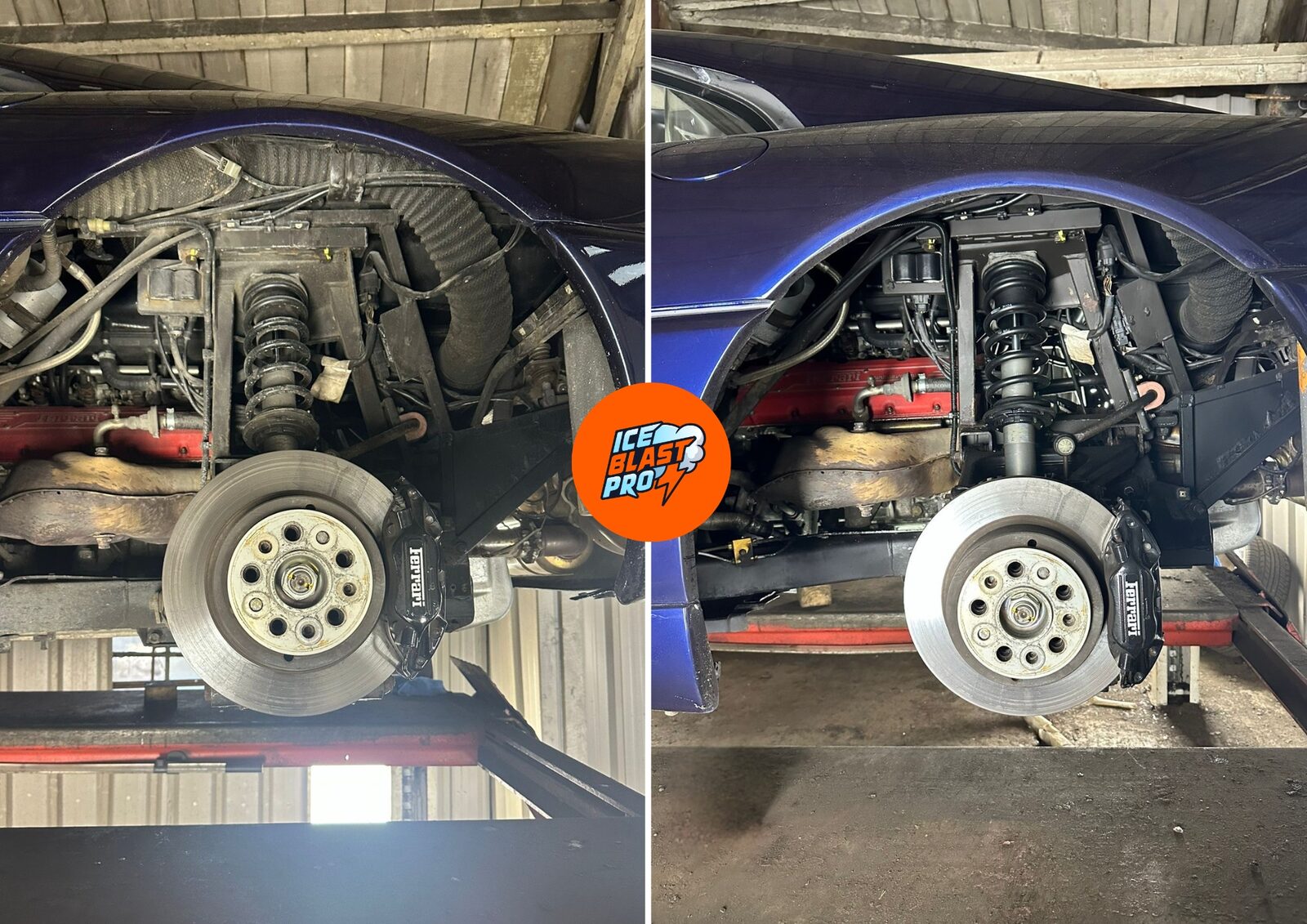
Before and after: see real projects
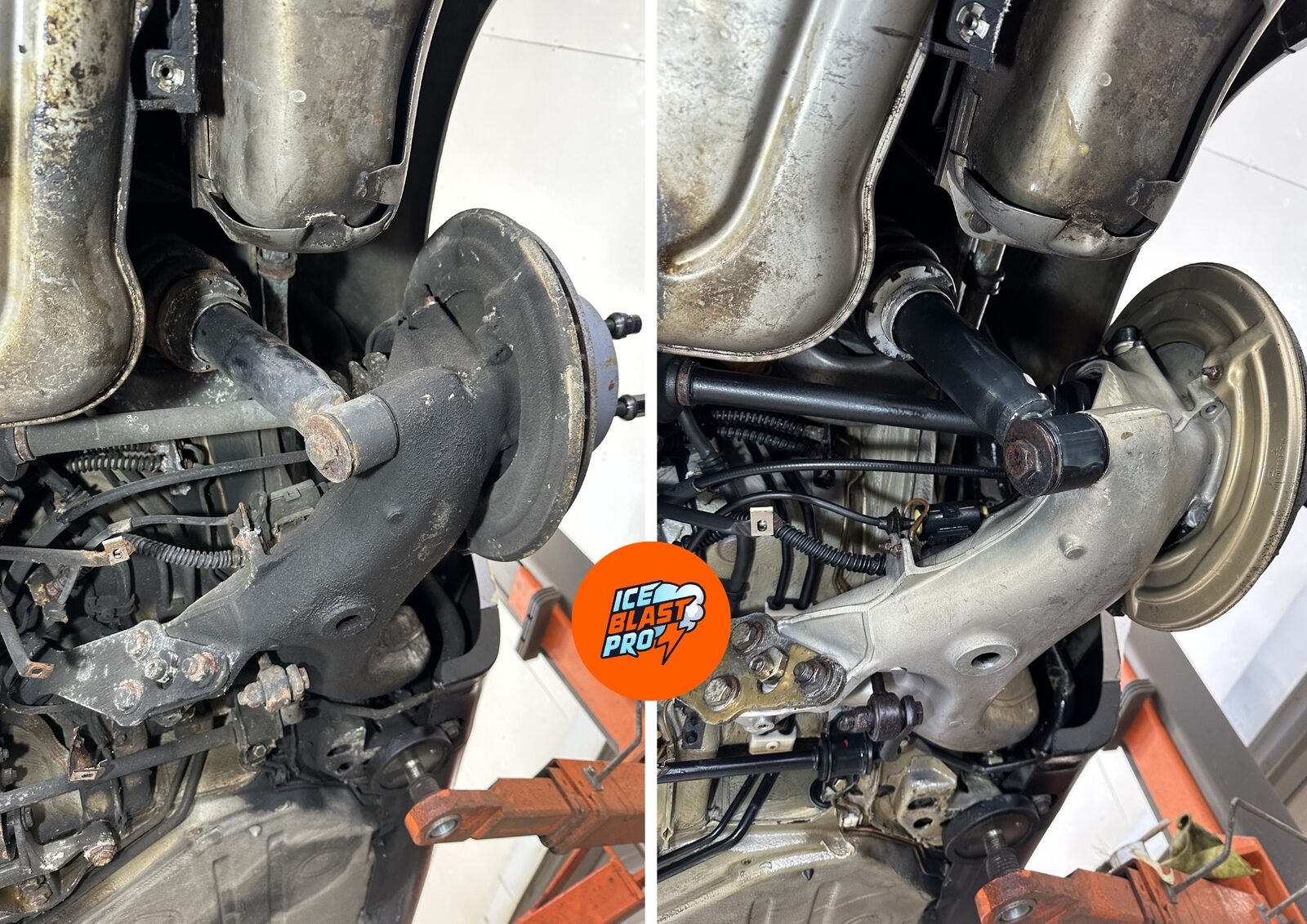
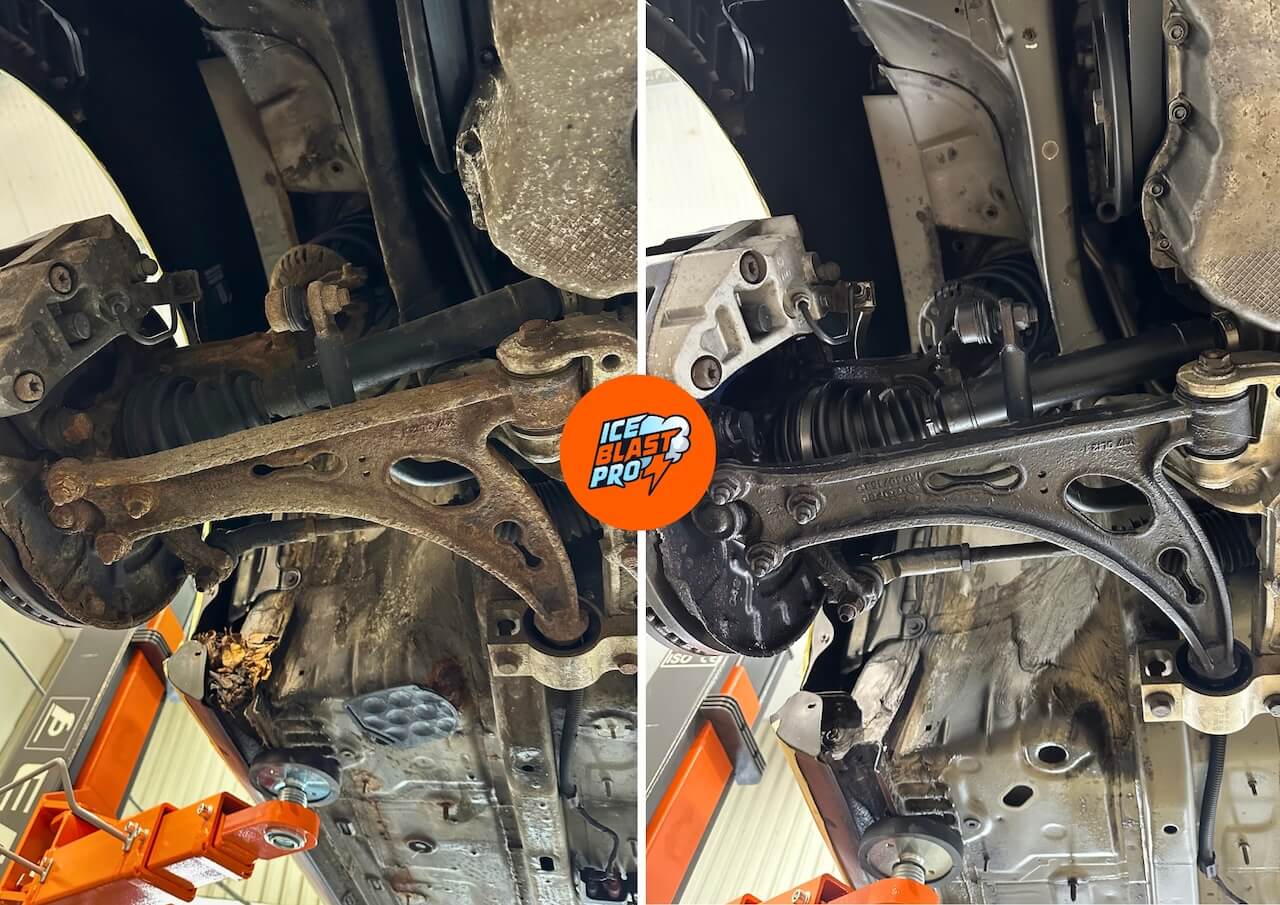
The difference is easiest to judge on a real car. Our case studies show vehicle undersides and engine bays photographed before and after dry ice cleaning, rust treatment and long-term protection – the same condition-led process from first inspection to a documented finish.
Dry ice blasting for customers across the UK
Customers travel to our Oxfordshire workshop from the Cotswolds, London and across the UK for specialist dry ice blasting and underbody preservation. Most vehicles are treated at the workshop, with collection and delivery available by arrangement.
Proof: related case studies
See dry ice blasting as the first stage of a documented preservation programme on real cars:

Common questions
What types of vehicles are best suited for dry ice blasting?
Dry ice blasting is particularly suited to classic cars, modern performance vehicles, and well-maintained daily drivers where preservation of original materials is important. It is commonly used on underbodies, engine bays, wheel arches, and complex assemblies where abrasive or water-based methods would be inappropriate.
What makes dry ice blasting more effective than pressure washing or sandblasting?
Pressure washing drives water into seams, cavities and electrical components – exactly where you don't want it on a classic. Sandblasting is abrasive and removes the substrate along with the contamination. Dry ice sublimates on impact: no moisture, no abrasion, and no spent media to clean up. It is a fundamentally different technique built around preservation, not surface removal.
Is dry ice blasting safe for electrical components, brake lines and fuel pipes?
Yes, when carried out by a trained operator. Pressure, nozzle and standoff distance are adjusted for sensitive areas, and components that should not be exposed are masked or worked around. We routinely clean around looms, sensors, brake hardware and fuel lines without damage.
Will dry ice blasting damage original paint, undersealing or factory finishes?
No. The technique is non-abrasive and non-chemical, and it does not remove sound original coatings. Factory undersealing and original paint are preserved while contamination, loose oxidation and degraded overlays come away. Pressure is always adjusted to suit the surface in front of the operator.
See what's really under your car
Tell us about your vehicle and what you want to achieve, and we'll recommend the right preservation programme with a quote to match.
Get Instant Quote