Land Rover Defender 90
A hard-working classic 4x4 given a full underbody preservation programme: the underside dry ice cleaned, active corrosion neutralised with multi-stage rust treatment, then sealed with a durable protection chosen for how this vehicle is actually used – and documented at every step.
Published

In short: what was done to this Defender 90
A Land Rover Defender 90 came in for a full underbody preservation programme covering the underbody, chassis, arches and engine bay. The underside was dry ice blasted (no water, no abrasive media, no residue), active corrosion was neutralised and stabilised with multi-stage rust treatment, then the whole underside was sealed with a durable black protection finish chosen for a vehicle that works on salted winter roads. Every stage was documented with before-and-after photos for the vehicle's history file.
What was booked in
The Defender arrived for our full Underbody Preservation programme – covering the underbody, chassis, arches and engine bay. As a working classic 4x4, it had spent its life on UK roads and the underside carried the usual mix of road grime, packed dirt and surface corrosion that comes with it.
The exact condition under the dirt was unknown, so our consultative, in-depth inspection and treatment programme would let the underside be cleaned back, assessed, treated and protected – then documented to a standard that matches the rest of the vehicle.
- Vehicle
- Land Rover Defender 90
- Service
- Full underbody preservation programme
- Protection
- Durable underbody protection (black)
- Areas
- Underbody · Chassis · Arches · Engine bay
The preservation programme standard
Every vehicle follows the same six-stage programme, with the work paused for your decision whenever the condition changes the scope.
Plan & Pre-Inspection
- Vehicle received and stored inside with 24hr security
- Vehicle prepped and exterior protected
- Full underbody inspection photos delivered
Test & Check-In
- Test patches in multiple areas to assess condition and substrate
- Findings shared with you – photos or call
- If something significant changes the scope, work pauses for your decision
Dry Ice Blast
- Underbody, chassis, arches, suspension and engine bay
- No water, no abrasive media, no residue
- Pressure adjusted by area – gentler on sensitive substrates
Multi-Stage Rust Treatment
- Loose corrosion lifted by the ice during blasting
- Active rust chemically neutralised and stabilised
- Sound foundation laid for proper adhesion of protection
- Welding quoted separately if structural repair is needed
Underbody Protection Applied
- Protection finish agreed at booking and chosen to suit each area
- Finish may be adapted mid-programme if condition warrants it – only with sign-off
- Underbody paint colour-matching and stone chip available
Reassembly & Documentation
- Reassembled with new fixings where required, exterior returned to delivery standard
- Specialist detailing and ceramic coatings available by arrangement
- Full photographic record retained for the vehicle's history file
Pre-inspection: the first conversation
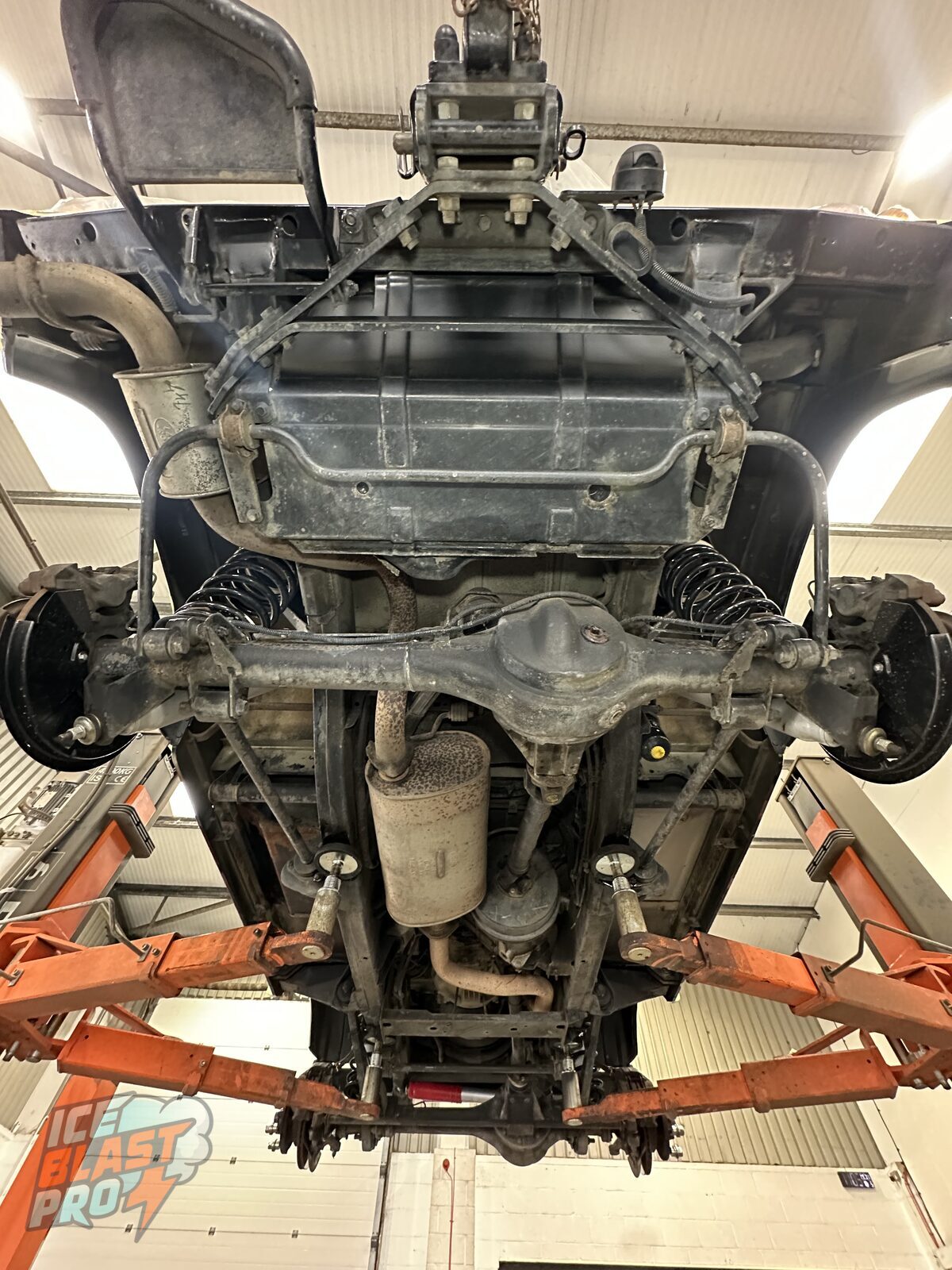
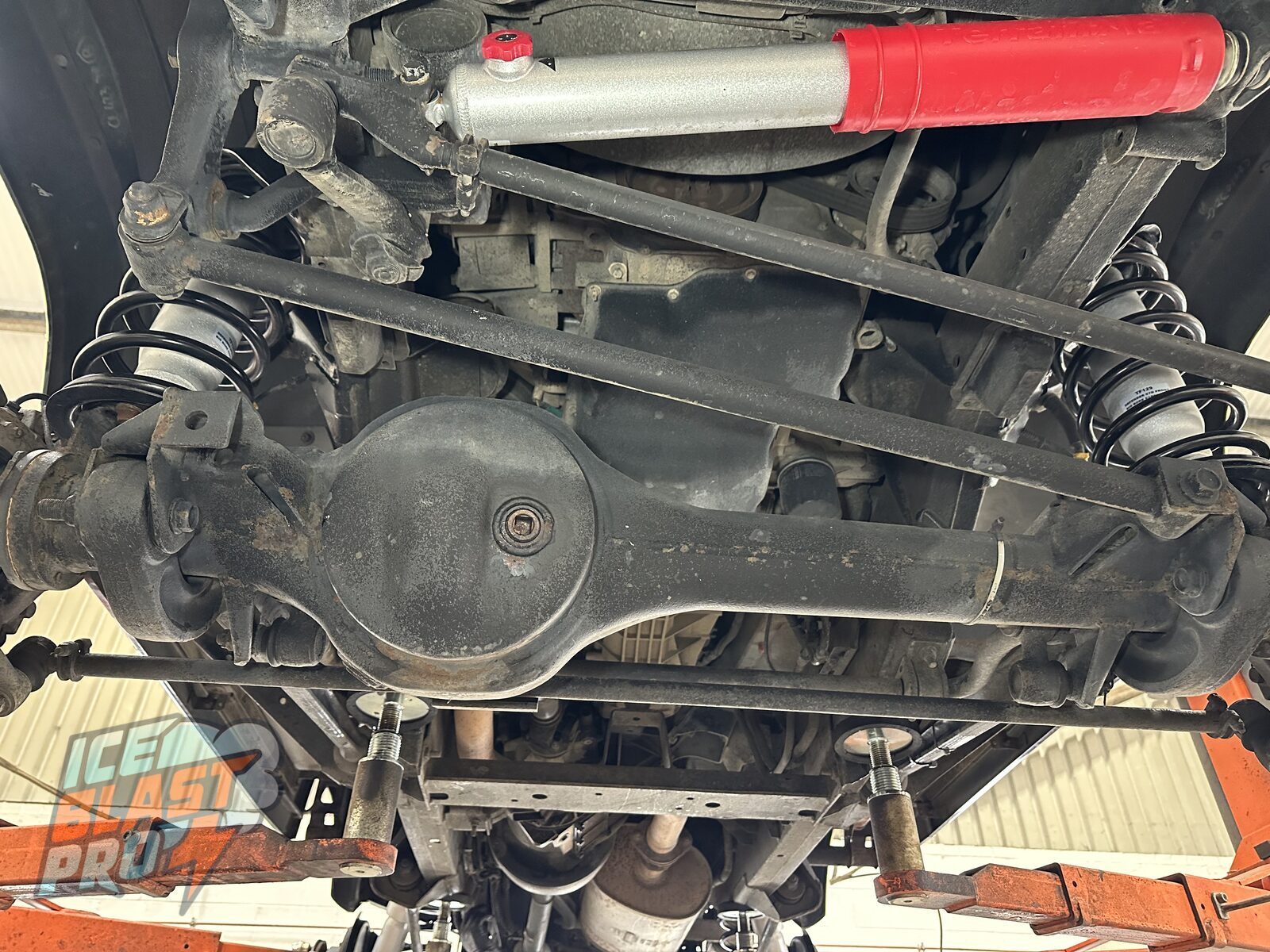
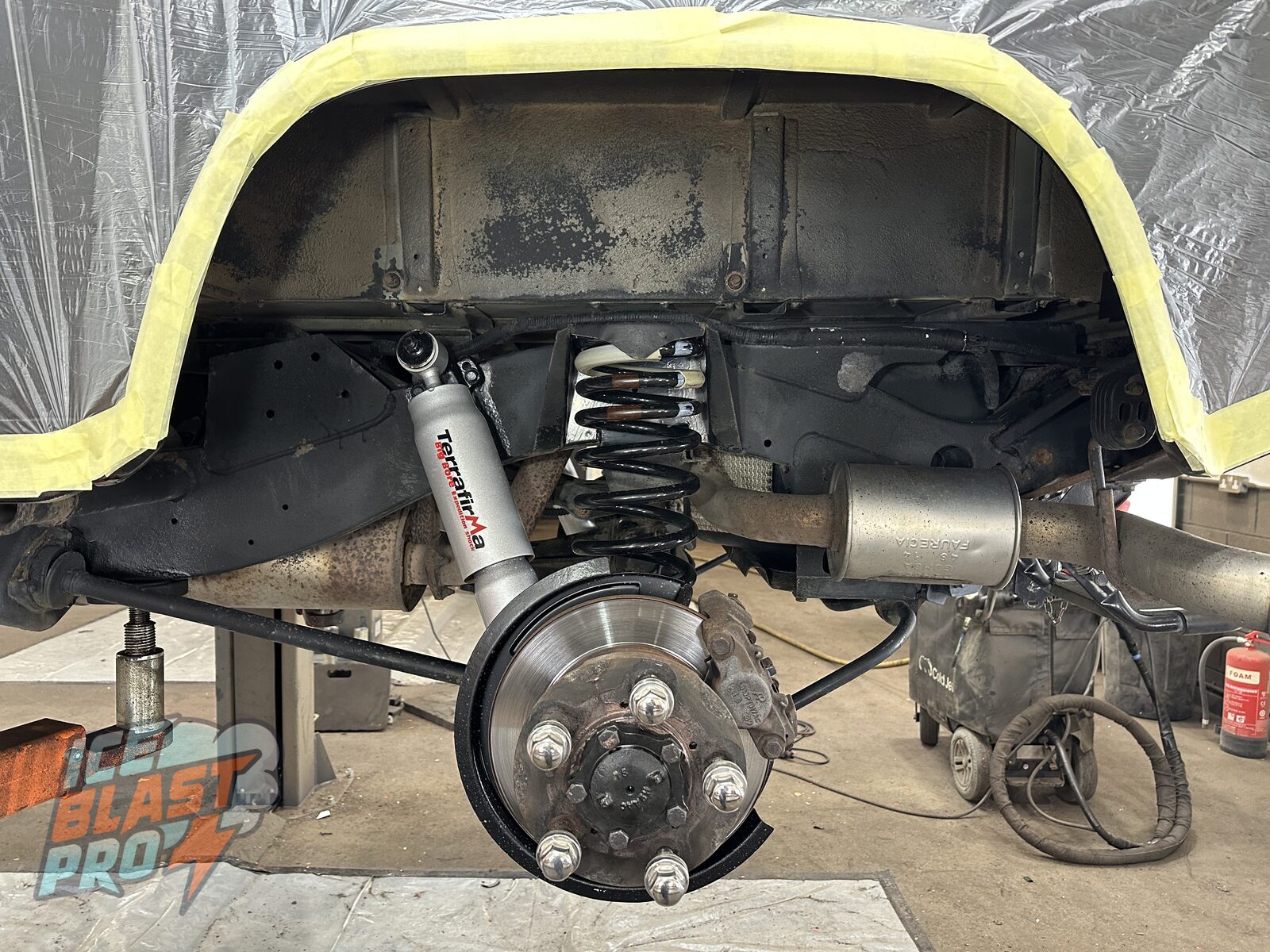
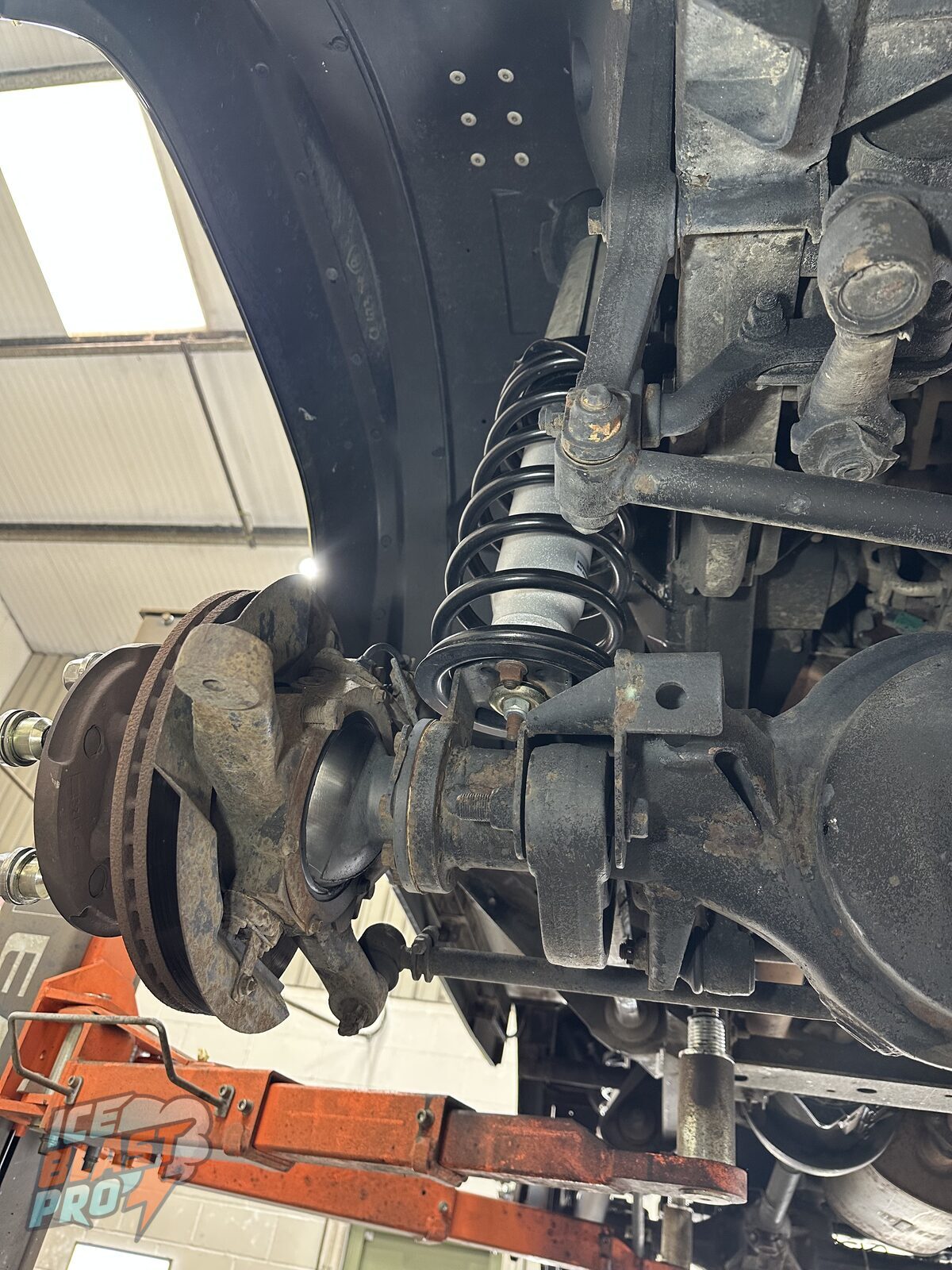
With the vehicle prepped, the underside is fully inspected and documented. The same photographs we work from are sent across, along with our recommendations – what requires treatment, where and why. No work begins until everything is reviewed and agreed.
What the test blasts revealed
Before committing to the full underside, we run test patches in key areas to see exactly what is under the dirt and confirm the metal is sound and treatable. On this Defender the ice lifted the road grime and surface corrosion cleanly, showing solid metal underneath and a chassis worth preserving properly.
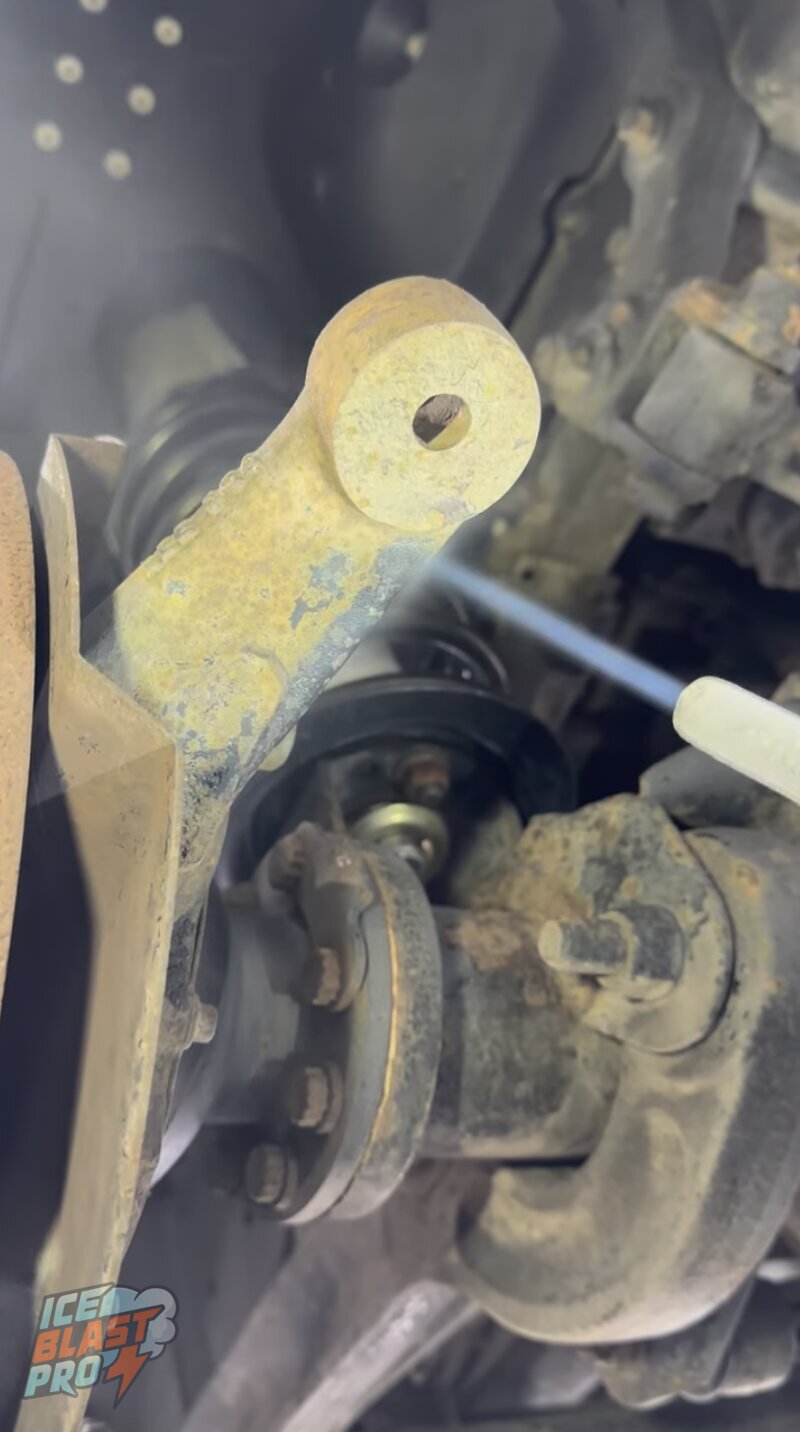
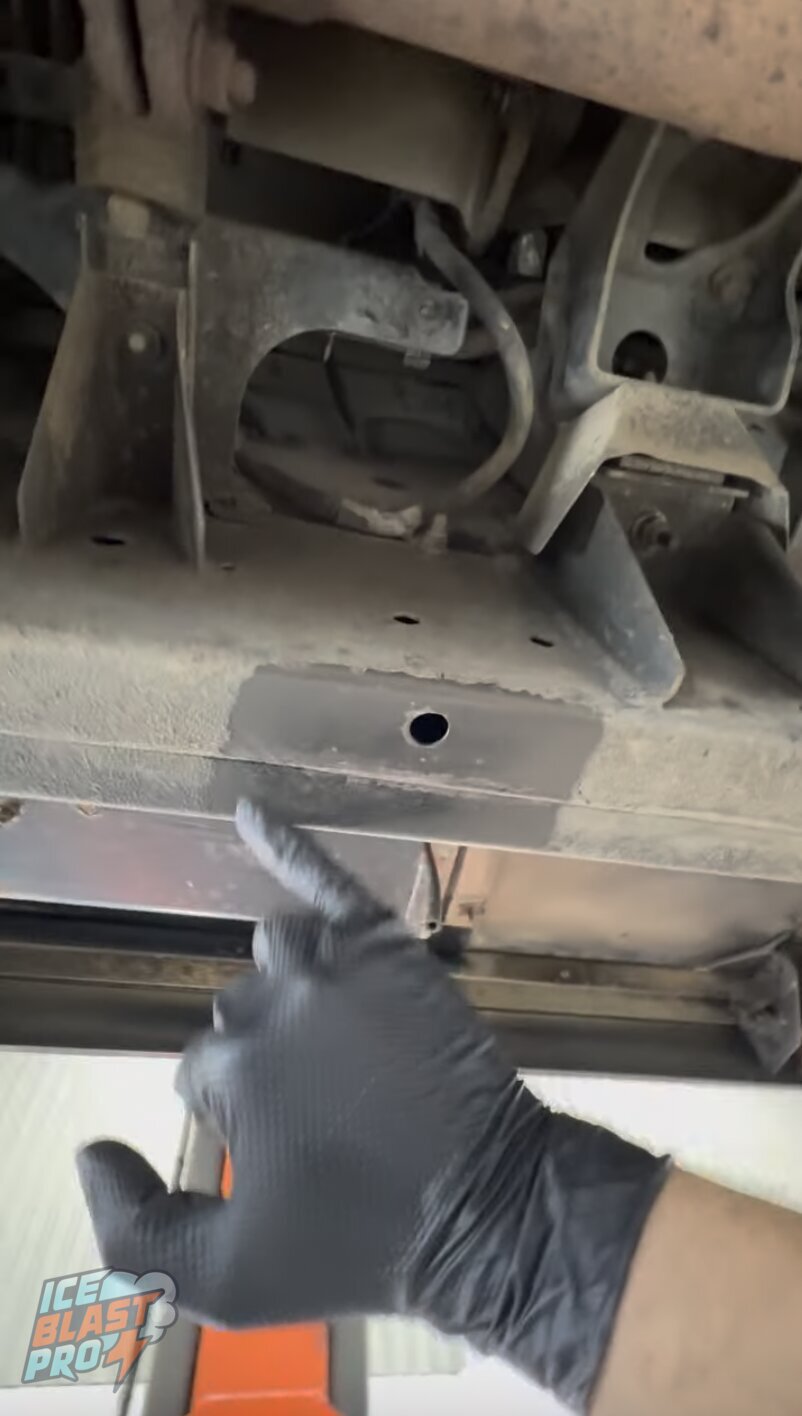
Dry ice blast the full underside, chassis and engine bay, neutralise any active corrosion with multi-stage rust treatment, then seal the whole underbody with a durable black protection finish. The customer sees this stage too – same photos, same conversation.
Cleaned, treated and protected
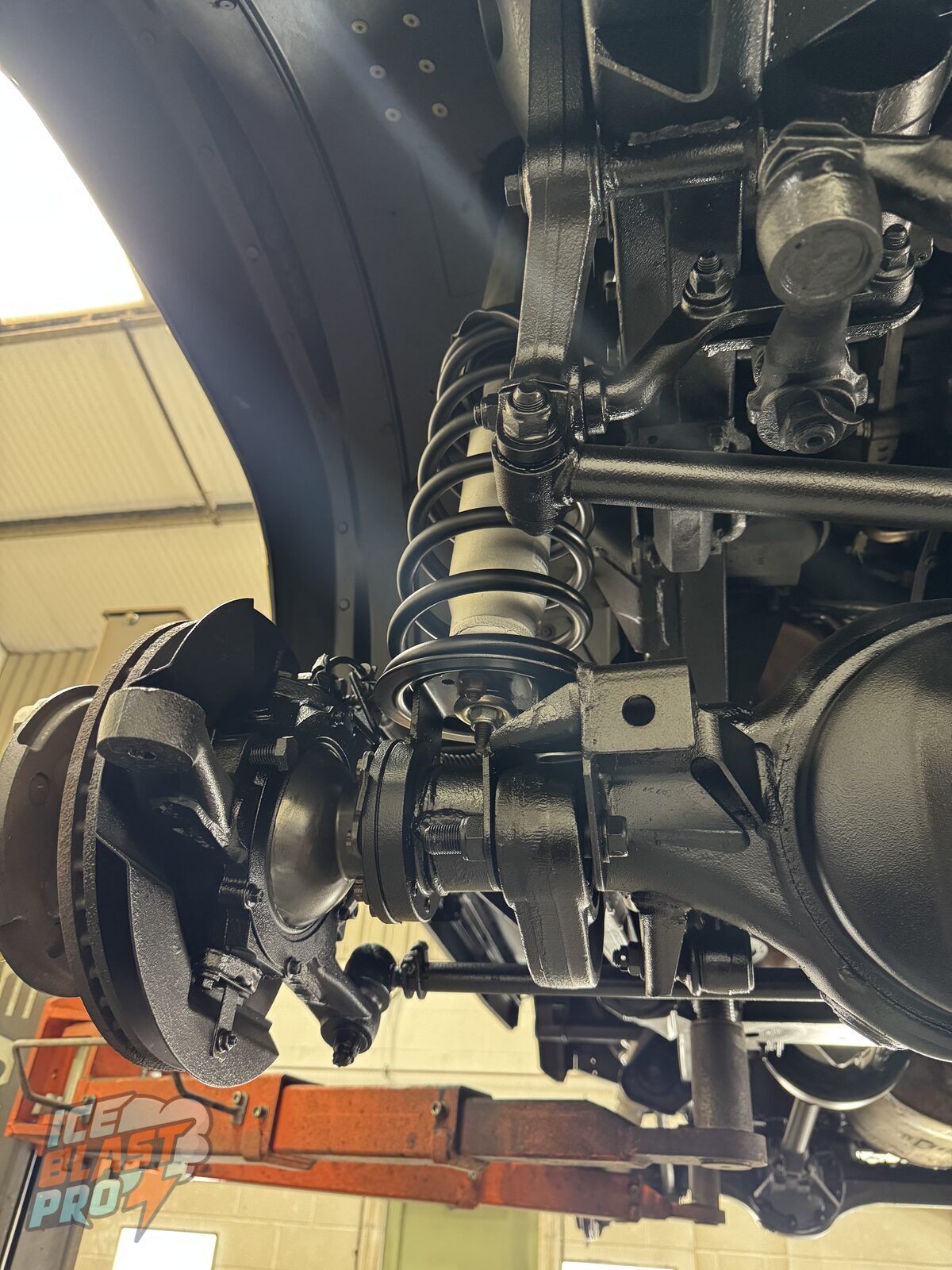
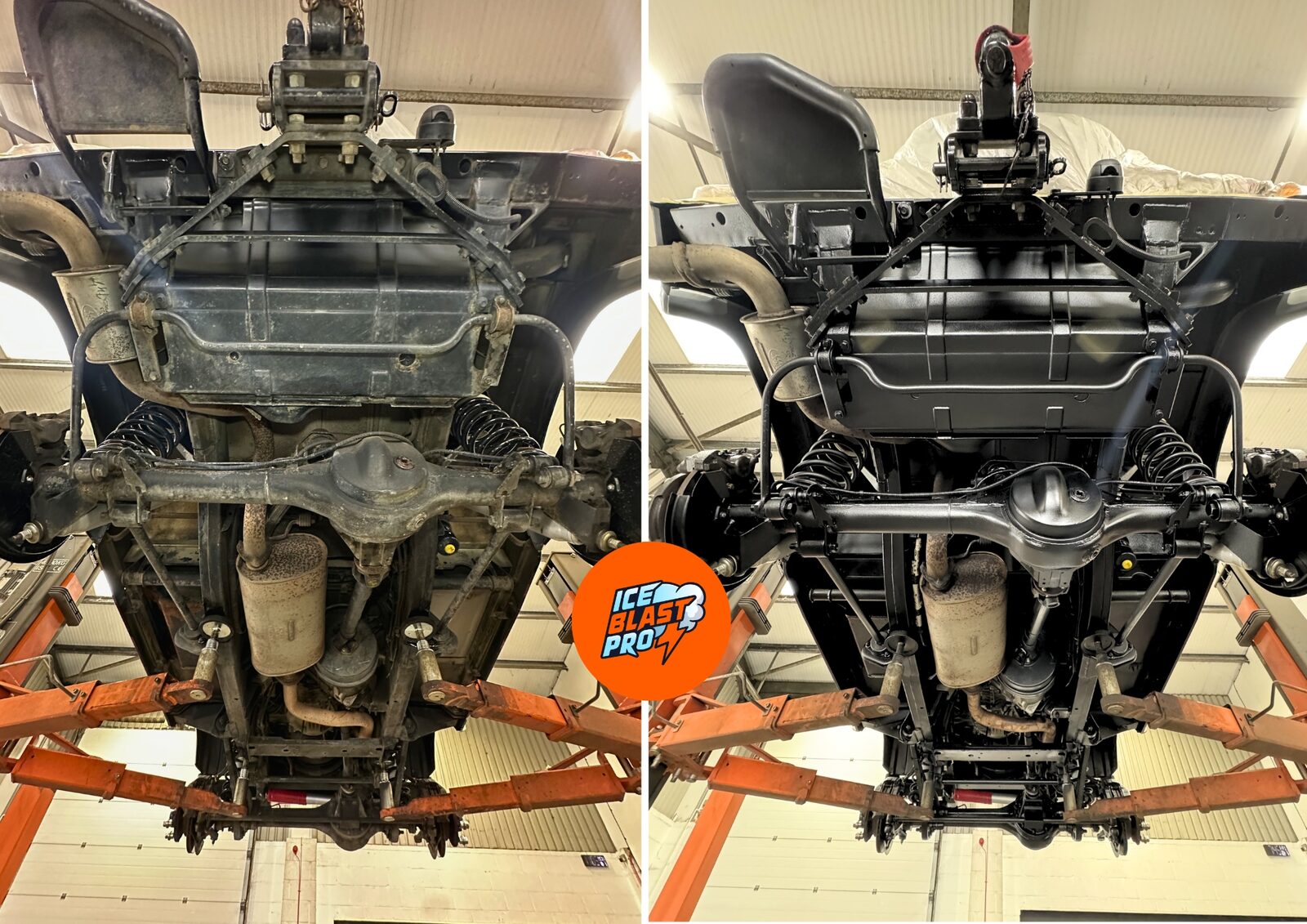
With the underside blasted back, every affected area went through multi-stage rust treatment to neutralise active corrosion and lay a sound foundation, then the whole underbody was sealed with a durable black protection finish. The before-and-after composites tell the story area by area – the same components, cleaned back, treated and protected.
A black finish suits a working 4x4 like this: it is tough, it hides the daily knocks of off-road and winter use, and it leaves a clean, consistent underside that is easy to keep an eye on at the annual inspection.
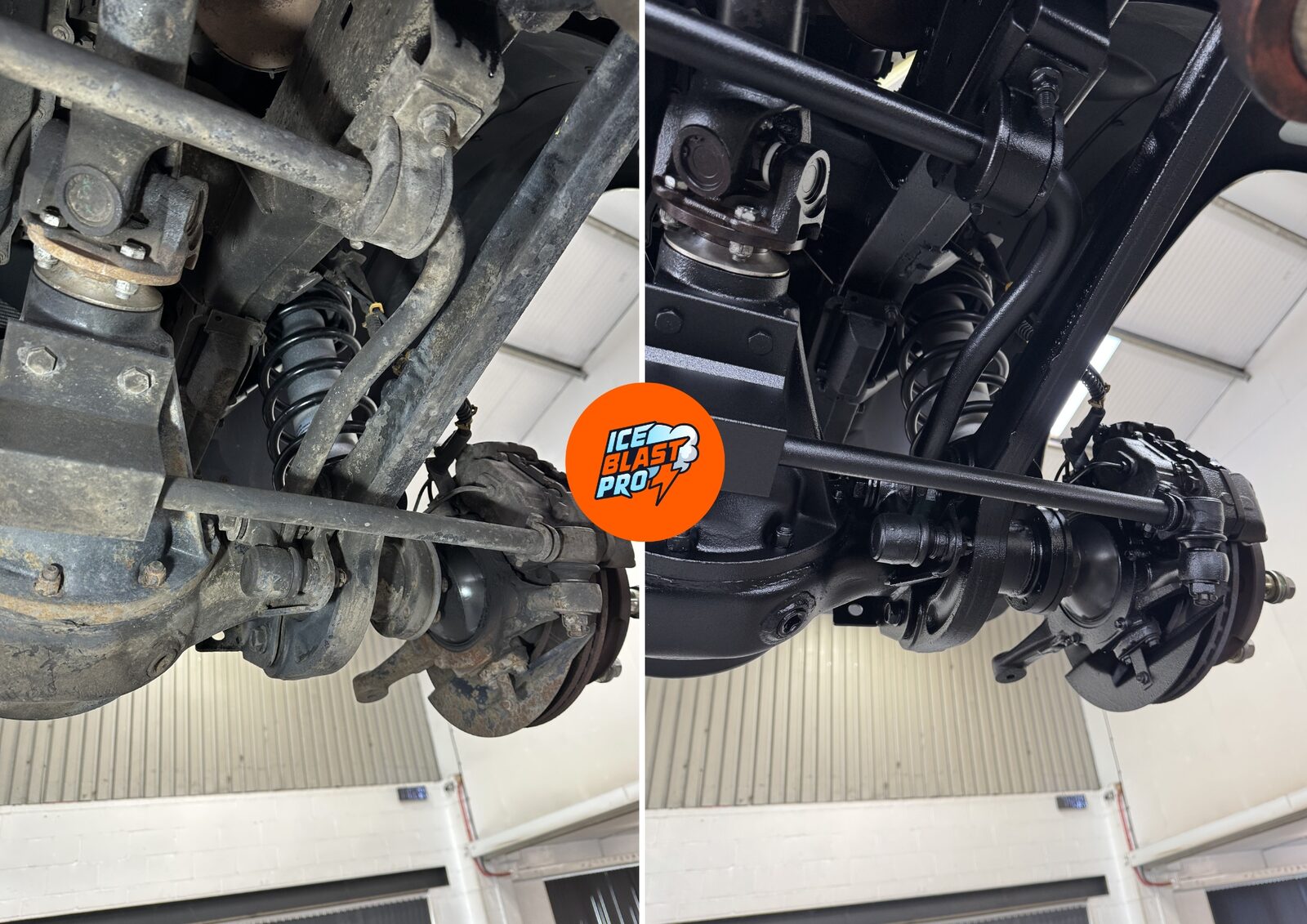
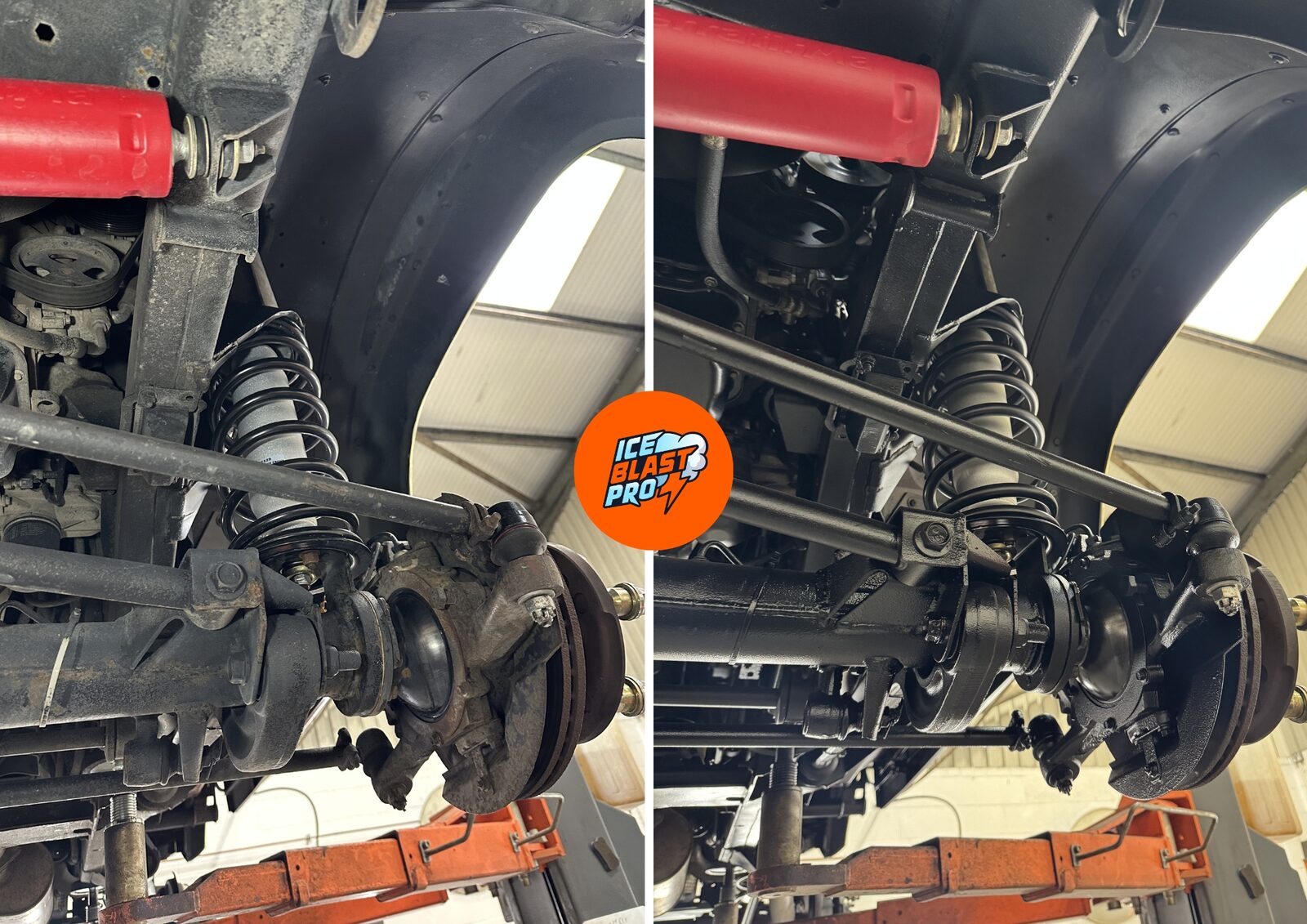
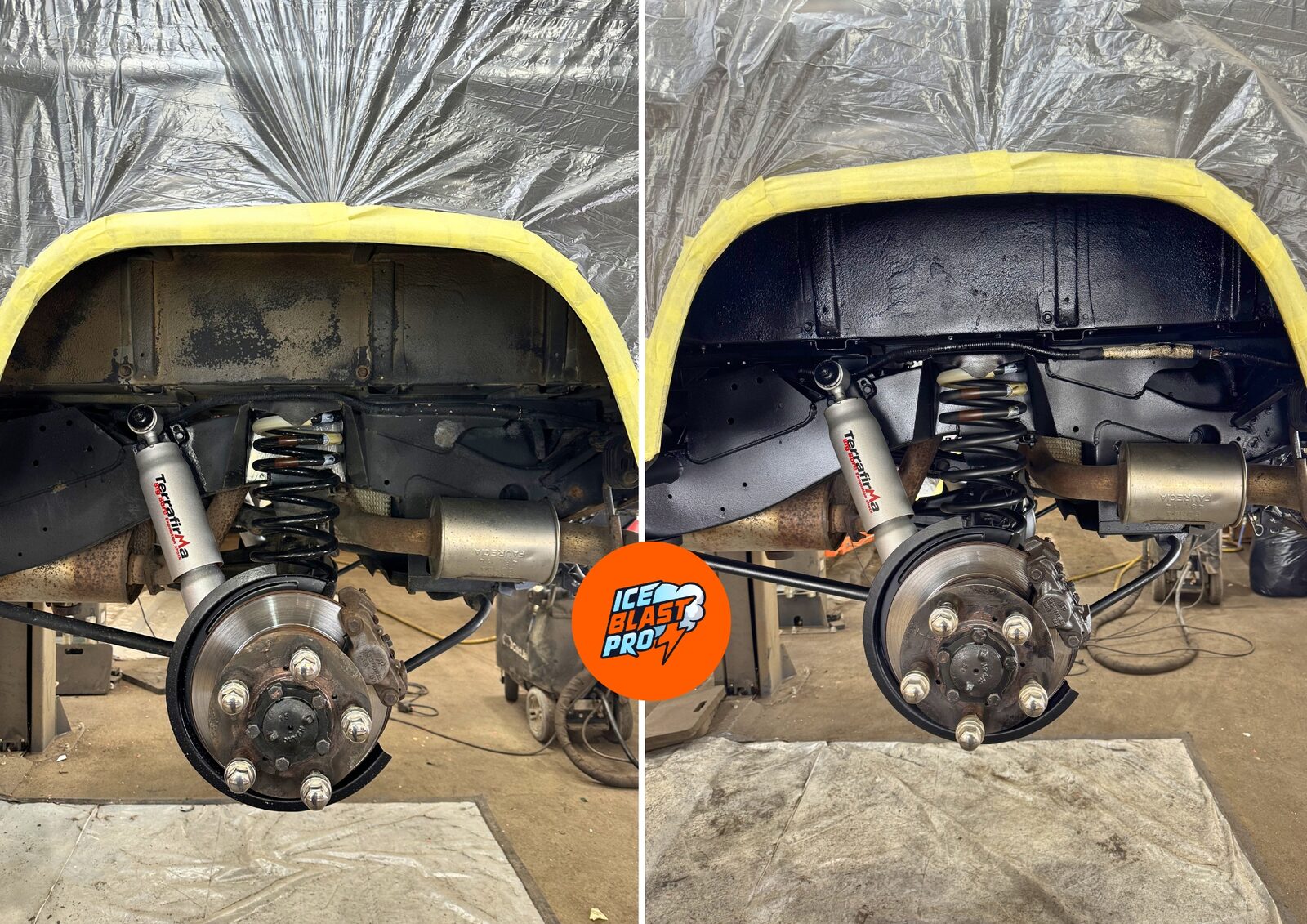
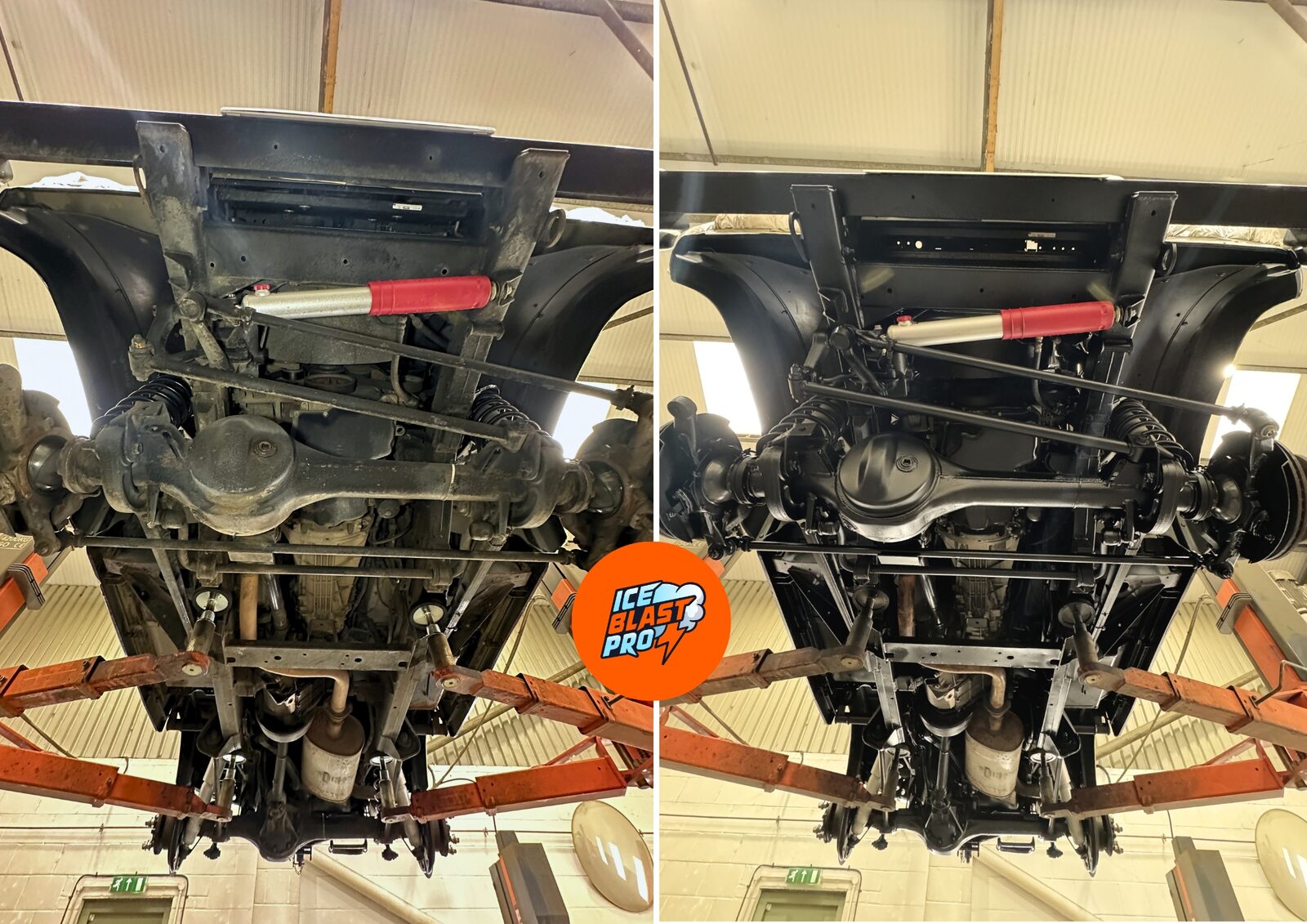
A clean, consistent underside
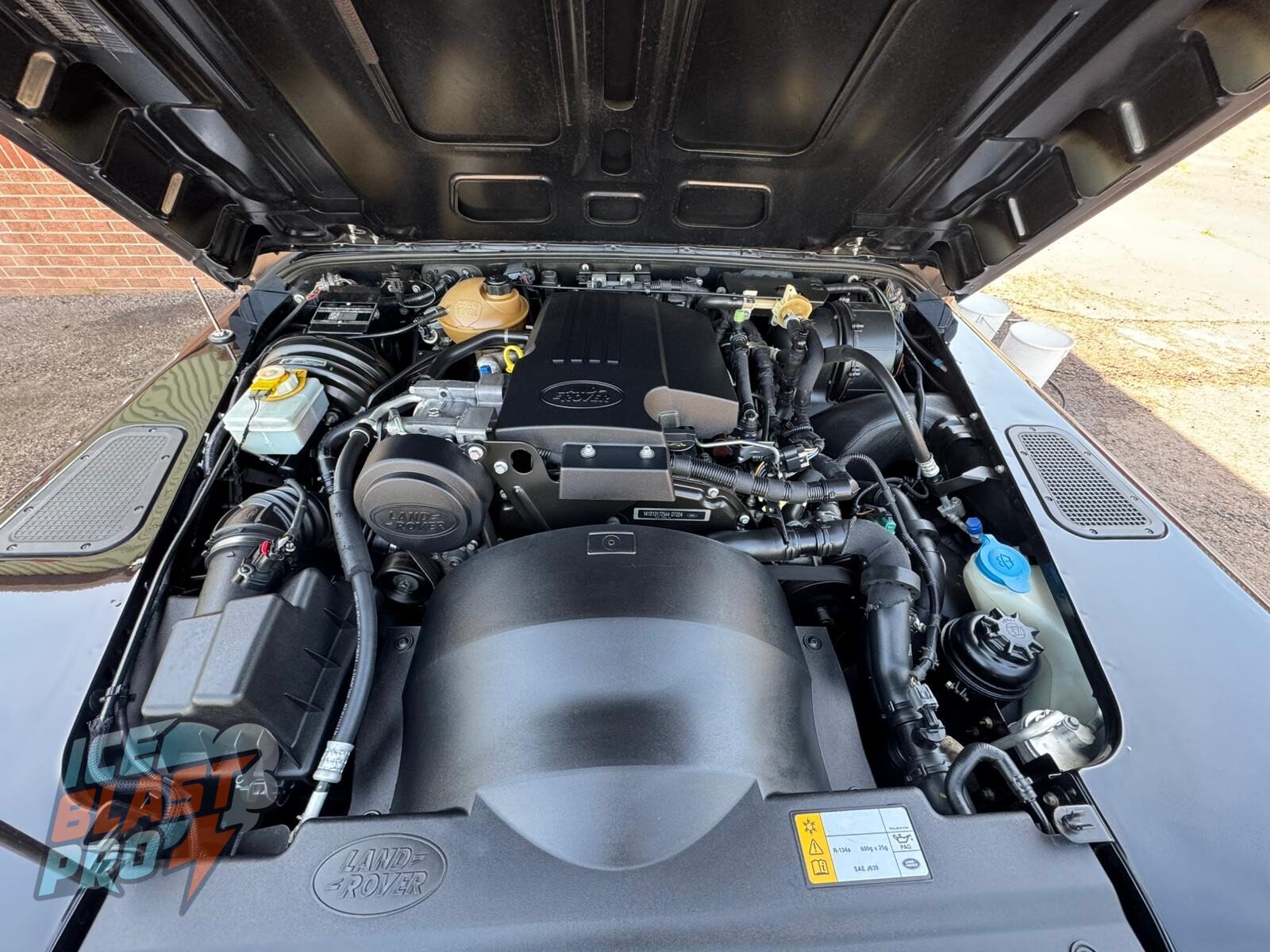
Across every corner the result is the same: grime and loose corrosion gone, active rust neutralised, and a durable, even protection sealing the metal. The engine bay was dry ice cleaned alongside the underside, so the whole vehicle is consistent from the chassis up.
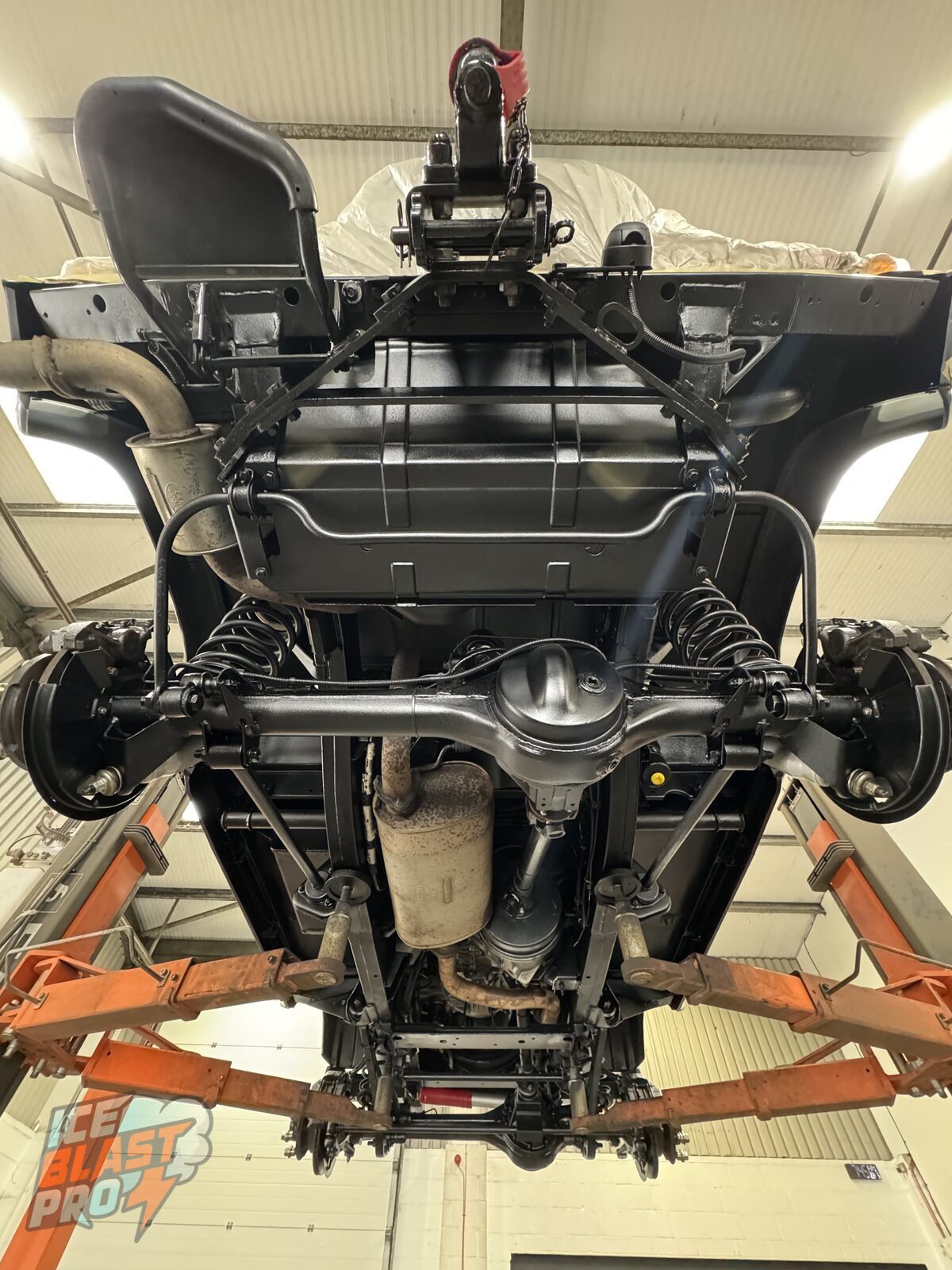
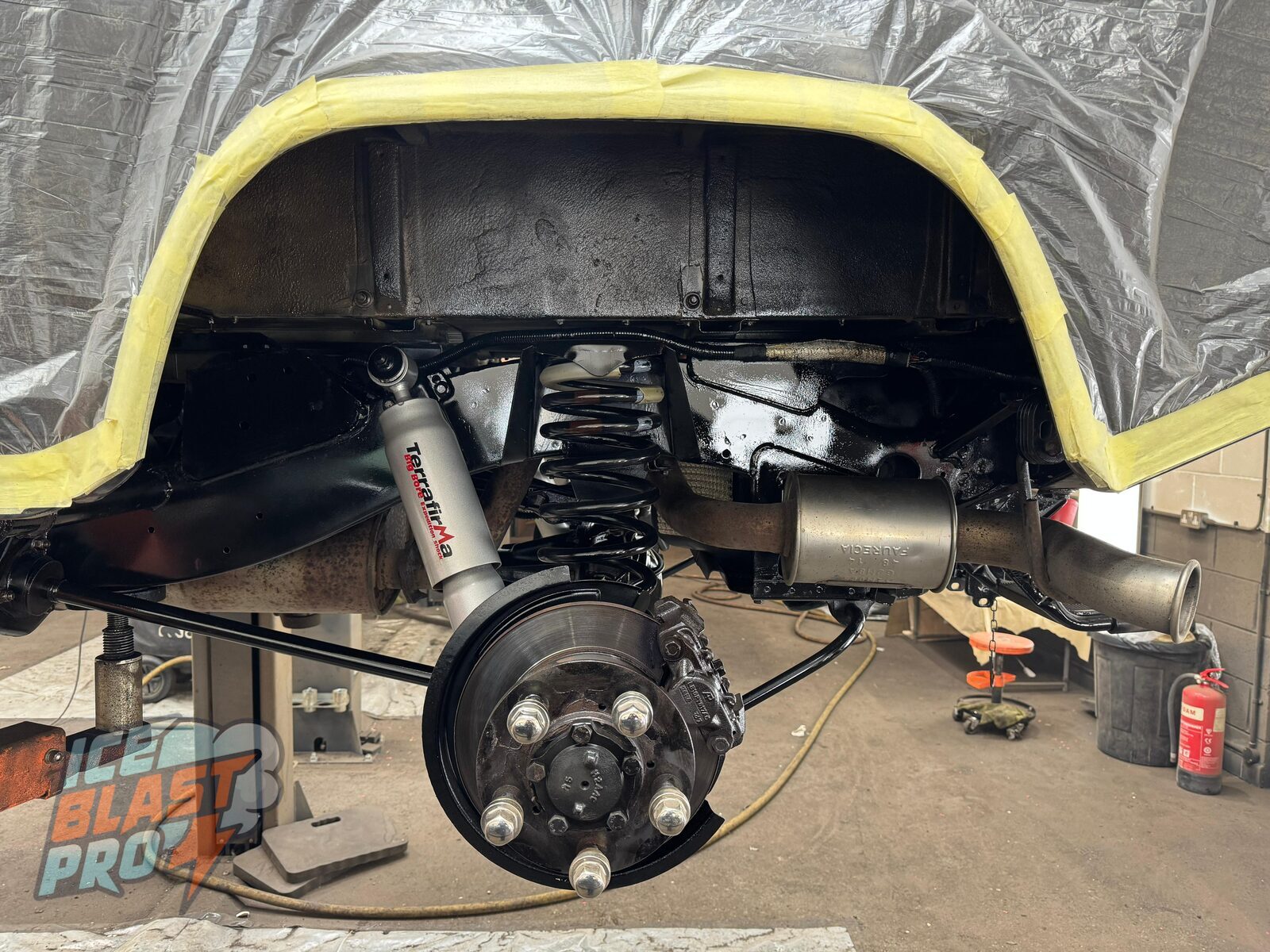
The final outcome
The underside is now properly preserved – structurally and visually. The chassis, axles and suspension are cleaned back, treated to neutralise active corrosion and sealed with a durable protection that stands up to how this Defender is actually used.
It is a documented underside, treated and protected for the long term, and supported by preservation inspections so any area that needs attention is picked up early rather than left to spread.
Treated. Protected. Documented.
The vehicle arrived carrying the usual wear of a hard-working 4x4. It leaves with a clean, treated and protected underside – every affected area neutralised and sealed with a finish chosen for the way it is used. The programme is documented and shared with the client throughout, and we remain available long after for advice and annual inspections.
Underbody, arches and engine bay treated
Water, abrasive media or residue left behind
Rust treatment to neutralise active corrosion
Documented and shared at every stage
Prepared for UK roads, salt and winter use
Preservation inspections available annually
Common questions about this project
What work did this Land Rover Defender 90 have done?
It went through a full underbody preservation programme covering the underbody, chassis, arches and engine bay: dry ice blasting to lift grime and loose corrosion, multi-stage rust treatment to neutralise active corrosion, then a durable underbody protection finish – all documented with before-and-after photos.
Is dry ice blasting safe for a Land Rover Defender underbody?
Yes. Dry ice blasting lifts road grime, loose corrosion and failing coatings with no water, no abrasive media and no residue, and the pressure is adjusted area-by-area so it stays gentle on the chassis, axles and suspension components.
Why does a Defender's underbody need protecting?
Defenders work hard on salted winter roads and off-road, and the chassis, outriggers, crossmembers and bulkhead are all corrosion-prone. Cleaning the underside back, treating any active rust and sealing it with a durable protection is what keeps the structure sound for the long term.
Was the engine bay cleaned as well?
Yes. The engine bay was dry ice cleaned as part of the same programme, lifting grime from around the components without water or residue so nothing sensitive is soaked in the process.
Is the work documented for the vehicle's history file?
Yes. The underside is photographed before, during and after, and the same photos and findings are shared with you throughout, then retained as a record for the vehicle's history file.
Explore the process behind this project
Your car could be next
Tell us about your vehicle and what you want to achieve, and we'll recommend the right preservation programme with a quote to match.
Get Instant Quote