Car Rust Treatment & Prevention UK: How to Stop Rust Properly
Rust often starts out of sight – under the car, behind arch liners, around seams, inside cavities or beneath old underseal. This practical UK guide explains what causes corrosion, whether rust can really be stopped, when dry ice blasting helps, and how professional underbody protection actually works.
Published
Rust is one of the biggest threats to a vehicle’s long-term condition. It often starts quietly, underneath the car, behind arch liners, around seams, inside cavities or beneath old underseal. By the time it becomes obvious on the outside, the corrosion may already have been developing for years.
In the UK, road salt, moisture, mud, winter use and trapped dirt all accelerate corrosion. That is why proper rust treatment and prevention is not just about making a car look cleaner. It is about inspecting the vehicle properly, understanding what is happening underneath, treating active corrosion and protecting the car for long-term ownership.
This guide explains what causes rust, whether it can be stopped, what professional rust treatment involves, and how dry ice blasting, laser cleaning, rust stabilisation and underbody protection can help preserve classic, performance and prestige vehicles.
Quick answer: what is the best way to treat and prevent rust on a car?
The best way to treat and prevent car rust is to find it early, clean the affected areas properly, stabilise active corrosion, repair weak metal where required, then protect the surface with a suitable coating or wax system. Simply painting, spraying or sealing over rust may hide the problem for a while, but it does not deal with the corrosion underneath.
For car underbodies, the correct process is usually:
- Inspect the vehicle properly
- Remove contamination, dirt, salt, oil and failing coatings
- Assess whether the rust is surface rust, deeper corrosion or structural rot
- Stabilise active corrosion where appropriate
- Repair or replace weak metal if required
- Apply the correct protective coating, underbody wax or cavity wax
- Inspect and maintain the protection over time
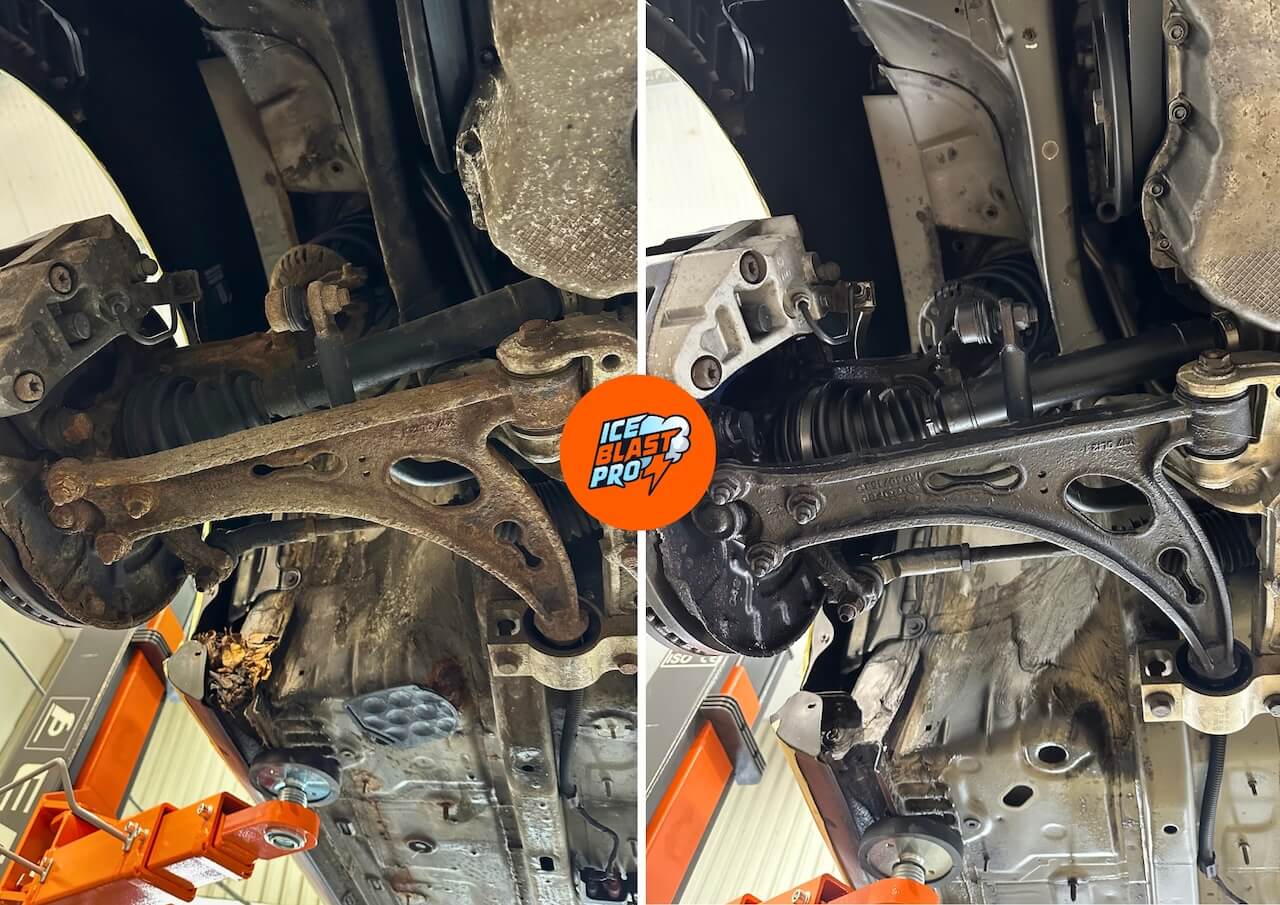
Dry ice blasting can play an important role because it removes contamination and loose corrosion without adding water or abrasive media. It exposes the true condition of the underside so rust can be treated properly before protection is applied.
Why do cars rust?
Rust forms when iron or steel reacts with oxygen and moisture. On cars, the process is accelerated by road salt, trapped dirt, humidity, stone chips, damaged coatings, poor drainage and previous repairs.
Rust is most common in areas where moisture and dirt sit for long periods. These areas include wheel arches, sills, jacking points, chassis rails, subframes, suspension arms, brackets, floorpans, seams, cavities and areas hidden behind arch liners or undertrays.
The visible bodywork can look clean while the underside is quietly deteriorating. This is why inspection is so important, especially on classic, performance, prestige and collector vehicles.
Why do UK cars rust so fast?
UK cars often rust quickly because the climate creates the perfect corrosion cycle. Roads are wet for much of the year, salt is used through winter, and the underside of the vehicle can remain damp long after the visible bodywork looks dry.
Road salt is especially damaging because it helps moisture stay active against metal surfaces. Once it collects behind arch liners, undertrays, seams, brackets or old underseal, corrosion can develop quietly for years before it becomes obvious.
This is why UK vehicles often need more than a basic clean. They need regular inspection, proper preparation and a protection system suited to British road conditions.
Surface rust, corrosion and rot: what is the difference?
Surface rust is the early stage. It usually appears as light orange or brown staining on exposed metal. If caught early, it can often be cleaned, stabilised and protected.
Corrosion is more advanced. The rust has started to attack the metal more deeply and may include pitting, scaling or weakened areas. This usually needs more careful preparation and treatment before protection is applied.
Rot is severe corrosion. The metal has lost strength, become perforated or started to break away. At this point, coating or rust converter is not enough. Welding, fabrication or replacement may be required before the vehicle can be protected properly.
Understanding the difference matters because each stage needs a different response.
Can you stop rust once it starts?
You can often stop or slow rust once it starts, but only if the affected area is treated properly. The first step is to remove dirt, salt, loose corrosion and failing coatings so the true condition can be seen.
If the rust is light surface corrosion, it may be possible to clean it, stabilise it and protect it. If the corrosion has gone deeper, the area may need laser cleaning, rust stabilisation, coating, cavity wax or repair. If the metal is rotten, it needs repair or replacement before any protection system will be effective.
The earlier rust is found, the easier it usually is to manage.
Can rust be permanently removed from a car?
Rust can sometimes be removed from a specific area, especially if it is only surface rust. However, no treatment can permanently guarantee that a vehicle will never rust again. Rust prevention depends on preparation, the quality of treatment, the protection system used, how the vehicle is stored, how it is used and whether the protection is inspected over time.
The aim of professional rust treatment is to remove or stabilise corrosion where possible, protect the metal and reduce the chance of rust returning.
A well-prepared and properly protected vehicle can stay in much better condition, but rust prevention is a maintenance process, not a one-time magic fix.
Can you just paint over rust on a car?
No. Painting over rust is usually a short-term cosmetic fix. The surface may look better for a while, but active corrosion can continue underneath the paint. Eventually the coating can bubble, lift or fail.
Before paint, underseal or protective coating is applied, the rust needs to be cleaned, assessed and treated. If the metal is weak or perforated, it may need repair before any coating is applied.
The same applies to underseal. Sealing over rust can make the underside look protected while corrosion continues underneath – which is exactly why you should not underseal over rust.
Can I just spray paint over rust?
Spray painting over rust has the same problem as painting over rust. It can hide the corrosion, but it does not remove or neutralise what is happening underneath.
Spray paint may be suitable after proper preparation, but not as a substitute for rust treatment. If the surface is still contaminated, damp or actively corroding, the finish is likely to fail.
Can WD-40 remove rust on my car?
WD-40 can help displace moisture and may loosen light surface contamination on small areas, but it is not a proper rust treatment for car underbodies, sills, chassis areas or structural corrosion.
It should not be relied on to remove serious rust, stabilise active corrosion or provide long-term underbody protection.
For vehicle rust, the correct approach is cleaning, assessment, stabilisation, repair where required and suitable protection.
How do professionals remove car rust?
Professionals remove car rust by choosing the method based on the surface, severity and location. This may include dry ice blasting, laser cleaning, mechanical preparation, chemical rust treatment, rust conversion, localised repair, welding or replacement parts.
For underbodies, dry ice blasting is useful because it removes contamination, salt, oil, loose rust and failing coatings without adding water. Laser cleaning may then be used on deeper pitted corrosion, seams, edges or areas where more precise rust removal is required.
Professional rust treatment is not just about removing the visible rust. It is about understanding the condition of the metal, treating what is active and applying a protection system that suits the vehicle.
What role does dry ice blasting play in rust treatment?
Dry ice blasting is a preparation method. It removes road salt, oil, grease, dirt, loose corrosion and failing coatings so the real condition of the metal can be seen.
It does not rebuild metal, repair holes or reverse structural corrosion. Its value is that it cleans the surface without adding moisture or leaving abrasive media behind. Once the underside is clean, corrosion can be assessed and treated properly before protection is applied.
This is why dry ice blasting is commonly used as the first stage of underbody preservation. It exposes what is actually there.
When is laser cleaning needed?
Laser cleaning can be useful when rust has pitted into the metal, or when corrosion sits around weld seams, fasteners, brackets, edges or delicate areas where blasting alone may not reach deeply enough.
Dry ice blasting is excellent for removing contamination, loose corrosion and failing coatings across larger areas. Laser cleaning is more targeted. It can be used after blasting to treat stubborn corrosion more precisely before rust stabilisation or protective coating is applied.
The two methods work well together as part of a preservation process.
What is the best rust preventative for cars?
The best rust preventative depends on the vehicle, condition and how the car is used. A classic stored indoors may need a different system from a 4x4, daily driver or performance car used through winter.
Common rust prevention options include clear underbody wax, black underbody wax, cavity wax, lanolin-based products, rust inhibitors, corrosion stabilisers, Dinitrol-style systems, Bilt Hamber-style systems and premium coatings.
The most important factor is not only the product. It is the preparation before the product is applied. A protective coating only works properly if the surface underneath has been cleaned, assessed and prepared. See how the main systems compare in Lanoguard vs Dinitrol vs Bilt Hamber.
Which is the best rust inhibitor?
There is no single best rust inhibitor for every car. The right choice depends on the metal condition, existing coatings, whether rust is active, whether the finish needs to remain clear, and how exposed the area is to water, salt and road dirt.
For long-term results, rust inhibitors should be part of a system:
- Clean the surface properly
- Stabilise corrosion where needed
- Protect exposed surfaces
- Treat cavities where required
- Inspect the vehicle over time
A product used on the wrong surface, or over trapped contamination, will not perform properly.
Is anti-rust coating worth it?
Anti-rust coating is worth it when the surface is prepared properly first. A coating applied over dirt, trapped moisture or untreated corrosion can fail early or hide problems. A coating applied after proper cleaning, rust assessment and stabilisation can help protect the vehicle from moisture, salt and future deterioration.
For classic, performance and prestige cars, anti-rust coating can also support long-term ownership, maintenance records and resale confidence when the work is properly documented.
The value is not just in the coating. The value is in the process before the coating goes on.
What makes rust worse on a car?
Rust gets worse when moisture, oxygen and salt stay in contact with exposed metal. Trapped mud, blocked drainage, stone chips, damaged underseal, old wax, poor repairs and winter road salt all increase the risk.
Sealing over rust can also make things worse if moisture is trapped underneath the coating. The underside may look protected, but corrosion can continue beneath the surface.
Rust is also made worse by neglect. Small areas of surface rust can become much larger problems if they are not inspected and treated early.
Can a rusty car be saved?
A rusty car can often be saved, depending on how far the corrosion has gone. Light surface rust and moderate corrosion can often be cleaned, stabilised and protected. Heavier corrosion may need welding, replacement panels, new brackets, subframe work or restoration before protection is applied.
The key is proper inspection. Until the underside is cleaned and assessed, it is difficult to know whether the car needs simple treatment, localised repair or more serious restoration. A pre-purchase underbody inspection is one way to find out before you commit.
A rusty car should not automatically be written off, but it should not be hidden under fresh coating either.
How much rust is too much on a car?
Rust becomes too much when it affects structural strength, safety-critical mounting points, suspension areas, brake or fuel line supports, sills, chassis sections or MOT-critical areas.
Surface rust on exposed components is often manageable. Perforation, severe scaling, weak metal and structural corrosion need proper repair.
If there is any doubt, the vehicle should be inspected before coating or underseal is applied.
How much does it cost to fix rust on a car?
The cost to fix rust on a car depends on the location, severity and whether the work is cosmetic, protective or structural.
Small surface rust areas may be relatively straightforward. Full underbody cleaning, rust stabilisation and protection can move into the low-to-mid four figures. Structural corrosion, welding, panels or replacement parts can cost significantly more. Our dry ice blasting cost guide explains how a quote is built.
The most accurate quote comes after photos, video or inspection, because rust is often worse than it first appears once old coatings and contamination are removed.
Do car detailers fix rust spots?
Some detailers may clean light surface marks or improve the appearance of small areas, but rust treatment and corrosion protection are usually specialist work.
If rust is active, structural, hidden under coatings or present on the underbody, it should be assessed properly before being painted, polished or sealed.
For underbody rust, a preservation specialist or restoration workshop is usually more appropriate than a cosmetic detailer.
How long will a car with rust last?
How long a rusty car lasts depends on where the rust is, how severe it is and whether it affects structural areas.
A car with minor surface rust may last for many years if treated and protected early. A car with corrosion in sills, chassis rails, suspension mounting points or floor sections may need repair much sooner.
Rust should not be judged only by how it looks from outside. The underside needs proper inspection.
Which cars are most prone to rust?
Any car can rust if moisture, salt and dirt are allowed to sit against exposed metal.
Older vehicles, classics, 4x4s, vans, cars used through winter and vehicles with damaged underseal or previous repairs are often more vulnerable. Cars with complex undertrays, wheel arch liners and hidden cavities can also hold moisture and road salt where owners cannot easily see it.
A low-mileage car can still rust if it has been stored badly, used on salty roads or left with trapped moisture underneath.
What does the military use to prevent rust?
Military and industrial corrosion prevention usually relies on the same core principles: clean the surface properly, remove or stabilise corrosion, apply suitable coatings, protect cavities and maintain the protection over time.
The exact product is less important than the system and the environment the vehicle or equipment is exposed to.
For cars, the lesson is simple: preparation matters more than the label on the coating.
What is the silent killer in cars?
Rust is often called the silent killer of cars because it can develop out of sight for years before it becomes obvious. By the time bubbling paint, MOT advisories or visible holes appear, corrosion may already have spread beneath underseal, behind liners, inside cavities or around structural areas.
This is why underbody inspection matters. A car can look excellent from above and still have serious corrosion developing underneath.
How IceBlastPro treats and prevents underbody rust
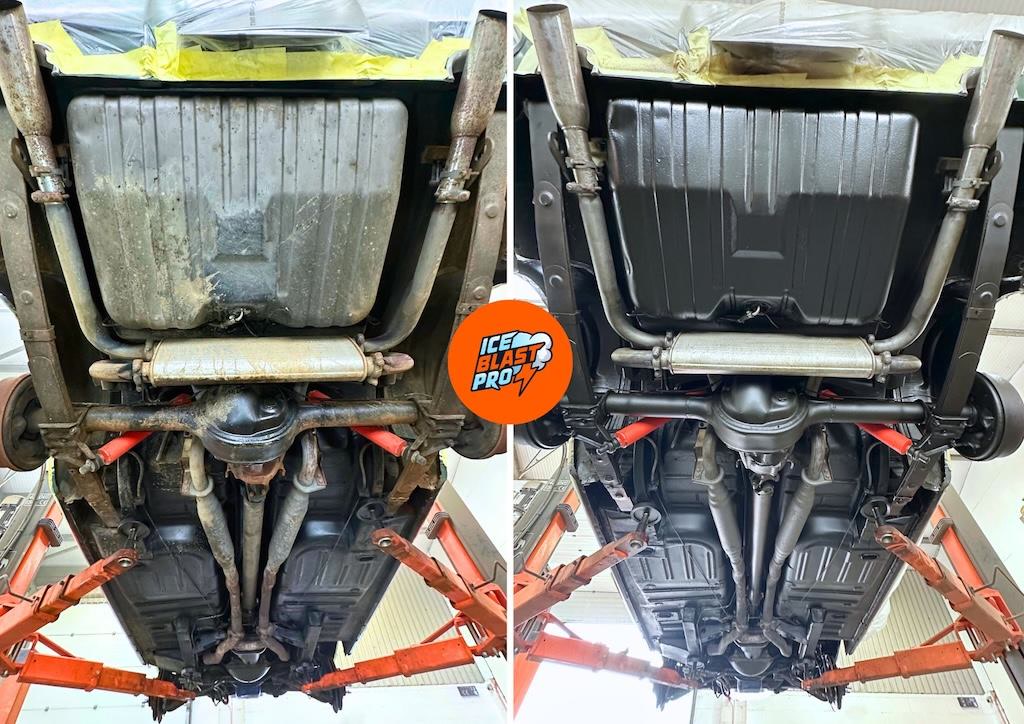
At IceBlastPro, rust treatment starts with inspection. We assess the underside, remove wheels, liners and trays where required, and use dry ice blasting to remove contamination, road salt, oil, grease and loose corrosion.
Once the true condition is visible, we document what we find. Surface rust can be stabilised. Deeper pitted corrosion may require laser cleaning or multi-stage treatment. Weak metal, holes or serious structural corrosion may need repair before protection is applied.
Only once the surface has been cleaned and assessed do we apply the correct protection system. This may include clear protection, black underbody coating, cavity wax, lanolin-based products, Dinitrol, Bilt Hamber or premium coating systems depending on the vehicle and intended use.
The goal is not to make rust disappear for a photo. The goal is to inspect, treat, protect and document the underside properly.
Final thoughts
Rust treatment and prevention are not about hiding corrosion. They are about finding it early, preparing the surface properly, treating what is active and protecting the vehicle for the way it will actually be used.
For UK vehicles, especially classics, performance cars, prestige vehicles, 4x4s and cars stored or driven through winter, the underside deserves more than a quick clean or a layer of underseal. It needs inspection, preparation, treatment, protection and documentation.
If you are unsure what condition your vehicle is in, send underside photos or a short video. IceBlastPro can advise whether it needs light cleaning, rust treatment, underbody preservation or further repair before protection.
Common questions
What is the best rust preventative for cars?
The best rust preventative depends on the vehicle, condition and use. Clear wax, black underbody wax, cavity wax, lanolin-based products, rust inhibitors, Dinitrol, Bilt Hamber and premium coatings can all have a place. The most important factor is proper preparation before protection is applied.
What is the best treatment for rust on cars?
The best treatment depends on the severity. Surface rust can often be cleaned, stabilised and protected. Deeper corrosion may need laser cleaning, rust converter, coating or repair. Structural rot needs welding or replacement before protection is applied.
What is the best way to prevent rust on a vehicle?
The best way to prevent rust is regular inspection, proper cleaning, early treatment of exposed metal, cavity protection and a suitable underbody protection system. On valuable vehicles, the underside should be checked regularly rather than waiting for visible corrosion.
Can you permanently get rid of rust on a car?
You can remove rust from specific areas, but no treatment can guarantee that a car will never rust again. Long-term rust control depends on proper preparation, protection, storage, vehicle use and ongoing inspection.
What permanently stops rust?
Nothing permanently stops rust in every situation. The best long-term control is proper preparation, rust stabilisation, suitable protection, cavity wax where needed and regular inspection.
Can rust on a car be fixed?
Yes, rust can often be fixed, but the method depends on how far it has gone. Surface rust may be treated and protected. Structural rust may need welding, fabrication or replacement parts.
Is a little rust on a car okay?
A little surface rust is common, especially underneath older vehicles. It should still be inspected and treated early because small rust areas can spread when exposed to moisture and salt.
Should I paint over rust on a car?
No. Rust should be cleaned and treated before painting. Painting directly over rust can trap active corrosion beneath the coating.
Can you stop rust once it starts?
Yes, rust can often be stopped or slowed if it is treated properly. The area needs to be cleaned, assessed, stabilised and protected. If the metal is weak or perforated, repair may be needed first.
Can a rusty car be saved?
Often, yes. A rusty car can sometimes be saved if the corrosion is caught before it seriously weakens structural areas. The first step is proper inspection so the real condition can be understood.
Can I just spray paint over rust?
No. Spray paint can hide rust temporarily, but it does not treat the corrosion underneath. Rust should be cleaned and stabilised before any paint or coating is applied.
What makes rust worse on a car?
Moisture, road salt, trapped mud, damaged coatings, blocked drainage, stone chips and poor repairs can all make rust worse. Sealing over untreated rust can also trap corrosion underneath.
Why do UK cars rust so fast?
UK cars rust quickly because the climate is wet, road salt is used in winter, and the underside of the vehicle often stays damp. Salt and moisture collect behind arch liners, undertrays, seams and old coatings.
How much would it cost to fix rust on a car?
The cost depends on the severity and location. Minor surface rust can be relatively simple to treat. Full underbody cleaning, rust stabilisation and protection can move into the low-to-mid four figures. Structural repairs, welding and replacement parts can cost more.
Can rust be completely removed from a car?
Surface rust can often be removed. Deeper corrosion may be reduced, stabilised or treated. Structural rot cannot simply be removed; it usually needs repair or replacement.
Do car detailers fix rust spots?
Some detailers may improve the appearance of small marks, but active rust and underbody corrosion usually need specialist treatment. Underbody rust should be assessed properly before being sealed, painted or coated.
How much rust is too much on a car?
Rust is too much when it affects structural strength, suspension mounting points, sills, chassis rails, floor sections, brake or fuel line supports, or any MOT-critical area. Surface rust is often manageable, but perforation and weakened metal need proper repair.
Worried about rust underneath your car?
Send us your vehicle details, underside photos or a short video and we’ll advise whether your car needs cleaning, rust treatment, underbody preservation or further inspection.
Get Instant Quote