Dry Ice Blasting vs Pressure Washing, Steam Cleaning and Sandblasting for Cars
Pressure washing, steam cleaning and sandblasting all clean a car, but they are not the same job. This guide compares each method against dry ice blasting for underbodies, engine bays, rust, underseal, cost and safety – and where laser cleaning fits in.
Published
Quick answer: which cleaning method is best for a car?
There is no single best method – it depends on the surface, the contamination and the goal. For cleaning and preserving a complete car underside, engine bay or mechanical components, dry ice blasting is usually the safest all-round choice because it is dry, non-abrasive and leaves no media behind.
In short:
- Dry ice blasting – best for cleaning and preserving complete undersides, engine bays and components in situ.
- Pressure washing – quick for loose surface mud, but forces water into seams, cavities and electrics.
- Steam cleaning – useful on grease and grime, but adds heat and moisture that has to be dried out.
- Sandblasting – strips heavy rust on removed parts, but is abrasive and too aggressive for many in-situ areas.
- Laser cleaning – targeted removal of pitted rust or coatings, often used alongside dry ice rather than instead of it.
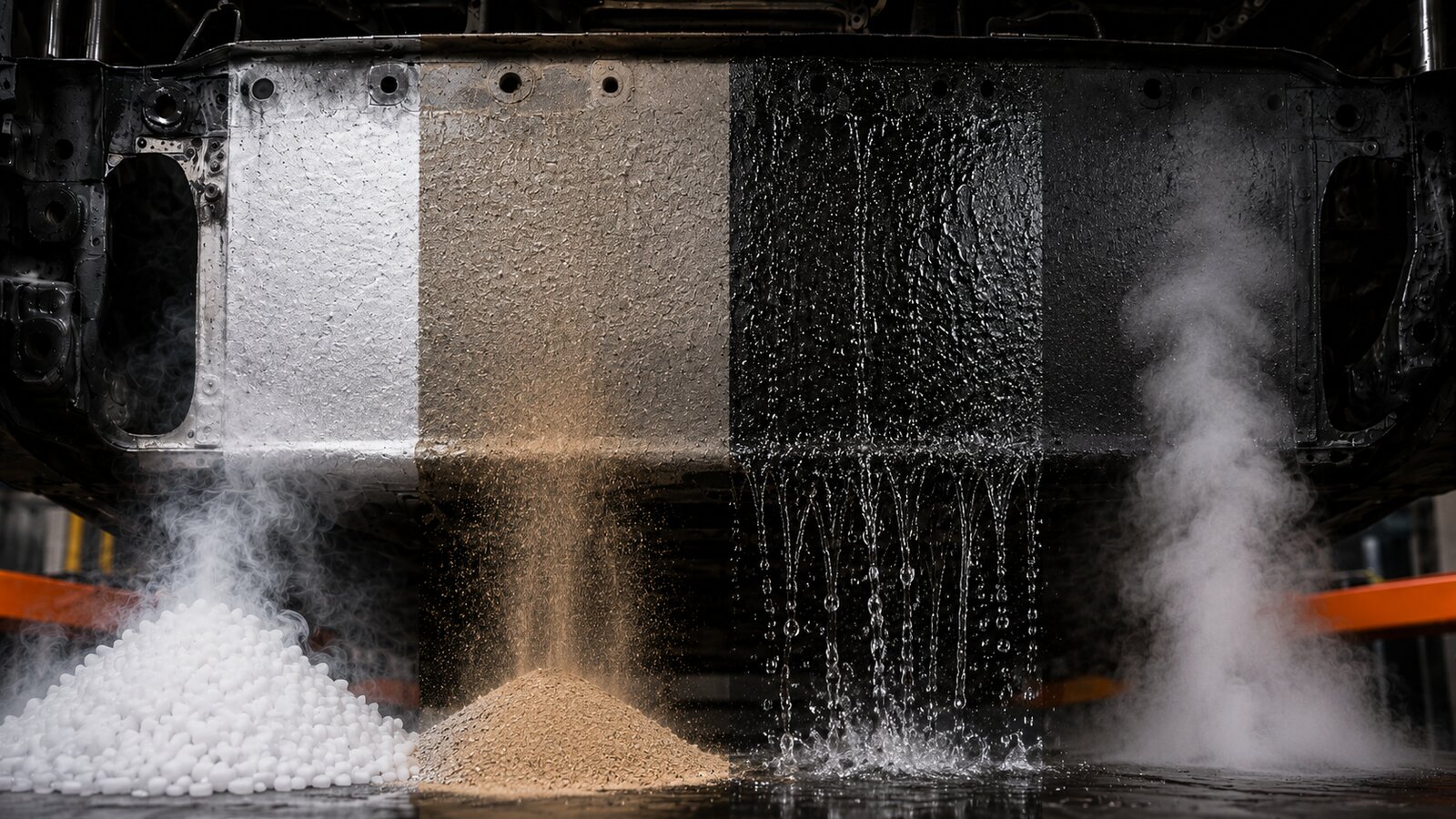
Comparison: dry ice blasting vs pressure washing, steam cleaning, sandblasting and laser cleaning
| Factor | Dry ice blasting | Pressure washing | Steam cleaning | Sandblasting | Laser cleaning |
|---|---|---|---|---|---|
| Adds water | No | Yes – high volume | Yes – heat and moisture | No | No |
| Abrasive | No | No | No | Yes – strips the substrate | Targeted – ablates coating or rust |
| Leaves media or residue | None – the ice turns to gas | Water and run-off | Moisture to dry out | Spent grit in seams | None |
| Heat into panels | Minimal | Low | Moderate – hot steam | Can warp thin panels | Localised heat |
| Safe in situ on a built car | Yes | Risky for seams and electrics | Limited | Usually no | Targeted areas only |
| Best for | Undersides, engine bays, preservation | Loose surface mud | Grease on robust surfaces | Removed parts, bare metal | Pitted rust, coating removal |
What is dry ice blasting?
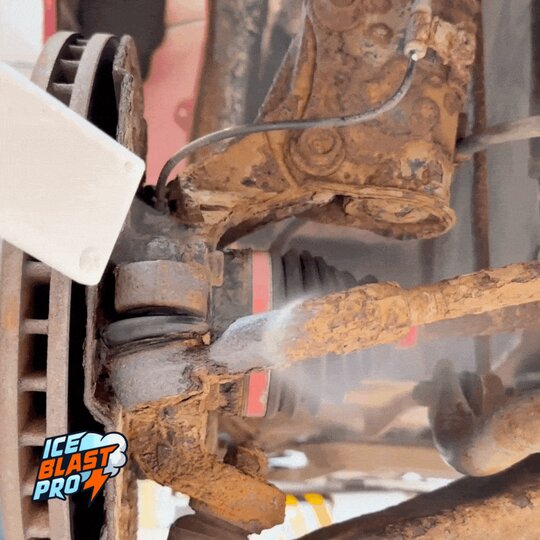
Dry ice blasting fires solid CO2 pellets at a surface using compressed air. The pellets are extremely cold, so they shock and lift contamination, then sublimate – turning straight from solid to gas – on impact. Nothing is left behind: no water, no chemicals and no abrasive grit.
That makes it well suited to underbody preservation, engine bays, wheel arches and mechanical components, where the aim is to clean and inspect without introducing moisture or stripping sound finishes. For the full process, read what is dry ice blasting?
What is pressure washing?
Pressure washing uses high-pressure water, sometimes with detergent, to blast loose dirt and mud off a surface. It is fast and cheap for surface grime, which is why it is so common.
The problem on a car underside is the water itself. High-pressure water can be forced into seams, cavities, bearings, electrical connectors and box sections, where it sits and encourages corrosion – the opposite of preservation. For the detailed head-to-head, see dry ice blasting vs pressure washing for car undersides.
What is steam cleaning?
Steam cleaning uses hot, pressurised steam to soften and lift grease and grime. It uses far less water than pressure washing and can be effective on robust, accessible surfaces.
However, it still adds heat and moisture. On a vehicle that moisture has to be dried out before any corrosion treatment or protection, and it can linger in cavities and seams. That makes steam less ideal where the surface needs to stay dry, which is exactly where dry ice blasting has the advantage.
What is sandblasting?
Sandblasting (and related abrasive methods like shot blasting and soda blasting) fires abrasive media at a surface to strip it back, often to bare metal. It is powerful for heavy rust and old coatings on removed parts.
Because it is abrasive, it removes sound material as well as contamination, can warp thin panels with heat, and leaves spent grit trapped in seams and cavities. That makes it too aggressive for many in-situ automotive areas. For the full comparison, read dry ice blasting vs sandblasting for car undersides.
Why dry ice blasting beats pressure washing for preservation
For underbody preservation, dry ice blasting is usually the better method because it cleans without water. Pressure washing can shift loose mud quickly, but driving water into seams, cavities, bearings and electrics works against the goal of keeping a car sound.
Dry ice cleaning exposes the true condition of the metal while keeping it dry, so the surface is ready for rust treatment and protection straight away. For the full breakdown of water, seams and electrics, read dry ice blasting vs pressure washing.
Dry ice blasting vs steam cleaning for cars
Steam cleaning can be effective on grease and general grime, but it relies on heat and moisture. For vehicle preservation, that moisture is a drawback: it has to be dried out before treatment, and any water left in cavities or seams can encourage the very corrosion you are trying to prevent.
Dry ice blasting removes contamination without adding water at all, so the surface stays dry and ready for the next stage. For grease on robust, accessible surfaces, steam still has a place, but for sealed cavities and electrical areas it is not the right tool.
Dry ice blasting vs sandblasting: which is right?
Sandblasting and dry ice blasting solve different problems. Sandblasting strips heavy rust and coatings back to bare metal, which is ideal for removed parts and bare-metal restoration. Dry ice blasting cleans in situ on a complete car without removing sound material or leaving grit behind.
For a whole car underside, dry ice is usually the safer choice; for stripped shells or removed components, sandblasting may be the better fit. The two can also be used together on the same project. For the full comparison, read dry ice blasting vs sandblasting.
Where laser cleaning fits alongside dry ice blasting
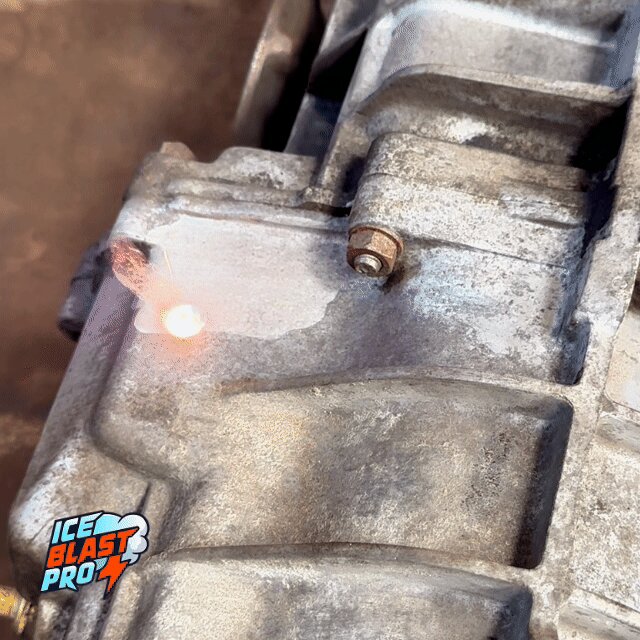
Laser cleaning uses a focused beam to ablate rust and coatings from a specific area. It is precise and excellent for pitted corrosion where rust has gone deeper into the metal, but it is slow over large areas.
Dry ice blasting is better for cleaning larger, more complex areas quickly, while laser cleaning is better for targeted, stubborn corrosion. The two methods often complement each other in a preservation project rather than competing.
Which method is best for car underbodies?
For a complete car underside, dry ice blasting is usually the best cleaning method because it works in situ, adds no water and leaves no media in the cavities. The cleaned surface can then be inspected, treated and protected as one continuous process:
- dry ice clean to expose the true condition of the metal
- inspect for rust, damage and previous repairs
- treat any corrosion that is found
- seal and protect with the right system for the car
Pressure washing risks trapped water, and sandblasting risks trapped grit and stripped finishes, which is why neither is ideal on a built car. See how we run the full process on underbody preservation.
Which method is best for engine bays?
Engine bays are full of electrics, connectors, sensors and sealed units, so adding water or abrasive grit is risky. Dry ice blasting is well suited here because it cleans without water and without media, lifting grease and grime while leaving the surfaces dry.
Pressure washing and steam can drive moisture into connectors, and sandblasting is far too aggressive, so dry ice blasting is usually the safest choice for cleaning an engine bay in place.
Which method is best for rust?
It depends on how deep the rust goes. Dry ice blasting removes loose surface corrosion and exposes what is underneath, but it does not repair pitted or structural rust. Sandblasting can strip heavy rust on removed parts, and laser cleaning is excellent for targeted, pitted corrosion.
In practice, dry ice blasting is the first step that reveals the true condition, after which the right rust treatment is chosen. For the honest detail on what each method can and cannot do, read can dry ice blasting remove rust?
Which method is best for underseal removal?
Removing old, failed underseal is a different job again. Heavy, built-up coatings often need a combination of methods rather than one, and the right approach depends on the coating type and what is underneath.
Dry ice blasting can remove some coatings and clean the surface without water, but very thick or stubborn underseal may need additional work. The goal is always to get back to sound, clean metal so it can be properly treated and protected.
Which method is safest for classic cars?
For classic and collectible cars, preserving original material matters. Dry ice blasting is usually the safest cleaning method because it is non-abrasive and does not strip sound original finishes, patina or paint when used correctly.
Sandblasting can destroy original finishes, pressure washing and steam add moisture that classics do not need, and aggressive methods can do more harm than good. Dry ice cleaning lets you see the true condition of a classic underside without damaging what is worth keeping.
The advantages of dry ice blasting
Compared with the traditional methods, dry ice blasting:
- adds no water, so nothing is forced into seams or cavities
- is non-abrasive, so sound material and finishes are preserved
- leaves no media behind, because the ice turns to gas
- cleans in situ on a complete car, with minimal dismantling
- exposes the true condition ready for treatment and protection
- is safe around most electrics and mechanical components
The disadvantages of dry ice blasting
It is not the right answer for everything. Dry ice blasting:
- does not strip heavy, pitted or structural rust
- requires specialist equipment and trained operators
- can be noisy and needs ventilation
- has a higher hourly rate than basic cleaning methods
- is overkill for simply hosing off loose surface mud
The right method always depends on the surface, the contamination and the goal, which is why these comparisons matter.
The downsides of pressure washing
On a car underside, the main downsides of pressure washing are:
- it forces water into seams, cavities and box sections
- it can reach bearings, connectors and electrical areas
- trapped water encourages the corrosion you want to prevent
- the surface must be dried fully before any treatment
The downsides of steam cleaning
Steam cleaning is gentler on water volume, but it still:
- adds heat and moisture that has to be dried out
- can leave moisture sitting in cavities and seams
- is limited around delicate electrics and weak adhesives
- is less suited to surfaces that must stay dry before sealing
The disadvantages of sandblasting
For in-situ automotive work, sandblasting:
- is abrasive and removes sound material as well as rust
- can warp thin panels through heat build-up
- strips original finishes and coatings
- leaves spent grit trapped in seams and cavities
- usually means more masking and clean-up work
What air supply does dry ice blasting need?
Dry ice blasting relies on a high volume of compressed air rather than a fixed domestic pressure figure. It needs a powerful compressor that can supply enough air flow and pressure continuously, which is part of why it is a professional process rather than a DIY one.
This is very different from a domestic pressure washer, which delivers water at high pressure. The two are not comparable, because one cleans with frozen CO2 and air and the other cleans with water.
How much does dry ice blasting cost in the UK?
Dry ice blasting usually has a higher hourly rate than pressure washing, steam cleaning or sandblasting, but the methods are not directly comparable. The cost depends on the area, access, contamination and whether the work is part of a wider preservation package.
Crucially, a lower hourly rate is not the same as better value. A cheaper method that traps water or grit, or strips sound material, can cost far more to put right later. For full ranges and what drives the price, see our dry ice blasting cost guide.
Why dry ice blasting costs more than basic cleaning
Dry ice blasting costs more per hour than a quick pressure wash because it requires specialist machinery, high-output compressed air, a dry ice supply, trained technicians, PPE and ventilation. The dry ice pellets are only a small part of the total.
What you are paying for is a dry, non-abrasive clean that preserves the car and prepares it properly for treatment and protection – something the cheaper methods cannot do without the trade-offs covered above.
How IceBlastPro chooses the right method
We do not treat dry ice blasting as the answer to everything. We choose the method based on the surface, the contamination, the condition of the metal and the goal for the car. For most underbody, engine bay and preservation work, dry ice blasting is the right starting point because it cleans dry and keeps the car sound.
Where heavy rust, removed parts or pitted corrosion are involved, we combine it with the right treatment, and with laser cleaning or other methods when they genuinely suit the job better.
Final thoughts
Pressure washing, steam cleaning and sandblasting all have their place, but on a complete car – especially the underside, engine bay and mechanical areas – dry ice blasting is usually the better choice. It cleans without water, without abrasion and without leaving media behind, exposing the true condition so the car can be treated and protected properly.
The best method always depends on the job. Where another method genuinely suits the surface better, it should be used – but for cleaning and preserving cars, dry ice blasting is hard to beat.
Common questions
Is dry ice blasting the same as pressure washing?
No. Pressure washing uses high-pressure water, while dry ice blasting fires solid CO2 pellets that sublimate into gas on impact. Dry ice cleaning adds no water and leaves no media behind, which is why it suits seams, cavities and electrical areas that water can damage.
Will dry ice blasting take off rust?
Dry ice blasting removes loose surface corrosion and contamination, but it does not repair pitted, scaled or structural rust. Deeper corrosion needs proper rust treatment, laser cleaning or repair once the area has been cleaned and assessed.
Will a sandblaster remove rust?
Yes, sandblasting is aggressive enough to strip heavy rust back to bare metal, which is why it suits removed parts and bare-metal restoration. The trade-off is that it also removes sound material, can warp thin panels and leaves grit in seams and cavities.
Why is sandblasting restricted now?
Traditional silica sand blasting carries a serious health risk because the dust can cause lung disease, so it is heavily controlled. Many operators now use alternative media or different processes. For in-situ car underbodies, non-abrasive methods are usually more appropriate.
What is better than sandblasting for a car underside?
For a complete car underside, dry ice blasting is usually better than sandblasting because it is non-abrasive, adds no water and leaves no grit behind. Sandblasting still has a place for removed parts and bare-metal restoration where stripping to clean steel is the goal.
Can I use my pressure washer as a sandblaster?
Sandblasting kits exist for pressure washers, but they are not a substitute for professional underbody work. They still rely on abrasive media and water, both of which are the opposite of what dry ice cleaning is chosen for when the aim is preservation.
Will a pressure washer melt ice?
Warm or hot pressure washer water can melt ice, but that is not how dry ice blasting works. Dry ice blasting does not rely on melting; the frozen CO2 pellets lift contamination through cold and impact, then turn straight to gas without leaving water behind.
Where does the dirt go when you steam clean?
Steam cleaning loosens grease and grime, but the contamination is carried away in moisture and run-off, which has to drain or be wiped away. On a car underside that moisture can sit in seams and cavities, which is why steam is less ideal before corrosion treatment.
Can steam cleaning create mould?
Steam cleaning adds heat and moisture. If surfaces are not dried properly, trapped moisture can encourage mould or corrosion in enclosed areas. Dry ice blasting avoids this because it cleans dry and leaves no water behind.
What surfaces should not be steam cleaned?
Steam is best avoided on delicate electrics, sensitive sensors, weak adhesives, soft trim and areas where trapped moisture would cause problems. On vehicles, that often rules it out for the very seams, cavities and electrical areas dry ice cleaning handles safely.
How much does it cost to have a car ice blasted?
Cost depends on the area, access, contamination and whether the work is part of a wider preservation package. Dry ice blasting is most cost-effective for underbodies, engine bays and components rather than a basic cosmetic clean. See our pricing guide for full ranges.
How much does it cost to sandblast a car in the UK?
Sandblasting usually has a lower hourly rate than dry ice blasting, but it involves more masking, more clean-up and the risk of stripping sound material. The two are not directly comparable because they do different jobs, so compare on the result, not just the hourly rate.
Can you do DIY dry ice blasting?
DIY dry ice blasting is not recommended for car work. It needs the right machine, high-output compressed air, a dry ice supply, pressure control, PPE and ventilation, and incorrect use can damage finishes or be unsafe. It is best left to trained operators.
What happens if you touch dry ice for one second?
It can be painful and may cause a cold burn depending on contact time and skin sensitivity. Dry ice is extremely cold and should always be handled with insulated gloves or suitable tools, never bare hands.
What are three things you should never do with dry ice?
Never touch dry ice with bare hands, never store it in an airtight container, and never use or store large amounts in an enclosed, unventilated space. As it sublimates it becomes CO2 gas, which can displace oxygen.
How long will 20kg of dry ice last?
It depends on storage, format, temperature and container quality. Pellets used for blasting sublimate faster than blocks because they have more exposed surface area, so dry ice is usually bought close to the time it is needed.
How long will a 10lb block of dry ice last?
It depends on storage conditions, but a solid block usually lasts longer than pellets because it has less exposed surface area. Either way, dry ice continually turns to gas, so it cannot be stockpiled for long.
How much is 1kg of dry ice?
The pellet cost is only a small part of a professional job. Machinery, high-output compressed air, labour, PPE, ventilation and access all matter far more to the price than the raw cost of the dry ice itself.
Not sure which cleaning method your car needs?
Send us photos or a short video of the area you want cleaned and we'll advise on the right method – whether that's dry ice blasting, rust treatment, laser cleaning or a combination – for underbodies, engine bays, restoration components and preservation work.
Get Instant Quote