What Is Dry Ice Blasting? An Automotive Guide
Dry ice blasting is a dry, non-abrasive cleaning process that uses solid CO2 pellets fired by compressed air. This guide explains what it is, what it does to a car, whether it is worth it, what it can and cannot remove, whether it damages paint, and where it fits in underbody preservation.
Updated
Quick answer: what is automotive dry ice blasting?
Dry ice blasting is a dry, non-abrasive cleaning and preparation process that uses solid carbon dioxide pellets fired through compressed air. When the pellets hit the surface, they remove road grime, salt, grease, oil, loose corrosion and some failing coatings before turning directly into gas.
On cars, dry ice blasting is most commonly used for underbodies, wheel arches, engine bays, suspension components, subframes, gearbox casings and detailed mechanical areas. It is especially useful for classic, performance and prestige vehicles because it cleans without adding water and without leaving sand, grit or secondary blasting media behind.
It is not simply a cosmetic cleaning method. In automotive preservation, dry ice blasting is used to reveal the true condition of the vehicle so rust, failed coatings, oil contamination and hidden issues can be inspected before treatment and protection.
Dry ice cleaning vs dry ice blasting: are they the same thing?
In automotive use, dry ice cleaning and dry ice blasting almost always describe the same process. Dry ice blasting is the more technical term, because the process blasts solid CO2 pellets at the surface using compressed air. Dry ice cleaning is the more customer-friendly phrase, because most people are thinking about the outcome – a cleaner car.
You may also hear it called CO2 blasting or CO2 cleaning. They all refer to the same method: solid carbon dioxide pellets that lift contamination away and then turn straight into gas, with no water and no leftover grit. On this site we use dry ice blasting as the main term, but treat dry ice cleaning as exactly the same service.
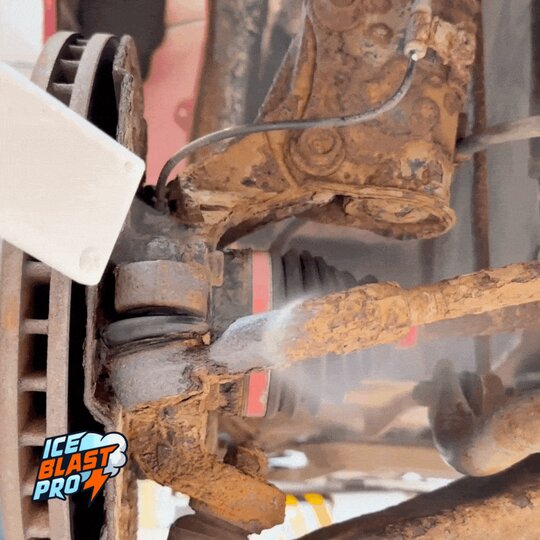
What does dry ice blasting mean?
Dry ice blasting means cleaning a surface using solid CO2 pellets instead of water, chemicals, sand or grit. The pellets are extremely cold and are accelerated through a blasting machine using compressed air. When they hit the surface, they help break the bond between the contamination and the material underneath, then the dry ice sublimates – it turns directly from solid into gas. Dry ice is solid carbon dioxide, and at normal pressure it sublimates at −78.5°C.
That is why dry ice blasting is different from pressure washing, steam cleaning, sandblasting or chemical cleaning. For the full technical explanation of the three forces at work, read our full guide to how dry ice blasting works on cars.
What does dry ice cleaning a car do?
Dry ice cleaning removes contamination from areas of a car that are difficult to clean properly by hand or with water. On a typical project it can remove:
- road salt, mud, dirt and grime
- oil, grease and old wax
- loose surface corrosion and loose paint
- failing underseal and some coatings
- some adhesives and residues
On a vehicle underside, this helps expose the real condition of the metal, factory coatings, seams, arches, suspension components and hidden areas. The main value is not only the clean finish – it is the inspection opportunity it creates.
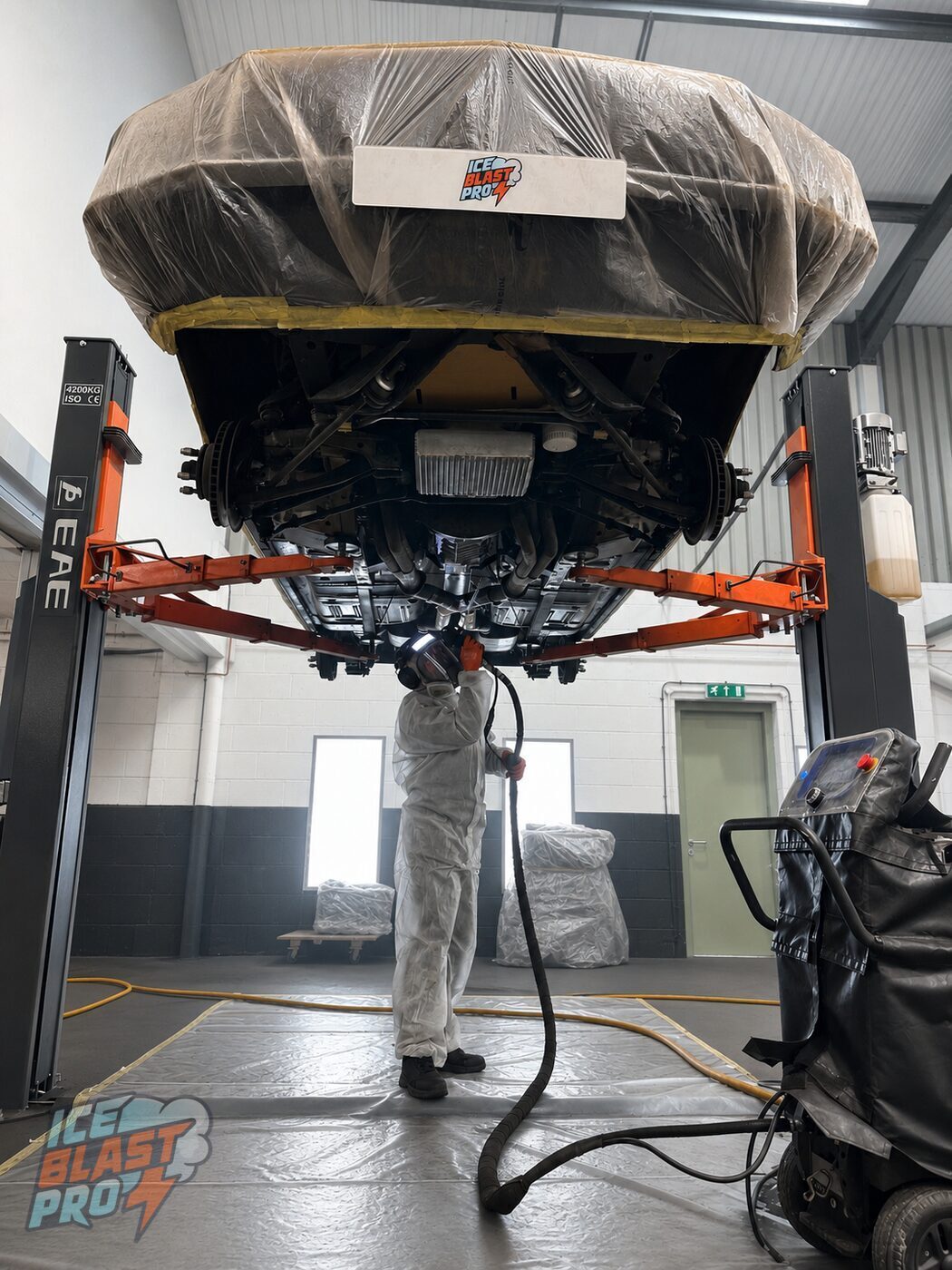
Is dry ice cleaning good for a car?
Yes, dry ice cleaning can be very good for a car when carried out correctly. It is especially useful for underbody cleaning, wheel arch cleaning, engine bay cleaning, classic car preservation, performance and prestige maintenance, inspection before rust treatment and preparation before underbody protection.
The result depends on the operator, pressure, nozzle, machine, access and condition of the vehicle. It should be carried out by someone who understands automotive materials, not treated like a basic industrial cleaning job.
Is dry ice cleaning worth it?
Dry ice cleaning is worth it when the goal is careful cleaning, inspection and preservation. It may not be necessary for a quick exterior wash or basic cosmetic clean, but it can be valuable if the aim is to remove contamination from the underside, reveal the condition of the vehicle, prepare for rust treatment, protect originality or build a documented maintenance record.
For classic, performance, prestige and collector cars, the value is not just appearance. It is condition visibility and long-term preservation.
How does dry ice blasting work?
Dry ice blasting works through three main actions:
- Kinetic impact. The pellets hit the surface at speed and help loosen contamination.
- Thermal shock. Dry ice is extremely cold, around −79°C, which helps dirt, grease, wax and brittle material contract and release from the surface.
- Sublimation. The dry ice turns directly from solid CO2 into gas, expanding around 800 times in volume. This rapid expansion helps lift contamination away without leaving liquid water or blasting media behind.
For the full technical explanation, read our guide to how dry ice blasting works on cars.
What parts of a car can be dry ice blasted?
Dry ice blasting can be used on many vehicle areas, including:
- underbodies, floorpans and chassis rails
- wheel arches and jacking points
- suspension arms and subframes
- engine bays
- gearbox and differential casings
- brackets and fixings
- selected rubber, plastics and painted areas when treated carefully
The operator must adjust the pressure and technique depending on the material. Not every area should be blasted the same way.
Engine bays and engine components are a good example. In the clip below, a Peugeot 205 GTI engine has around 30 years of baked-on oil and grime dry ice cleaned away – with no water and no abrasion.
Engine bay dry ice cleaning
Dry ice blasting is useful for engine bays because it can remove oil, grease, dust, grime and old contamination without introducing water. That matters around mechanical assemblies, wiring, labels, sensors, plastics, rubber and painted surfaces, and a clean engine bay also makes future leaks, staining or corrosion easier to spot.
It is often chosen by owners of classic, performance and prestige cars who want a cleaner, more inspectable finish without soaking the engine bay with water. See our engine bay dry ice cleaning guide for more detail.
Underbody dry ice blasting
The underside of a car collects road salt, mud, oil, grease, tar, old wax and general road contamination. Over time those materials can hide corrosion and make it difficult to inspect the vehicle properly.
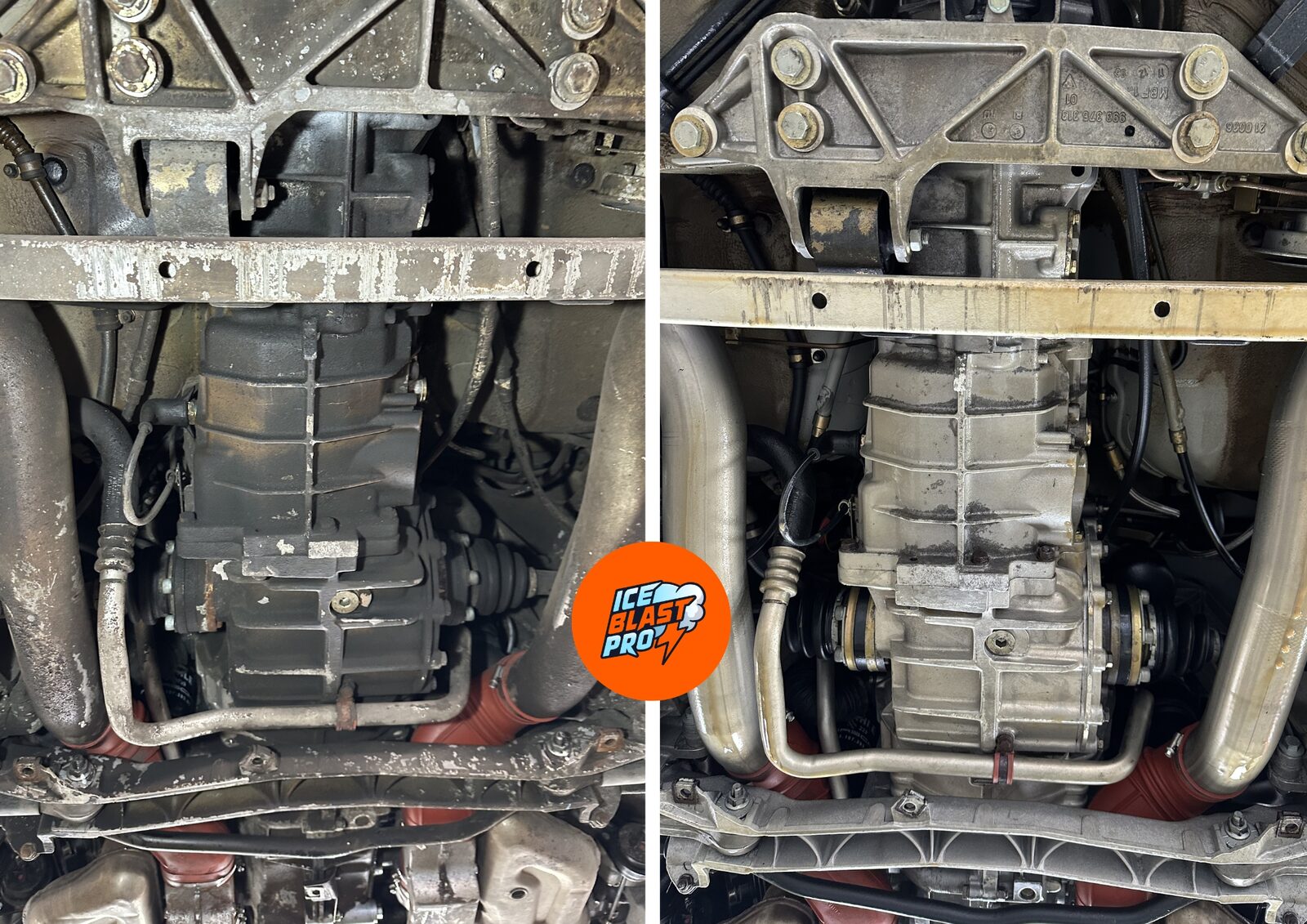
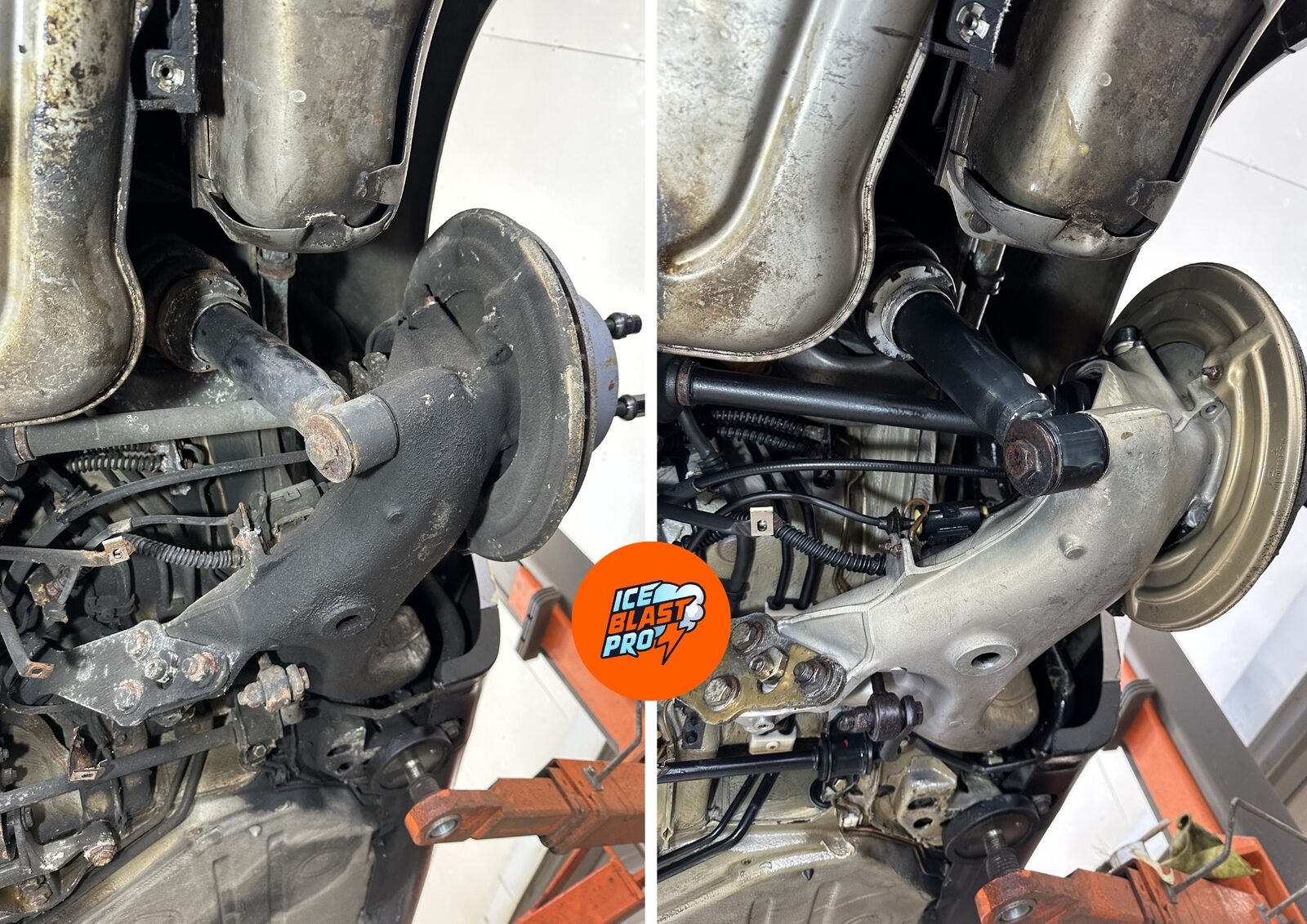
Dry ice blasting is well suited to underbody cleaning because it removes contamination without adding moisture, which makes it useful before rust treatment, underbody protection or cavity wax. For long-term preservation, underbody dry ice blasting should usually be followed by inspection, treatment where needed and suitable protection. This is the heart of our underbody preservation work.
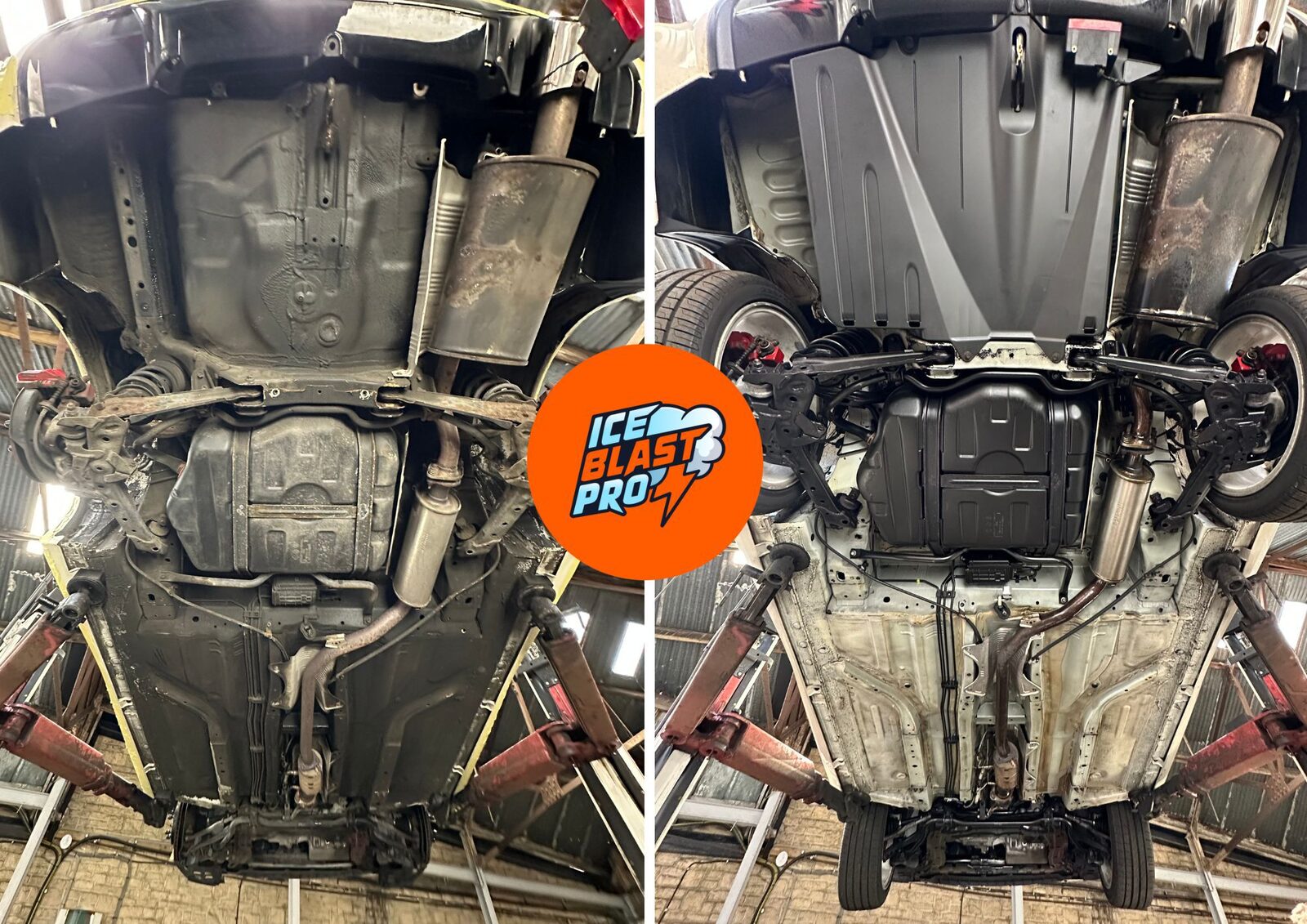
Here is underbody dry ice blasting across a few different cars – each shown before and after, cleaned back to honest metal with no water and no abrasion.
Is dry ice blasting a rust treatment?
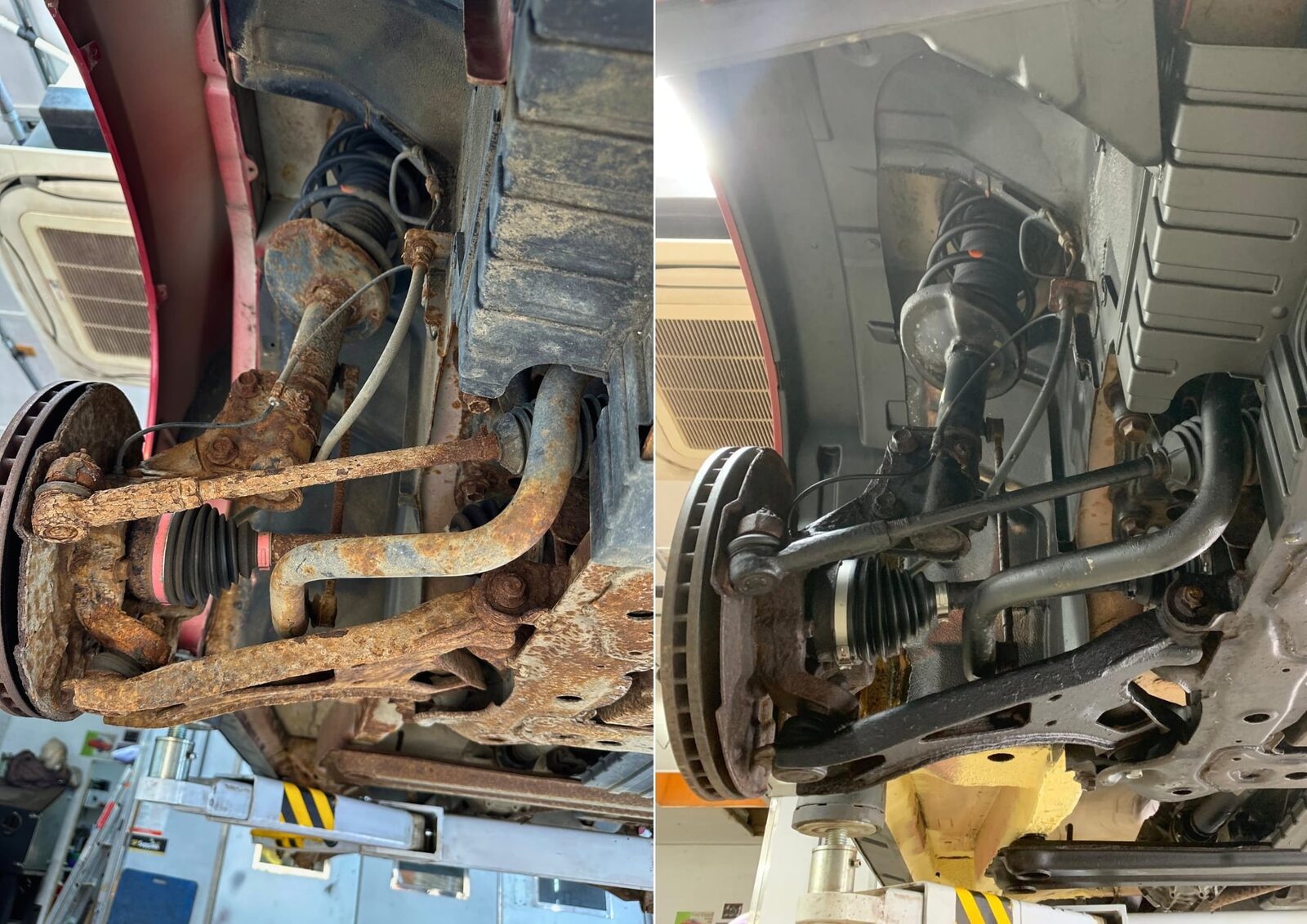
Dry ice blasting can remove loose surface corrosion, road salt, dirt and failing coatings. It does not repair pitted metal, rebuild weak areas or reverse structural corrosion, so it should be viewed as preparation, not a complete rust treatment by itself.
Once the underside is clean, corrosion can be assessed properly. Surface rust may need stabilisation, deeper pitting may need laser cleaning or rust treatment, and holes or weak metal may need welding or replacement before protection is applied. For the honest, in-depth answer, see our guide on whether dry ice blasting can remove rust.
Does dry ice blasting damage car paint?
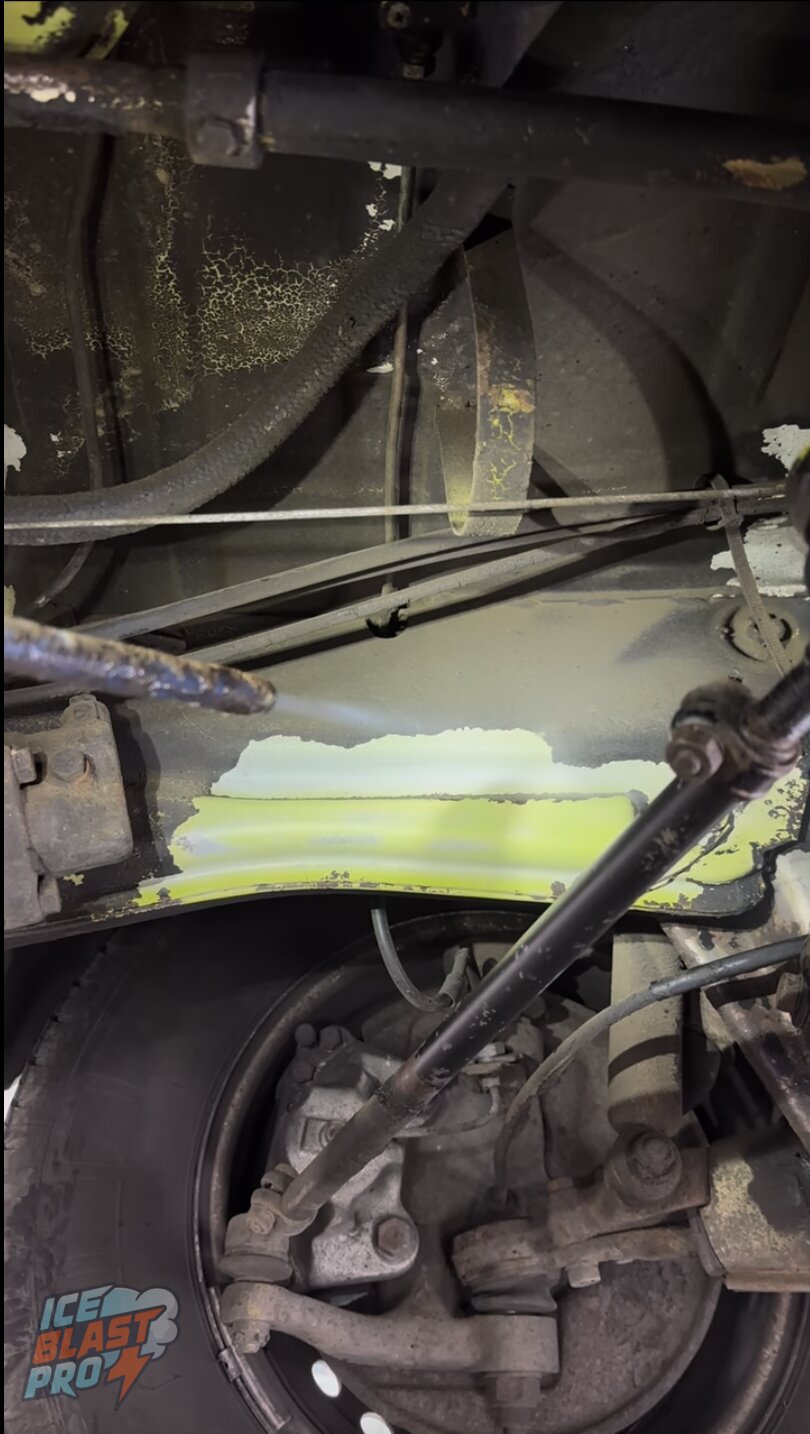
Dry ice blasting should not damage sound automotive paint when it is carried out by an experienced operator using the correct settings. It may remove loose, weak, flaking or poorly bonded paint, but sound paint should stay put. If paint lifts during blasting, it may already have been failing.
On vehicle undersides this can actually be useful, because it reveals where coatings have split, failed or trapped corrosion underneath. Painted panels, underbody coatings, plastic liners, rubber, wiring and aluminium parts all need different technique, which is why automotive dry ice blasting needs care.
What are the benefits of dry ice blasting?
- no water introduced and no chemicals required
- no sand or grit left behind
- non-abrasive when used correctly
- suitable for detailed areas, underbodies and engine bays
- helps expose corrosion and failed coatings
- preserves original finishes where possible
- reduces the need for aggressive scraping
- prepares the surface for rust treatment and protection
For vehicle owners, the biggest benefit is that dry ice blasting cleans and reveals condition at the same time.
What are the disadvantages of dry ice blasting?
- higher cost than basic cleaning
- specialist equipment, dry ice supply and storage required
- noise and ventilation requirements
- PPE requirements
- not always fast on thick rubberised underseal or bitumen
- does not repair deep rust, holes or structural corrosion
- the result depends heavily on operator skill
Dry ice blasting is a powerful preparation method, but it is not the answer to every problem. Most issues come from using the wrong settings, poor access or expecting it to repair rust rather than reveal and prepare it.
How much does dry ice blasting cost, and why?
Dry ice blasting is more expensive than basic cleaning because it requires specialist machinery, high-output compressed air, dry ice pellets, trained technicians, PPE and a controlled working environment. For automotive work the cost may also include lifting the vehicle, masking, removing wheels, arch liners and undertrays, inspection, documentation, rust treatment and protection.
In the UK, targeted cleaning may start from a few hundred pounds, while underbody and preservation projects usually move into the low-to-mid four figures depending on the vehicle, access, condition and whether protection is included. For detailed pricing, see our dry ice blasting cost guide.
How does it compare with other methods?
Dry ice blasting is usually better than pressure washing for car undersides because it does not force water into seams, cavities and electrics. Compared with sandblasting, it is gentler and leaves no abrasive media behind, which suits whole vehicle undersides and delicate original finishes – although sandblasting can be better for removed parts or bare-metal restoration.
Laser cleaning does a different job again: it is better for targeted, pitted corrosion where rust has gone deeper into the metal, and the two methods often complement each other in preservation work. Other alternatives include steam cleaning, soda blasting, vapour blasting, chemical cleaning and manual preparation, each with different trade-offs around water, abrasion and residue.
For a full side-by-side, read dry ice blasting compared with other methods.
Can you do dry ice blasting yourself?
DIY dry ice blasting is possible in some situations, but full car underbody or engine bay work is not straightforward. You need a suitable machine, a high-output compressor, the correct nozzles, a dry ice supply, ventilation, PPE and experience controlling pressure around sensitive vehicle materials.
Machines can sometimes be hired, but the machine is only one part of the setup, and poor technique can damage finishes, miss hidden contamination or expose rust without treating it properly afterwards. For car underbodies and engine bays, the real question is not whether you can blast the surface – it is whether you know what to do with what the blasting reveals.
How IceBlastPro uses dry ice blasting
At IceBlastPro, dry ice blasting is used as part of a wider preservation process. We inspect the vehicle, protect the bodywork, remove wheels, liners and trays where required, dry ice blast the underside or engine bay, document the condition, treat corrosion where needed and apply suitable protection.
Depending on the vehicle, that may include clear protection, black underbody coating, cavity wax, rust stabilisation, laser cleaning or engine bay coating. The goal is not simply to make the vehicle look cleaner – it is to inspect, clean, treat, protect and document it properly.
Final thoughts
Dry ice blasting is one of the most useful preparation methods for modern automotive preservation. It cleans without water, leaves no sand or grit behind, and can expose the true condition of a vehicle's underside, arches, engine bay and mechanical components.
But it is not magic. It does not repair rust, fill holes or replace proper corrosion treatment – its value is in what it reveals and how well it prepares the surface for the next stage. For owners of classic, performance, prestige and collector vehicles, it can be one of the safest ways to inspect, clean and preserve the parts of a car that are usually hardest to see.
Common questions
What is dry ice blasting?
Dry ice blasting is a cleaning method that uses solid carbon dioxide pellets fired through compressed air. The pellets remove contamination and then turn directly into gas, leaving no water or blasting media behind.
What is automotive dry ice blasting?
Automotive dry ice blasting is the use of dry ice blasting on cars, usually for underbodies, wheel arches, engine bays, suspension components and mechanical areas. It is often used before rust treatment and underbody preservation.
What does dry ice blasting mean?
It means cleaning a surface with dry ice pellets instead of water, chemicals, sand or grit. The dry ice removes contamination and then sublimates into gas.
Are dry ice cleaning and dry ice blasting the same?
In automotive use, yes. Dry ice blasting is the technical term, because the process blasts solid CO2 pellets at the surface using compressed air, while dry ice cleaning is the more customer-friendly phrase for the same method. You may also see it called CO2 blasting or CO2 cleaning.
What does dry ice cleaning a car do?
It removes road grime, salt, grease, oil, loose corrosion, old wax and some failing coatings from areas that are difficult to clean by hand or with water, which also exposes the true condition of the metal underneath.
Is dry ice cleaning worth it?
It is worth it when the goal is careful cleaning, inspection and preservation. It may not be necessary for a basic cosmetic clean, but it is valuable for underbodies, engine bays and long-term vehicle protection.
Is dry ice cleaning good for cars?
Yes, when carried out correctly. It is particularly useful for underbodies, engine bays, wheel arches and detailed mechanical areas, especially on classic, performance and prestige vehicles.
What are the disadvantages of dry ice cleaning?
The main disadvantages are cost, specialist equipment, dry ice supply, noise, ventilation requirements and the fact that it does not repair deeper rust or structural corrosion.
Is dry ice blasting a rust treatment?
Not on its own. It can remove loose surface corrosion, road salt, dirt and failing coatings, but it does not repair pitted metal, holes or structural rust. It should be seen as preparation, not a complete rust treatment.
Will dry ice blasting take off paint?
It may remove loose, weak or failing paint, but sound paint should not be removed when the process is carried out correctly. If paint lifts during blasting, it was usually already failing.
Does dry ice blasting damage car paint?
It should not damage sound automotive paint when used by an experienced operator with the correct settings, but weak, loose or damaged coatings may lift.
Why is dry ice blasting so expensive?
It requires specialist machinery, high-output compressed air, dry ice pellets, trained technicians, PPE, ventilation, preparation, inspection and often protection afterwards.
How much does dry ice blasting cost in the UK?
Targeted automotive cleaning may start from a few hundred pounds, while underbody and preservation projects usually move into the low-to-mid four figures. See the dedicated cost guide for more detail.
Is dry ice blasting as good as sandblasting?
It depends on the job. Dry ice blasting is usually better for cleaning, inspection and preservation because it leaves no abrasive media behind. Sandblasting is more aggressive and may suit removed parts or bare-metal restoration.
Can you do dry ice blasting yourself?
It is possible in some cases, but full automotive work needs the right machine, a high-output compressor, dry ice supply, PPE, ventilation and experience. Professional work is usually safer and more effective for complete underbody preservation.
Can you hire a dry ice blasting machine?
Yes, but the machine is only one part of the setup. You also need a suitable compressor, dry ice, nozzles, safety equipment, ventilation and enough knowledge to use it correctly on a vehicle.
What PSI is needed for dry ice blasting?
There is no single PSI for every vehicle. The pressure depends on the machine, nozzle, pellet size, material and contamination. Automotive work is about control rather than maximum force.
Is dry ice blasting noisy?
Yes. It uses compressed air and high-velocity pellets, so hearing protection is normally required for operators and anyone working nearby. This is one reason it suits a controlled workshop.
Is dry ice legal in the UK?
Yes, but it must be handled, stored and transported safely. The main risks are cold burns, pressure build-up in airtight containers and carbon dioxide gas building up in poorly ventilated spaces.
What are three things you should never do with dry ice?
Never touch it with bare hands, never store it in an airtight container, and never use or store large amounts in an enclosed space without ventilation.
Are the fumes from dry ice toxic?
Dry ice turns into carbon dioxide gas. It is not toxic like a chemical poison, but it can displace oxygen in enclosed spaces, which can be dangerous, so good ventilation is essential.
Do you need gloves to handle dry ice?
Yes. Dry ice is around −79°C and should always be handled with insulated gloves or suitable tools, never with bare hands, because it can cause a cold burn.
What is another name for dry ice?
Dry ice is solid carbon dioxide, or solid CO2. The cleaning process may be called dry ice blasting, dry ice cleaning, CO2 blasting or CO2 cleaning.
Does dry ice take dents out of a car?
No. Dry ice blasting is a cleaning and preparation process, not a dent repair method. Dents should be handled by paintless dent repair or body repair specialists.
Want to know if dry ice blasting is right for your car?
Send us your vehicle details, underside photos or a short video and we'll advise whether your vehicle needs dry ice blasting, engine bay cleaning, rust treatment, cavity wax or underbody preservation.
Get Instant Quote