Can Dry Ice Blasting Be Used on Car Interiors?
Yes, but only selectively. Dry ice blasting can help on hard surfaces, stripped cabins, seat runners, brackets, pedal boxes, vents and restoration interiors – but it is not a replacement for upholstery cleaning, leather care, wet extraction, odour treatment or normal interior detailing.
Published
Quick answer: can dry ice blasting clean car interiors?
Dry ice blasting can be used on selected car interior areas, but it is not usually the best method for a normal interior clean.
It can be useful on:
- hard surfaces and metal floor sections
- stripped cabins and restoration interiors
- seat runners, seat frames and brackets
- pedal boxes and under-seat areas
- vents and crevices in some cases
- areas where moisture would create a problem
However, it should not be treated as a simple replacement for upholstery shampooing, leather cleaning, wet extraction, mould treatment or normal interior detailing. The right answer depends on the material, condition, contamination, access and risk.
For IceBlastPro, dry ice blasting is mainly used for underbodies, engine bays, arches, mechanical areas and preservation work. Interior dry ice cleaning is only relevant in specific restoration or specialist situations.
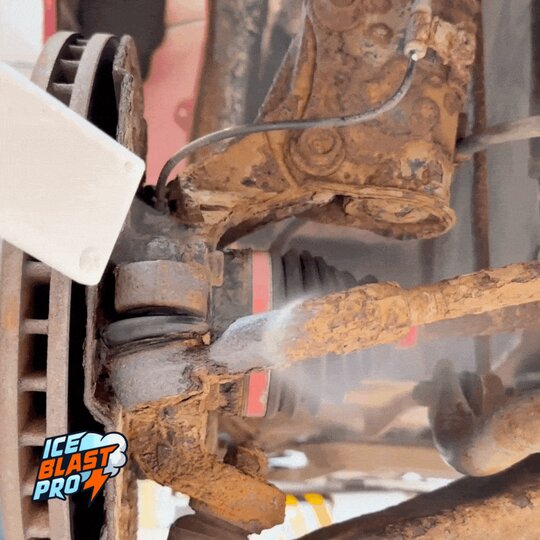
What does dry ice cleaning do inside a car?
Inside a car, dry ice cleaning can help remove contamination from certain areas without adding water. It may be useful for:
- seat runners, seat frames and brackets
- pedals and pedal boxes
- stripped cabin shells and metal floor sections
- under-seat areas and hard plastics in some cases
- vents and crevices in some cases
- restoration interiors that need to stay dry
The value is that dry ice sublimates into gas, leaving no water behind. That can be useful where moisture would create drying problems, mould risk or electrical concerns. However, not every interior surface is suitable.
What car interior areas should not usually be dry ice blasted?
Dry ice blasting should be avoided or used with extreme caution around:
- soft, old or cracked leather
- delicate fabric and loose stitching
- headliners and carpets with weak backing
- glued trim, veneer and adhesive-backed trim
- touchscreens, instrument clusters and delicate switches
- airbags and seat occupancy sensors
- brittle plastics, labels and old foam
- areas with unknown previous repairs
These areas may be better suited to specialist detailing, steam cleaning, controlled extraction, leather care or replacement. The fact that dry ice blasting is dry does not mean it is risk-free.
Is dry ice cleaning good for car interiors?
Sometimes. Dry ice cleaning can be good for car interiors when the area is suitable, accessible and robust enough for the process – it suits bare metalwork and exposed structural areas during a restoration far more than trimmed cabins or finished upholstery. It is most useful when:
- the cabin is partly stripped or the vehicle is being restored
- there is contamination in hard-to-reach areas
- water-based cleaning would be a problem
- the area is metal, hard plastic or mechanical rather than soft upholstery
- the goal is preparation, inspection or restoration support
It is less useful when the customer simply wants cleaner seats, fresh carpets or a normal interior detail. For everyday cosmetic interior work, a specialist detailer is usually the better route.
Is dry ice blasting better than normal interior detailing?
Not usually. The best method depends on the problem.
Normal interior detailing is better for:
- fabric seats, carpets and headliners
- leather cleaning and everyday dirt
- spills, general odour work and cosmetic improvement
Dry ice blasting may be better for:
- hard-to-reach dry contamination
- stripped interiors and metal cabin areas
- seat runners, brackets and restoration work
- situations where water should be avoided
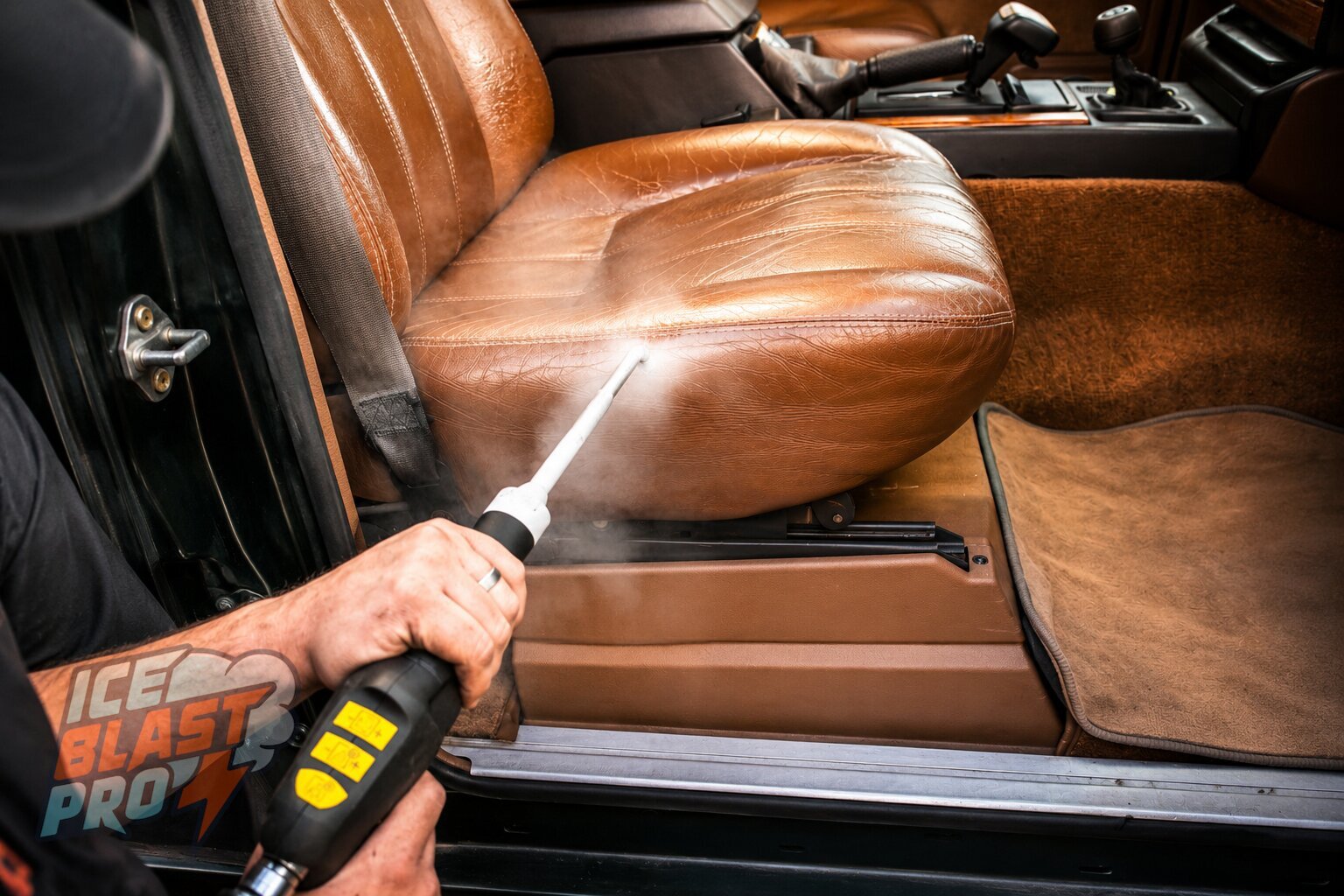
Can dry ice cleaning remove odours from a car interior?
Dry ice cleaning may help remove contamination that contributes to odours in some areas, but it should not be sold as a guaranteed odour removal method.
Interior smells can come from many sources, including damp carpets, mould, bacteria, smoke contamination, pet contamination, heater boxes, air conditioning systems, foam, headliners, wiring insulation or old sound deadening. If the source of the smell is in soft trim, foam, carpets or ventilation systems, dry ice blasting may not solve it. For odour removal, the cause needs to be identified first.
Can dry ice cleaning dry out wet car seats?
No. Dry ice blasting should not be positioned as a method for drying wet car seats.
If a car seat is wet, the right approach is usually extraction, airflow, dehumidification, controlled heat and checking whether water has reached the foam, wiring, seat sensors or the carpet underneath. Dry ice is dry, but that does not make it the right solution for waterlogged seats. A wet seat may still be recoverable if it is dried quickly and properly, so the priority is fast, safe drying and a proper check for mould and electrical issues.
Does dry ice blasting damage car paint?
Dry ice blasting should not damage sound car paint when carried out correctly with the right pressure, nozzle, distance and technique.
However, loose paint, failed coatings, weak finishes or damaged areas may lift, which is why pressure and surface condition matter. The same principle applies inside the car: sound hard surfaces may be suitable, but delicate or weakened materials may be damaged, so each area needs assessing before any cleaning begins.
Can dry ice blasting remove rust from interior metal areas?
Dry ice blasting can remove loose surface corrosion and contamination from metal interior areas, such as stripped cabin sections or floorpan areas. It does not repair pitted metal, holes or structural rust.
If rust is found inside a vehicle, it may need rust treatment, repair, welding, coating or cavity protection depending on severity. For the full picture, read can dry ice blasting remove rust?
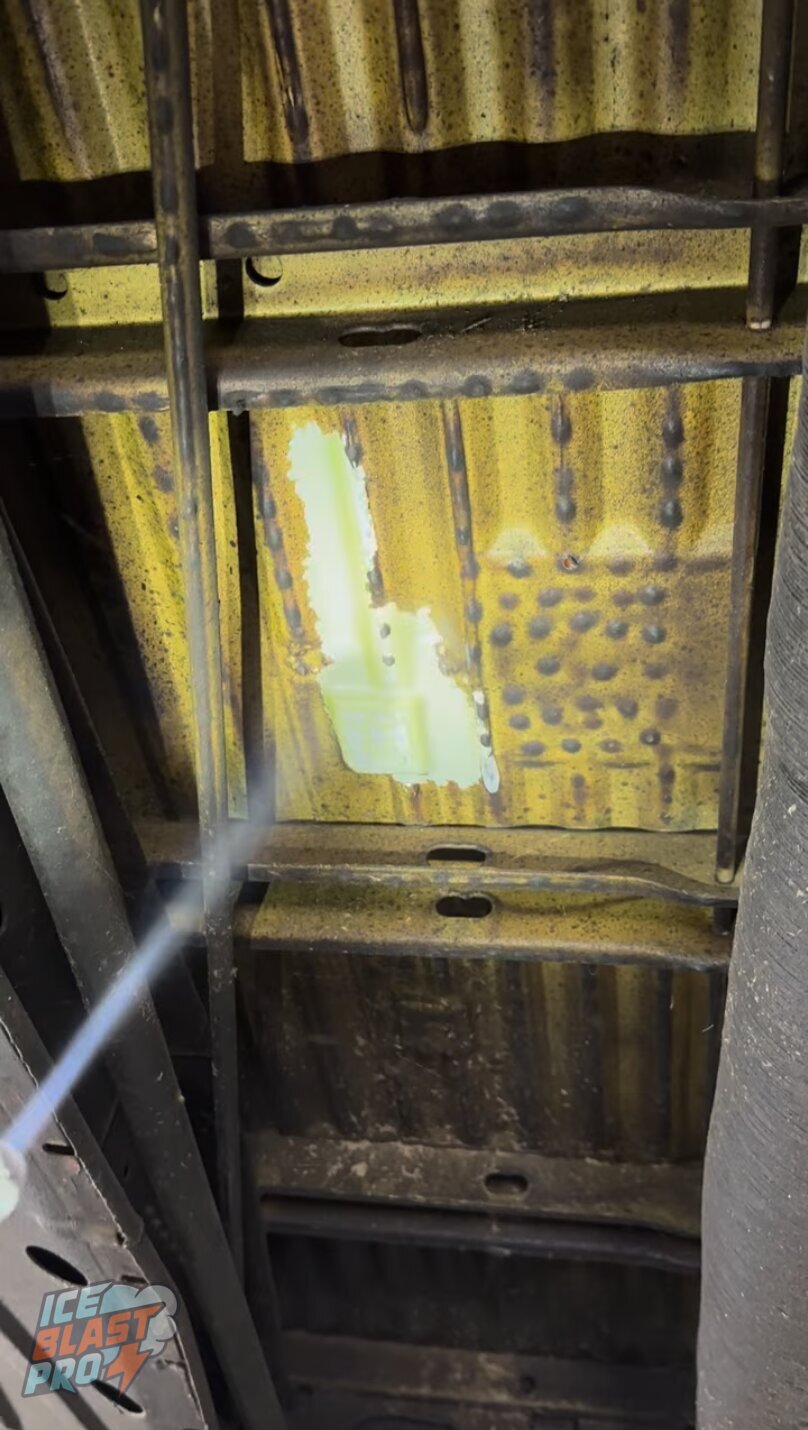
Is dry ice blasting as good as sandblasting for interior areas?
For interiors, dry ice blasting is usually safer than sandblasting because it leaves no abrasive media behind and is less aggressive when used correctly.
Sandblasting may be useful on stripped metal shells or removed parts, but it can be too aggressive for assembled interiors, trims, wiring, soft materials and delicate finishes. For a full comparison, read dry ice blasting vs sandblasting.
Is laser cleaning better than dry ice blasting for interiors?
Laser cleaning and dry ice blasting do different jobs. Laser cleaning is better for targeted rust or coating removal on suitable metal areas. Dry ice blasting is better for dry contamination removal across larger or more complex areas.
For interiors, laser cleaning would usually only apply to stripped metal sections or restoration areas, not normal interior detailing.
What are the disadvantages of dry ice blasting for interiors?
The main disadvantages are that it:
- is not suitable for all interior materials
- requires specialist equipment and trained operators
- can be noisy and needs ventilation
- may be too aggressive for delicate trim or weak adhesives
- does not replace upholstery cleaning or dry wet seats
- does not guarantee odour removal
- can be expensive for the result if the job is only a basic clean
This is why most general interior jobs are better handled by a specialist detailer, while dry ice blasting is reserved for the right hard-surface or restoration situations.
What can you dry ice blast on a car?
Common suitable areas include:
- underbodies, wheel arches and engine bays
- suspension components, subframes and brackets
- gearbox and differential casings
- fixings and mechanical assemblies
- selected hard interior areas and stripped interior metal sections
- restoration components
Less suitable areas include delicate upholstery, headliners, weak trims, airbags, screens, sensors and old adhesives. See where it fits in our automotive dry ice blasting service.
How much does dry ice cleaning cost in the UK?
Dry ice cleaning cost depends on the area, access, contamination, vehicle condition and whether the work is part of a wider preservation package. The cost of the dry ice itself is only one part of the job: machinery, compressor output, labour, PPE, ventilation, access and operator experience all matter.
For IceBlastPro, dry ice blasting is usually most cost-effective when used for underbody, engine bay, component or preservation work rather than a standalone basic interior clean. For broader pricing, see our dry ice blasting cost guide.
When would IceBlastPro recommend interior dry ice cleaning?
IceBlastPro would only recommend interior dry ice cleaning in specific situations, such as:
- restoration interiors and stripped cabins
- hard-to-reach metal areas
- seat runners or brackets
- dry contamination around mechanical interior parts
- specialist projects where water should be avoided
For normal interior detailing, fabric seats, carpets, leather cleaning, odour removal or wet interior drying, a specialist interior detailer is usually the better route. This keeps the service aligned with our main expertise: automotive dry ice blasting, underbody preservation, engine bay cleaning, rust treatment and restoration preparation.
Final thoughts
Dry ice blasting can be used on car interiors, but only in the right situations. It is useful for some hard interior areas, restoration interiors, stripped cabins, seat frames, brackets and areas where water would create a problem.
It is not a magic replacement for proper upholstery cleaning, leather care, wet extraction, carpet drying, odour removal or normal detailing. For most car owners, dry ice blasting is far more valuable underneath the car, in the engine bay, around the arches, on mechanical components and during restoration preparation – cleaning without water, exposing the true condition and preparing the vehicle for preservation.
Common questions
Is dry ice cleaning good for a car?
Yes, when used in the right areas. It is particularly useful for underbodies, engine bays, wheel arches, suspension components, mechanical areas and some restoration interior sections. It is less suited to general interior detailing.
What does dry ice do for a car?
Dry ice blasting removes contamination without adding water or leaving blasting media behind. It is used to clean and expose the true condition of vehicle surfaces, mainly underneath the car, in the engine bay and on components.
Can you dry ice blast cars?
Yes. Dry ice blasting can be used on cars, especially underbodies, engine bays, wheel arches, suspension components, subframes and selected restoration areas. Interior use is more limited and should be assessed carefully.
How do you dry out the interior of a car?
Use extraction, airflow and dehumidification, with careful heat where safe. Remove mats where possible and check under carpets, seats and sound deadening if water has gone deep. Dry ice blasting is not the first-choice solution for drying a wet interior.
What is the fastest way to dry car seats?
Wet extraction, airflow and dehumidification are usually the safest route. Avoid extreme heat that could damage leather, fabric, glue, foam or electronics. Dry ice blasting is not a car seat drying method.
Is a car seat ruined if it gets wet?
Not always. It depends on how long it stayed wet, how deep the water went, and whether wiring, occupancy sensors, heating elements, foam or mould are involved. A seat dried quickly and properly may be recoverable.
Can you do dry ice blasting yourself?
DIY dry ice blasting is not recommended for interiors. You need the right machine, compressor, dry ice supply, nozzle, pressure control, PPE and ventilation, and incorrect use can damage trims, fabrics, leather, plastics or electronics.
Are dry ice fumes toxic?
Dry ice turns into carbon dioxide gas. It is not toxic in the way a chemical poison is, but it can displace oxygen in enclosed spaces, which is why ventilation matters.
What are the symptoms of dry ice exposure?
Possible symptoms of too much carbon dioxide exposure include headache, dizziness, confusion, shortness of breath or feeling unwell. Move to fresh air immediately and seek medical advice if symptoms continue.
What are three things you should never do with dry ice?
Never touch dry ice with bare hands, never store it in an airtight container, and never use or store large amounts in an enclosed, unventilated space.
What happens if you touch dry ice for one second?
It can be painful and may cause a cold burn depending on contact time and skin sensitivity. Dry ice should always be handled with insulated gloves or suitable tools.
Do I need gloves to handle dry ice?
Yes. Dry ice should be handled with insulated gloves or suitable tools because it is extremely cold.
How long will 20kg of dry ice last?
It depends on storage, format, temperature and container quality. Pellets used for blasting sublimate faster than blocks because they have more exposed surface area.
How long will a 10lb block of dry ice last?
It depends on storage conditions, but a block usually lasts longer than pellets because it has less exposed surface area.
Does dry ice take dents out of a car?
No. Dry ice blasting is not a dent repair process. Dents should be handled by paintless dent repair or bodywork specialists.
Does WD-40 remove scratches from cars?
Not properly. It may temporarily change the look of very light marks by adding oil to the surface, but it does not remove scratches. Proper scratch removal usually requires polishing, paint correction or repair.
Does vinegar damage car paint?
Vinegar is acidic and can affect paint if used incorrectly or left on the surface. It is not a professional car paint or interior cleaning solution, so use proper automotive products and methods.
Does Vaseline remove car paint?
Vaseline is not a proper paint removal method. It may leave oily residue and create cleaning issues. Do not use household products as substitutes for proper detailing, paint correction or bodywork.
Why does Coca-Cola remove rust?
Coca-Cola contains acids that can affect light rust or staining in small situations, but it is not a professional vehicle rust treatment method. Vehicle rust should be cleaned, assessed, stabilised, repaired where required and protected properly.
What will destroy car paint fast?
Strong chemicals, brake fluid, bird droppings, incorrect polishing, abrasive tools, poor washing methods and harsh environmental exposure can damage paint. Dry ice blasting should not damage sound paint when used correctly, but weak coatings may lift.
Not sure whether dry ice cleaning is right for your car?
Send us photos or a short video of the area you want cleaned and we'll advise whether dry ice blasting is suitable, or whether a specialist detailer would be the better option. For underbodies, engine bays, restoration components and preservation work, we can advise on the right process.
Get Instant Quote