When to Use Dry Ice Blasting During a Vehicle Restoration
Dry ice blasting is most useful at five key stages of a restoration: before work begins, after dismantling, before paint or protection, after restoration work, and during long-term maintenance. This guide explains when it helps, when it does not, and how timing changes the result.
Published
Quick answer: when should dry ice blasting be used in a vehicle restoration?
Dry ice blasting is most useful at five key stages of a restoration:
- before restoration begins, to reveal the true condition of the car
- after dismantling, to clean components without further disassembly
- before paint, coating or rust treatment, to prepare surfaces properly
- after restoration work, to clean and protect the finished vehicle
- during long-term maintenance, to keep the underside, arches and engine bay clean and inspectable
The most valuable time to use dry ice blasting is often early in the restoration process. It can remove decades of dirt, grease, oil, road salt, loose corrosion and old contamination, giving the owner or restoration team a clearer view of what actually needs repairing.
It can also prevent unnecessary stripping. In some cases, an underside or component that appears tired may clean back to a well-preserved original finish, saving time, money and unnecessary work.
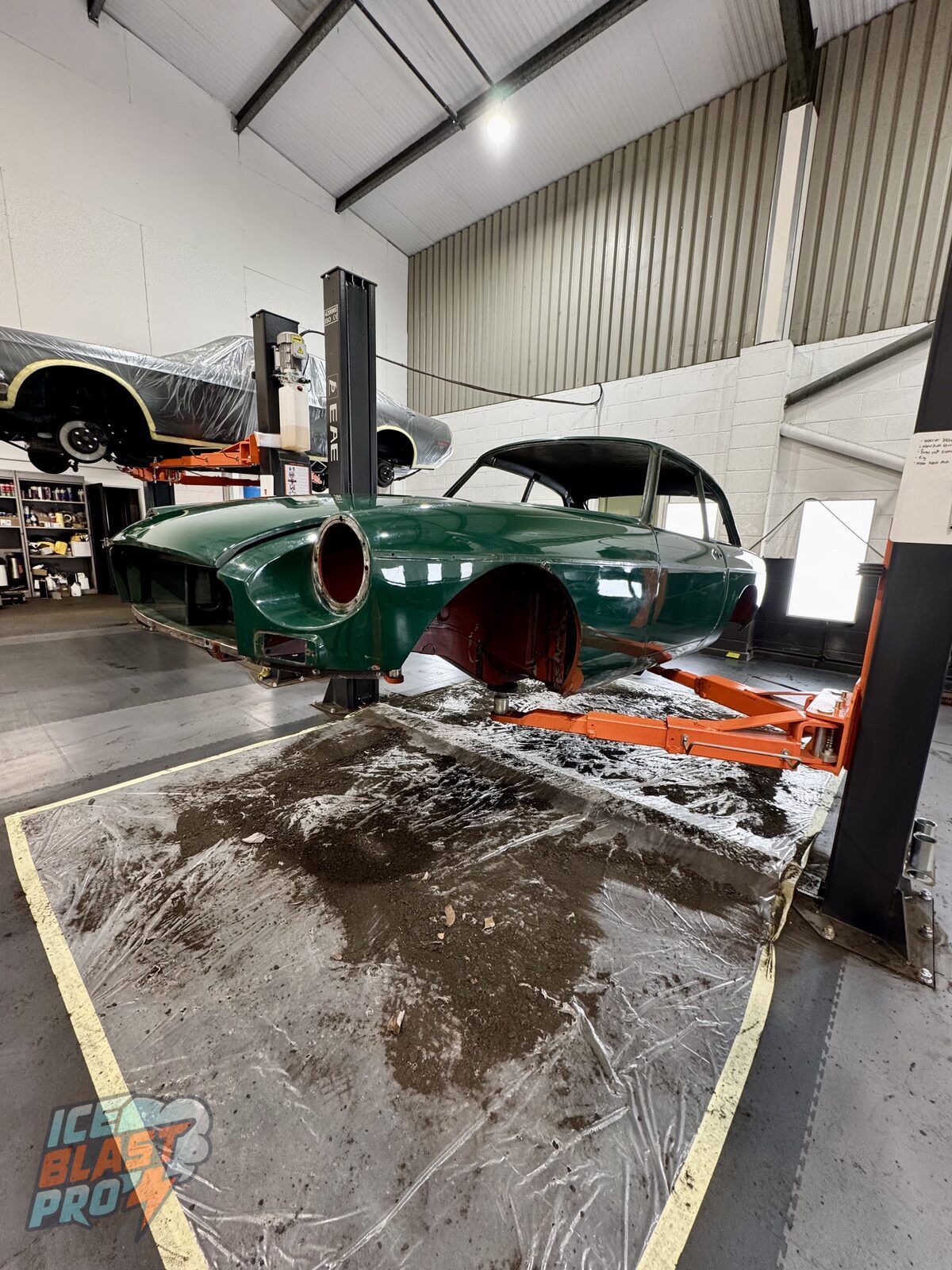
Why timing matters in a restoration
Dry ice blasting is not just another cleaning method. In a restoration, timing matters.
Used too late, it may reveal issues after paint, repairs or coatings have already been completed. Used too aggressively or in the wrong area, it may not be the right method for the job. Used at the right time, it can give the restoration team a much clearer understanding of the vehicle before major decisions are made.
This is especially important on classic cars, rare vehicles and high-value restorations where originality matters. Parts may be expensive, difficult to replace or no longer available. If dry ice blasting can help retain original components, avoid unnecessary disassembly or reveal that a panel is better than expected, it can change the whole restoration plan.
Stage 1: before restoration begins
One of the best times to use dry ice blasting is before the main restoration starts. At this stage, the goal is not to make the car look finished. The goal is to understand what you have.
A classic car may have decades of dirt, oil, grease, road salt, failed wax, underseal and surface corrosion covering the underside, suspension, engine bay and mechanical components. Until that contamination is removed, it can be difficult to know whether a vehicle needs full stripping, localised repair, rust treatment or simple preservation.
Dry ice blasting can reveal:
- original paint and factory coatings
- previous repairs
- hidden rust and corrosion around seams
- failed underseal and oil leaks
- condition of suspension components
- condition of chassis and floor sections
- whether some parts can be retained rather than replaced
This can help shape the restoration budget before unnecessary work begins.
Why use dry ice blasting before restoration?
Using dry ice blasting early helps reduce guesswork. It can show whether a vehicle is better or worse than expected underneath, and it can prevent unnecessary stripping of areas that are still original and well preserved.
For classic vehicles, this matters because originality can be part of the car’s value. If the underside, floorpan, suspension components or engine bay can be cleaned and retained rather than stripped, repainted or replaced, the restoration can become more accurate and less invasive.
Dry ice blasting is also useful because it does not add water and does not leave abrasive media behind, which makes it well suited to early inspection work. It is often the first stage of proper underbody preservation.
Stage 2: during dismantling and component cleaning
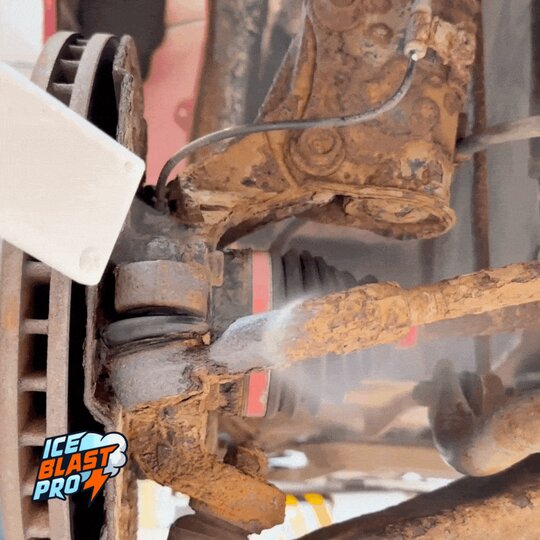
Dry ice blasting is also useful once parts have been removed or partially dismantled. During a restoration, owners and workshops often end up surrounded by suspension parts, engine components, brackets, gearbox casings, subframes, arms and running gear, all covered in oil, grease, road dirt and surface corrosion.
Dry ice blasting can clean many of these components without needing to strip them further. This is useful for:
- engine components and gearbox casings
- suspension parts, subframes, brackets and arms
- wheel arch areas and running gear
- oily or greasy mechanical assemblies
Unlike abrasive blasting, dry ice blasting leaves no sand or grit behind, which reduces the risk of contamination in areas where abrasive media would be a problem.
Stage 3: before paint, rust treatment or protective coating
Dry ice blasting can be useful before paint, rust treatment or underbody protection, but it must be used with the right expectations. For light contamination, loose surface corrosion, old grease, oil or dirt, it can provide a clean surface before the next stage.
However, if the component has deep corrosion, heavy pitting or needs to be stripped to bare metal, dry ice blasting may not be enough by itself. In those cases, sandblasting, laser cleaning, mechanical preparation, rust conversion or repair may be required. The right question is not “can dry ice blasting do everything?” It is “what does this part need next?”
- light surface rust may need dry ice blasting followed by rust conversion
- pitted corrosion may need laser cleaning
- removed parts may need abrasive blasting before paint
- structural rust may need welding or replacement
- clean underbodies may need clear protection or wax
Dry ice blasting is a preparation method. The final result depends on what happens afterwards.
Stage 4: after restoration work is completed
Dry ice blasting can also be useful after a restoration has been completed. Even after careful work, restored vehicles can collect dust, oil, compound residue, grease, hand marks and workshop contamination. Some areas may have been restored, while untouched areas still look dirty or aged, creating a disjointed finish.
A final dry ice clean can help bring the vehicle together visually. It can be used on engine bays, underbodies, arches, suspension areas, mechanical components, restored parts and areas left original but needing cleaning.
This is often the point where underbody protection, cavity wax or clear protective coating can be applied to help preserve the work that has just been completed.
Stage 5: long-term maintenance after restoration
Dry ice blasting is not only useful during the restoration itself. It can also support long-term maintenance. After a vehicle has been restored, the underside, arches and engine bay should still be inspected and kept clean. Road salt, damp storage, oil leaks, winter use and general road grime can still affect the vehicle over time.
Depending on how the vehicle is used, periodic underbody inspection and cleaning may help keep the restoration in better condition. For many restored or preserved vehicles, the ongoing plan may include:
- annual visual inspection
- checking protective coatings
- topping up cavity wax or underbody protection where required
- cleaning contaminated areas and re-treating vulnerable sections
- documenting condition over time
A restoration should not end the day the vehicle is collected. It should move into a maintenance and preservation plan. See our annual underbody inspection for how this works in practice.
Is dry ice blasting good for classic car restorations?
Yes, dry ice blasting can be very useful for classic car restorations when used at the right stage. It is particularly valuable because it can clean without water, chemicals or abrasive media, helping preserve original finishes and clean intricate areas that are difficult to reach by hand.
It is useful for:
- classic car underbodies and floorpans
- engine bays and gearbox casings
- suspension parts and wheel arches
- original paint areas and mechanical components
- oily or greasy assemblies and restoration inspection
The key is to use it as part of a restoration plan, not as a shortcut. See real examples in our case studies and guides.
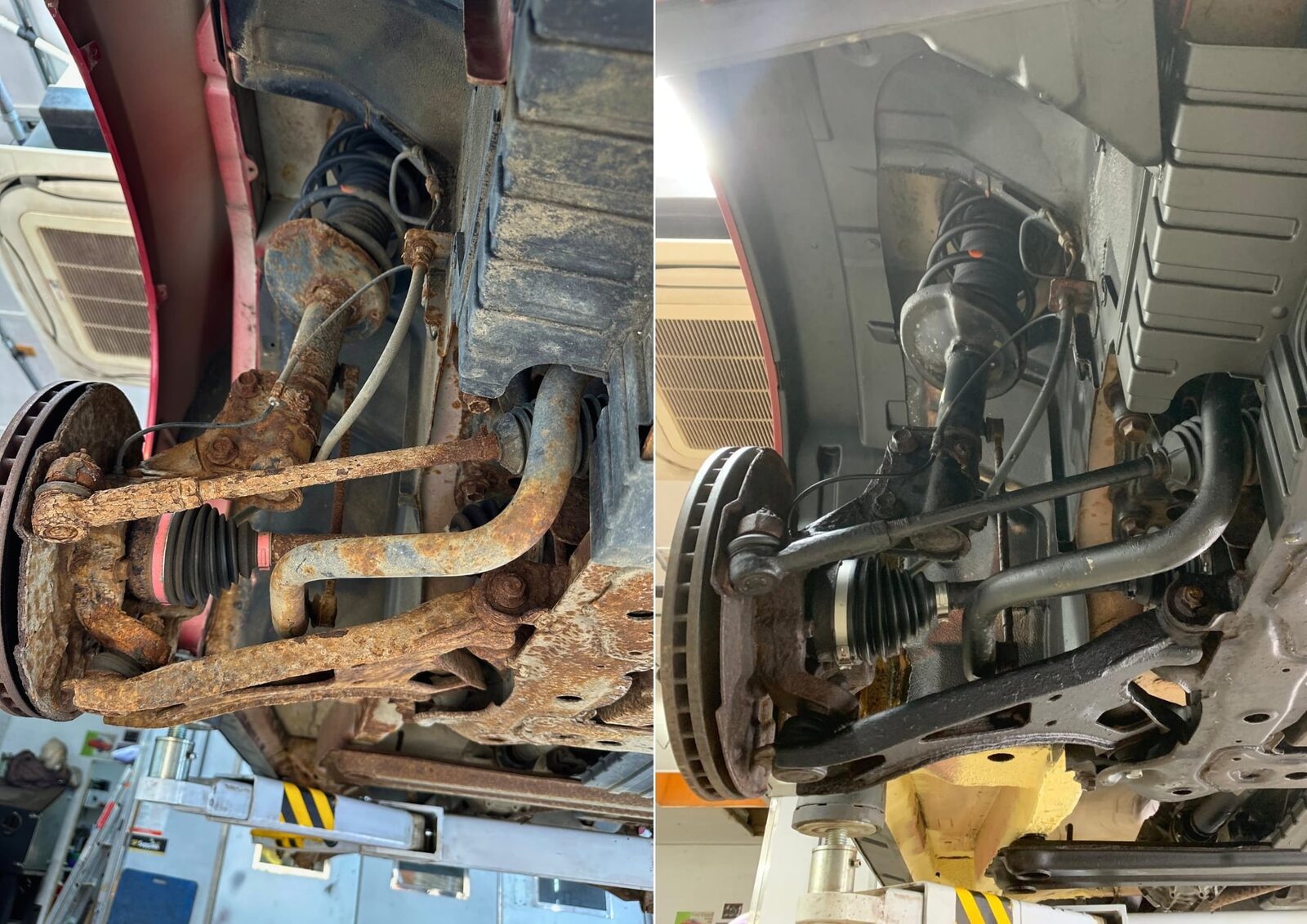
Can dry ice blasting damage car paint?
Dry ice blasting should not damage sound car paint when carried out correctly with the right pressure, nozzle, distance and technique.
However, loose paint, failing coatings, old underseal, cracked sealant or damaged finishes may lift during the process. That can be useful during inspection because it reveals areas where coatings were already weak. On classic cars, the operator must be careful: factory paint, aged finishes, labels, rubbers, plastics and delicate components all require different technique.
Will dry ice blasting remove rust during a restoration?
Dry ice blasting can remove loose surface corrosion, road salt, dirt, oil, grease and failing coatings. It does not repair pitted metal, weak sections, holes or structural rust.
In restoration work, this is useful because it reveals what is really happening underneath. Once the rust is exposed, the restoration team can decide whether the area needs rust conversion, laser cleaning, abrasive blasting, welding, replacement or protection. Dry ice blasting helps diagnose rust – it does not magically fix it. For the full picture, read can dry ice blasting remove rust?
Is laser cleaning better than dry ice blasting during restoration?
Laser cleaning and dry ice blasting do different jobs. Dry ice blasting is better for larger-area cleaning, removing contamination, cleaning complex assemblies and revealing the condition of the vehicle. Laser cleaning can be better for targeted pitted corrosion, seams, edges and more precise rust removal.
In a high-quality restoration, both can be useful. Dry ice blasting can clean and expose the area first. Laser cleaning can then be used where deeper corrosion needs more focused treatment.
Is dry ice blasting as good as sandblasting?
It depends on the job. Dry ice blasting is usually better for cleaning, preservation and inspection because it is dry, controlled and leaves no abrasive media behind. Sandblasting or abrasive blasting can be better for removed parts, bare metal restoration and heavy corrosion where the aim is to strip a surface completely before priming and painting.
For complete vehicles, underbodies, engine bays and original finishes, dry ice blasting is often the safer and more controlled option. Read the full dry ice blasting vs sandblasting comparison.
How much does dry ice blasting cost during restoration?
The cost depends on the stage of restoration, vehicle size, access, contamination, amount of dismantling, underseal, rust level and whether protection is included afterwards.
A targeted component clean may be lower cost. A full underbody, arches and engine bay preservation project will usually cost more because it includes preparation, access, inspection, blasting, treatment, protection and documentation. For detailed pricing, see our dry ice blasting cost guide.
What can you blast with dry ice during a restoration?
Dry ice blasting can be used on many areas, including:
- underbodies, floorpans and chassis sections
- wheel arches and engine bays
- suspension components and subframes
- gearbox and differential casings
- brackets, fixings and mechanical assemblies
- selected painted, rubber and plastic areas when treated carefully
Every area should be assessed before blasting, and the operator should adjust technique to the material and desired outcome. See where it fits in our automotive dry ice blasting service.
How IceBlastPro uses dry ice blasting during restoration projects
At IceBlastPro, dry ice blasting is used as part of an inspection-led restoration and preservation process. Depending on the project, we may use it before restoration starts, after dismantling, before rust treatment, before coating, after restoration work or during long-term maintenance.
The process may include:
- vehicle inspection and bodywork protection
- wheels, arch liners and trays removed where required
- dry ice blasting and rust assessment
- rust conversion, stabilisation or laser cleaning for pitted corrosion
- welding or repair where required
- clear protection, black underbody coating and cavity wax
- engine bay cleaning, final photos, videos and documentation
The goal is not simply to clean the car. The goal is to reveal, preserve and protect it properly.
Final thoughts
Dry ice blasting can be one of the most useful tools in a vehicle restoration, but only when it is used at the right time. It can reveal the true condition of a classic car before major decisions are made, clean components after dismantling, prepare surfaces before coating, help finish a restored vehicle properly and support long-term maintenance after the restoration is complete.
But it is not a replacement for every restoration method. It will not repair deep rust, remove every coating instantly, fix dents or replace proper bodywork, welding or paint preparation. Used correctly, dry ice blasting helps owners and restoration teams make better decisions, preserve more original material and protect the vehicle for the future.
Common questions
When should dry ice blasting be used during a restoration?
It is most useful before restoration begins, during component cleaning, before paint or protection, after restoration work and as part of long-term maintenance.
Is dry ice blasting good for vehicle restorations?
Yes, when used at the right stage. It helps reveal the true condition of the vehicle, clean complex areas and prepare surfaces for treatment or protection.
Can you dry ice blast a car?
Yes. Dry ice blasting can be used on car underbodies, engine bays, wheel arches, suspension parts, gearbox casings and selected painted, rubber and plastic areas when carried out carefully.
Does dry ice blasting harm original paint, trim or rubber?
It should not harm sound paint, trim or rubber when used correctly, but loose paint, weak coatings, failing underseal, brittle plastics and fragile labels can lift or be damaged if the wrong technique is used, which is why an experienced operator matters.
Can dry ice cause damage?
Yes, if used incorrectly. Too much pressure, the wrong nozzle or pellet size, or unsuitable use on fragile materials can cause damage. The method is controlled and non-abrasive when used properly.
Will dry ice blasting take off rust?
It can remove loose surface corrosion, road salt, dirt, oil, grease and failing coatings, but it does not repair pitted metal, holes or structural rust.
How long does dry ice blasting take during a restoration?
A small component clean may be relatively quick, while a full underbody or engine bay clean can take much longer, especially if wheels, liners, trays or components need to be removed. A full preservation project may take several working days.
What are the disadvantages of dry ice blasting?
The main disadvantages are cost, specialist equipment, dry ice supply, noise, ventilation and PPE requirements, that it is not always fast on thick underseal or bitumen, and the fact that it does not repair heavy rust or structural damage.
Why is sandblasting sometimes described as forbidden?
The issue is usually traditional silica sand, which must not be used in direct pressure blasting because of the health risks from respirable crystalline silica dust. Abrasive blasting still exists with other media, controls, containment and PPE.
How much does it cost to get a car ice blasted?
It depends on whether the work is targeted cleaning, engine bay cleaning, underbody cleaning, underseal removal or full preservation. The best quote usually requires photos, video or inspection.
What is the best paint protection for cars in winter?
For exterior paint, winter protection may include waxes, sealants, ceramic coatings and regular safe washing. For the underside, it is different: the vehicle may need underbody cleaning, rust treatment, cavity wax and suitable underbody protection against road salt and moisture.
What are three things you should never do with dry ice?
Never touch it with bare hands, never store it in an airtight container, and never use or store large amounts in an enclosed space without ventilation.
What happens if you touch dry ice for one second?
It can cause pain and may result in a cold burn depending on the length of contact and skin sensitivity. Dry ice should be handled by a trained operator with proper equipment.
What are the three hazards associated with dry ice?
The three main hazards are cold burns, pressure build-up in sealed containers and carbon dioxide build-up in poorly ventilated spaces.
How long will 20kg of dry ice last?
It depends on format, storage, temperature and container quality. Pellets used for blasting sublimate faster than blocks and need to be used quickly.
How long will a 10lb block of dry ice last?
It depends on storage conditions, but a block usually lasts longer than pellets because it has less exposed surface area.
Does dry ice remove dents?
No. Dry ice blasting is not a dent repair process. It is used for cleaning and preparation, not panel repair. Dents should be handled by paintless dent repair or bodywork specialists.
What dents cannot be removed?
Dents can be difficult or impossible to remove with paintless dent repair if the metal is stretched, the paint is cracked, the dent is on a sharp bodyline, the panel is badly creased or there is previous filler or repair work. Dry ice blasting does not repair body damage.
Does WD-40 remove scratches from cars?
Not properly. It may temporarily change the appearance of light marks by adding oil to the surface, but it does not remove scratches. Proper scratch removal usually requires polishing, paint correction or bodywork repair.
What will destroy car paint fast?
Strong chemicals, incorrect polishing, abrasive tools, bird droppings, brake fluid, poor washing methods and harsh environmental exposure can damage paint. Dry ice blasting should only be carried out by someone who understands the surface being cleaned.
Why does Coca-Cola remove rust?
Coca-Cola contains acids that may affect light rust or staining on small items, but it is not a professional vehicle rust treatment method. Car rust should be cleaned, assessed, stabilised, repaired where required and protected properly.
Planning a vehicle restoration?
Send us photos or a short video of the underside, engine bay or parts you are restoring and we'll advise whether dry ice blasting, laser cleaning, rust treatment, cavity wax or underbody preservation is the right next step.
Get Instant Quote